
An enterprise-grade analysis for commercial food procurement directors, R&D formulation managers, and regulatory leaders navigating Identity Preserved (IP) supply networks, functional substitution, and global compliance standards.
In an increasingly complex global trade environment, food and beverage manufacturers face significant hurdles when securing verified Non-GMO Food Ingredients. The demand for clean-label, non-genetically modified products is no longer a niche market segment; it is a fundamental requirement across retail, food service, and industrial manufacturing sectors worldwide. Procurement teams must navigate strict regulatory definitions such as the USDA National Bioengineered Food Disclosure Standard (NBFDS) and EU Regulations (EC) No 1829/2003 and 1830/2003, while simultaneously maintaining strict cost controls and operational uptime.
At American International Foods, Inc. (AIFI), we leverage decades of distribution logistics expertise, rigorous auditing framework, and strategic producer relationships to provide a single, fully accountable supply platform. Distributing over 2,500 conventional, organic, non-GMO, and gluten-free ingredients across all 48 contiguous United States, AIFI bridges the gap between agricultural producers and commercial manufacturing lines.
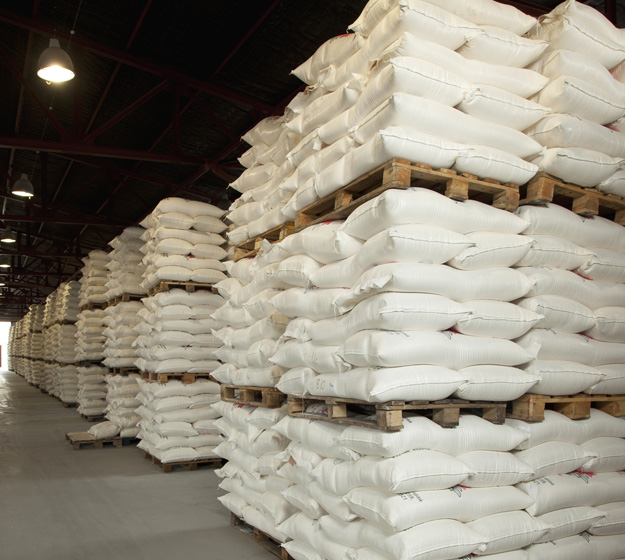
Successful formulation requires an alignment of rheological properties, thermal stability, shelf-life performance, and strict compliance documentation. Below is a detailed breakdown of core Non-GMO ingredient categories supplied by AIFI for commercial processing.
Starches serve as the backbone of texture, viscosity, and moisture retention in frozen meals, bakery goods, sauces, and meat analogs. Transitioning from genetically modified corn starch to non-GMO alternatives requires careful evaluation of shear resistance and gel strength.
As functional plant protein demands surge globally, maintaining non-GMO status across high-protein matrices is essential for brand positioning and label transparency.
Emulsifiers play a critical role in controlling fat crystallization, moisture migration, and texture retention in chocolates, baked goods, and dressings.
Replacing high-fructose corn syrup (HFCS) and standard GE corn-derived sweeteners is a primary driver in modern clean-label reformulations.
| Ingredient Category | Key Functional Attributes | Typical Application Fields | Compliance Standard |
|---|---|---|---|
| Non-GMO Tapioca Starch | High clarity, neutral taste, low gelatinization temp | Gluten-Free Bakery, Sauces, Dairy | IP Certified / PCR Negative |
| Non-GMO Sunflower Lecithin | Allergen-free emulsifier, viscosity control | Confectionery, Chocolate, Margarine | Non-GMO Project Verified |
| Non-GMO Pea Protein 80% | High solubility, gelling, water-binding capacity | Plant-Based Meats, RTD Drinks, Bars | IP Sourced / EU Compliant |
| Non-GMO Tapioca Maltodextrin | Bulking agent, carrier powder, low osmolality | Dry Mixes, Seasonings, Encapsulation | Non-GE Certified |
| Non-GMO High Oleic Sunflower Oil | Oxidative stability, high smoke point, zero trans fat | Snack Foods, Frying, Dressings | Expeller Pressed / IP Verified |
Understanding macro-economic shifts, crop economics, and regulatory transformations allows procurement executives to stay ahead of cost spikes and supply bottlenecks.
The global regulatory landscape is tightening around bioengineered disclosures. In North America, the implementation of the National Bioengineered Food Disclosure Standard has forced manufacturers to explicitly evaluate raw materials derived from genetically modified crops. Concurrently, European markets continue to mandate strict labeling for any item containing more than 0.9% adventitious GM content. This regulatory alignment is driving multinational food brands toward global Non-GMO formulations to simplify packaging SKUs and international supply chains.
Consumer sentiment has expanded beyond simple non-GMO verification toward sustainable farming practices. Industrial buyers are increasingly prioritizing non-GMO crops grown via regenerative agricultural practices—such as crop rotation, reduced tillage, and cover cropping. Sourcing non-GMO ingredients linked to verifiable soil-health metrics provides a secondary value layer, strengthening enterprise ESG (Environmental, Social, and Governance) scores and appealing to environmentally conscious consumers.
To combat price volatility in traditional modified starches, R&D teams are adopting upcycled non-GMO fibers and side-stream hydrocolloids. Ingredients such as citrus fiber derived from pectin extraction byproducts are being utilized as clean-label, non-GMO texturizers. These functional alternatives provide exceptional emulsification, water-binding capacity, and mouthfeel while meeting stringent non-GMO and clean-label standards.

As volatile weather patterns and geopolitical friction affect traditional growing regions, procurement models are evolving from transactional purchasing to strategic supply partnership frameworks.
1. Dual-Track Sourcing and Regional Stocking: Relying on a single supply origin for non-GMO commodities like soy lecithin or corn starch presents unacceptable supply disruption risks. Leading manufacturers are establishing multi-origin supply contracts (e.g., combining domestic US non-GMO corn with South American or Asian tapioca streams) and leveraging distributor warehousing networks to hold buffer stock across geographically strategic hubs.
2. Blockchain and Immutable Lot Traceability: Proof of non-GMO status requires unbroken documentation chains. Future procurement platforms integrate digital chain-of-custody tracking, connecting farm-level seed certification, grain elevator testing logs, and distributor Certificates of Analysis (COAs) into tamper-proof records. This reduces internal quality control audit times from days to seconds.
3. Forward-Contract Hedging against Price Spreads: The premium spread between conventional GE crops and non-GMO varieties fluctuates based on planted acreage and yields. Proactive supply chain managers utilize forward-booking contracts 6 to 18 months in advance, locking in volume and capping margin exposure while securing production scheduling.
Our operational disciplines eliminate cross-contamination risks and streamline regulatory approvals for commercial production lines.
Our non-GMO supply chain enforces strict segregation procedures at every node—from non-GMO seed verification and field buffer zones to dedicated transportation hoppers and processing lines. Every lot is tracked under rigorous IP protocols to maintain chain-of-custody validity.
Guaranteed protection against adventitious contamination throughout transport and storage.
Send an InquiryQuantitative Polymerase Chain Reaction (PCR) testing is conducted on raw material lots to detect trace DNA sequences associated with genetic modification. We verify that GMO thresholds remain strictly below target buyer limits prior to warehouse release.
Comprehensive lab verification provided alongside batch Certificate of Analysis (COA).
Send an InquiryHolding inventory in strategic cold-storage and dry warehouses across the United States allows AIFI to deliver full truckloads (FTL) and less-than-truckloads (LTL) with reduced transit times. We support Just-In-Time (JIT) production schedules to minimize holding costs.
Reliable supply continuity across 48 contiguous US states.
Send an InquiryReplacing conventional ingredients with Non-GMO substitutes can alter hydration rates, gelatinization points, and emulsification stability. AIFI’s food scientists work directly with your R&D bench to match functionality without compromising product texture or shelf-life.
Custom sample bench testing and direct formulation assistance.
Send an InquiryQuality assurance managers shouldn't spend hours chasing paperwork. Every shipment is accompanied by a complete documentation bundle: COA, technical data sheets, allergen declarations, country of origin, organic, kosher, halal, and non-GMO certificates.
Streamlined compliance for SQF, BRCGS, and FSSC 22000 audits.
Send an InquirySubstituting conventional, highly modified ingredients with clean-label Non-GMO options presents physical chemistry hurdles that must be managed during formulation.
1. Rheology and Shear Resistance: Native non-GMO starches often lack the cross-linking structure of chemically modified starches, making them vulnerable to shear breakdown under high-shear homogenizers or scraped-surface heat exchangers. AIFI's technical team provides functional physical modification solutions (such as thermal-inhibition starches) that retain clean non-GMO labels while standing up to rigorous processing conditions.
2. Emulsion Stability and HLB Matching: When replacing GMO soy lecithin with Non-GMO sunflower lecithin, formulators often experience differences in hydrophilic-lipophilic balance (HLB) and dark color contribution. Our de-oiled, standardized sunflower lecithin options provide neutral sensory properties and optimized HLB values, ensuring oil-in-water emulsions retain shelf stability without separation.
3. Moisture Management in Gluten-Free Systems: Non-GMO plant proteins and starches interact differently with water than traditional wheat flour. Fine-tuning particle size distribution and combining non-GMO tapioca starch with non-GMO pea protein isolates allows formulators to rebuild water retention capacity, elasticity, and crumb structure in gluten-free baked goods.

Addressing core technical, regulatory, and logistics queries from food manufacturing buyers.
Identity Preserved (IP) is a supply chain management process that guarantees a crop maintains its specific non-GMO identity from seed planting, harvesting, transportation, and storage through to processing. It relies on strict mechanical segregation, cleaning protocols, and chain-of-custody documentation.
Non-GMO Project Verified is a third-party certification program that requires ongoing testing of high-risk inputs, facility audits, and compliance with the Non-GMO Project Standard (which sets action thresholds such as <0.9% for food ingredients). AIFI supplies both IP Certified non-GMO ingredients and Non-GMO Project Verified items depending on your brand's regulatory and labeling goals.
Standard industrial Non-GMO ingredients comply with the European Union threshold of <0.9% adventitious GMO content, verified via Polymerase Chain Reaction (PCR) DNA testing. For ultra-strict clean-label programs, AIFI can supply specialized raw material lots tested to strict limits below 0.1% non-detectable GMO content. Each batch shipment is delivered with a lot-specific COA detailing analytical results.
AIFI mandates strict sanitation protocols across our distribution network. Bulk hoppers, totes, and bags are handled in SQF-certified facilities following hazard analysis and critical control point (HACCP) plans designed for allergen and GMO isolation. Reusable transportation containers undergo verified wash-outs, and dedicated non-GMO storage bays prevent airborne or equipment-based cross-contact.
Replacing GE modified corn starch can be achieved using Non-GMO Native Tapioca Starch, Physically Modified Non-GMO Corn Starch, or Non-GMO Potato Starch. Tapioca provides superior gel clarity, low flavor impact, and excellent freeze-thaw stability, while potato starch offers high viscosity building at lower process temperatures. AIFI’s R&D specialists assist with viscosity profiling (using RVA testing) to match target textures.
AIFI accommodates diverse manufacturing scales, offering full truckload (FTL) orders, palletized less-than-truckload (LTL) shipments, and custom multi-ingredient consolidated loads. Standard stocked items ship within 24 to 48 hours from our nationwide warehouse network. Specialized forward-contract items or custom-milled particle sizes feature designated lead times communicated transparently during quotation.
Yes. The USDA National Bioengineered Food Disclosure Standard requires entities to disclose bioengineered foods. Ingredients derived from bioengineered crops that contain detectable modified genetic material must carry a BE label. Sourcing verified Non-GMO ingredients ensures that products remain exempt from bioengineered labeling, safeguarding consumer trust and maintaining clean-label claims.
Yes. AIFI offers custom dry-blending services under strict allergen-controlled and IP non-GMO protocols. We combine non-GMO proteins, starches, hydrocolloids, sweeteners, and functional fibers into pre-scaled batch packs, streamlining your production line and reducing raw material handling steps.