
In high-throughput food manufacturing, liquid egg ingredients represent one of the most functionally critical yet volatile raw material categories. Unlike dry commoditized inputs, liquid eggs function simultaneously as structural binders, primary emulsifiers, foaming agents, and texture enhancers across commercial baking, dressing, sauce, noodle, and processed meat operations.
American International Foods, Inc. (AIFI) provides industrial food processors with high-purity, pasteurized liquid egg products designed to meet rigid viscosity, color, microbial, and functional benchmarks. Sourced from audited, USDA-inspected liquid breaking facilities across North America and global markets, our portfolio mitigates the operational risks associated with raw shell egg handling—including bio-burden variability, manual shell disposal costs, and cross-contamination hazards.
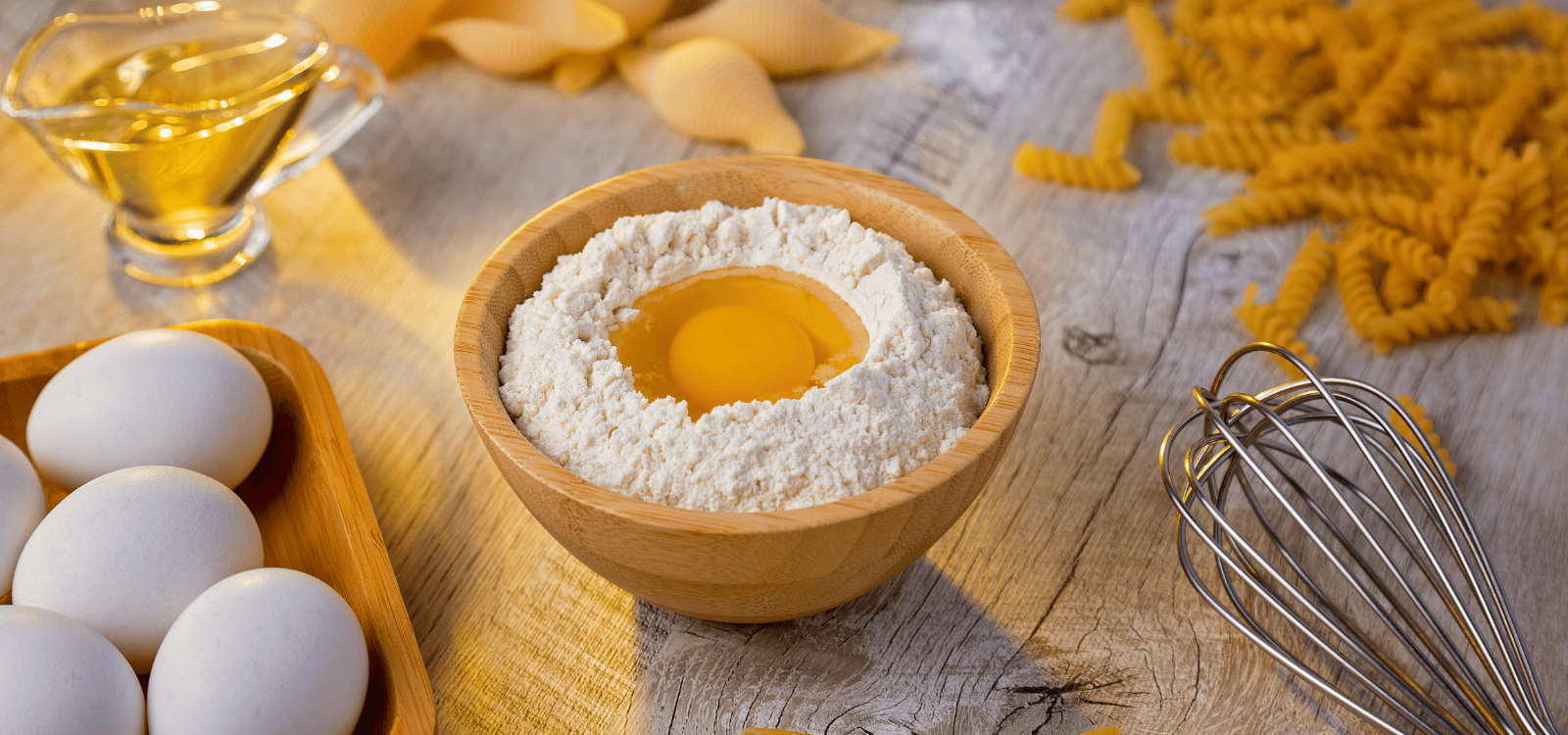
Select the precise liquid egg matrix engineered for your manufacturing equipment, thermal processing thresholds, and clean-label declarations.
| Product Variant | Composition & Specifications | Primary Functional Attributes | Key Industrial Applications |
|---|---|---|---|
| Liquid Whole Egg (Standard Pasteurization) | Min. 24.2% Total Egg Solids Natural ratio (~60% white / 40% yolk) USDA Pasteurized | Balanced emulsification, heat coagulation, Maillard browning, structural crumb matrix formation. | Commercial bakeries (cakes, muffins, bread), fresh pasta manufacturing, battered coatings. |
| Liquid Egg Whites (Albumin) | Min. 11.5% Egg Solids High protein purity, zero fat Controlled pH range (8.5 - 9.5) | Maximum overrun (whip capacity), high gel strength, heat-set structure, fat-free protein fortification. | Angel food cakes, meringues, nougats, protein beverages, surimi, low-fat gluten-free baked goods. |
| Sugared Liquid Egg Yolk (10% Sugar) | Min. 43% Total Solids (inc. sugar) 43% Min. Yolk Solids + 10% Sucrose Viscosity stabilized | Cryoprotected protein structure; prevents gelation during freezing; rich lecithin emulsification and gold color. | Sweet bakery doughs, ice cream bases, custards, sweet sauces, commercial dessert fillings. |
| Salted Liquid Egg Yolk (10% Salt) | Min. 43% Total Solids (inc. salt) 43% Min. Yolk Solids + 10% NaCl Microbially resistant | Extremely stable lipid-protein emulsification; reduced water activity ($a_w$); high shear tolerance. | Mayonnaise production, spoonable salad dressings, savory sauces (Hollandaise), savory dips. |
| Enzyme-Modified Liquid Egg Yolk | Phospholipase-treated yolk 10% Salted or Unsalted variants High heat stability | Hydrolyzed lecithin converts to lysophospholipids, dramatically enhancing heat-stable emulsion performance. | UHT/HTST shelf-stable dressings, retort sauce processing, instant emulsification systems. |
| Scrambled Egg Liquid Blends | Whole egg + milk solids/gums Modified for steam-table holding Non-browning formulation | Resists syneresis (water weeping); prevents greening/graying under extended thermal exposure. | QSR breakfast production, frozen breakfast burritos, institutional food service catering. |
For manufacturers producing shelf-stable dressings or heat-treated sauces, standard liquid egg yolk proteins coagulate at approximately 65°C to 70°C (149°F to 158°F), causing emulsion breakdown. By treating liquid egg yolks with Phospholipase A2 ($PLA_2$), specific fatty acids are cleaved from yolk lecithin to yield lysophospholipids. This structural modification elevates the coagulation temperature threshold and enhances surface activity at oil-water interfaces, enabling stable emulsions that withstand commercial sterilization and pasteurization thermal cycles without phase separation.
Understanding the molecular behavior of liquid egg components allows process engineers and product developers to maximize yields and optimize batch consistency.
Liquid whole egg and egg whites contain complex globular proteins—primarily ovalbumin, conalbumin (ovotransferrin), and ovomucoid. Upon heating above 62°C (144°F), these proteins denature, unfolding their polypeptide chains and cross-linking via hydrophobic interactions and disulfide bonds. This forms an irreversible 3D gel network that traps water, starch, and fat, providing structure in baked goods and gelling in meat matrices.
Liquid egg yolk is a naturally occurring oil-in-water emulsion consisting of 31.8% to 35% lipids, primarily low-density lipoproteins (LDL), high-density lipoproteins (HDL), and lecithin (phosphatidylcholine). The amphiphilic nature of these lipoproteins dramatically lowers interfacial tension between water and hydrophobic fats, creating stable air-oil-water matrices essential for dressings, batters, and sauces.
Liquid egg white protein (globulins and ovalbumin) rapidly adsorbs to the air-water interface during mechanical whipping, unfolding to encapsulate air bubbles. The resulting foam expands up to 800% (overrun capacity). When baked, heat sets the protein wall, maintaining fluffy, aerated structures in cakes, soufflés, and confectioneries.
As global regulatory landscapes evolve and supply chains face systemic volatility, procurement leaders must anticipate key macro trends shaping the liquid egg market over the next decade.
Regulatory frameworks across Europe and North America (such as California Proposition 12 and Massachusetts Question 3) are legally driving the food industry toward cage-free egg sourcing. Industrial buyers are shifting long-term liquid egg forward contracts toward certified cage-free, pasture-raised, and USDA Organic liquid egg streams to comply with corporate ESG goals and state retail compliance standards.
Traditional pasteurized liquid egg carries a 14- to 21-day cold-chain window, creating severe logistics challenges. Innovation in microfiltration, ultra-pasteurization (UP), and aseptic bag-in-box filling systems now enables refrigerated liquid egg storage up to 60–90 days without chemical preservatives, dramatically lowering freight frequency and operational downtime.
Highly Pathogenic Avian Influenza continues to disrupt flock sizes and trigger pricing spikes in the Urner Barry egg market index. Forward-thinking procurement teams are establishing index-linked pricing agreements, dual-region breaking plant approvals, and hybrid liquid-to-dried reformulating pathways to ensure operational continuity.
Consumer pressure to eliminate synthetic emulsifiers (such as polysorbates, DATEM, and mono- and diglycerides) has accelerated demand for standardized liquid egg yolk and enzyme-modified yolk. Formulators rely on egg yolk's natural lecithin structure to achieve clean-label declarations like "No Artificial Emulsifiers" on retail packaging.
Advanced food processing plants are requesting specialized enzymatic treatments targeting specific rheological outcomes. Beyond standard phospholipase conversion for heat stability, customized enzyme processing can alter viscosity profiles for high-speed automated depositing and inline spraying systems.
To reduce labor costs and packaging waste, mid-to-large scale bakeries are transitioning from 20-kg bag-in-box containers to bulk liquid egg totes (2,000 lbs) and direct insulated tank truck pumping systems connected to computerized automated dosing units.
We combine deep agricultural commodity intelligence with robust cold-chain logistics to safeguard your production schedules.
AIFI maintains preferred distribution agreements with top-tier, USDA-inspected liquid egg breakers across North America. By diversifying sourcing across distinct geographical flyways, we protect your plant from localized avian disease quarantines and regional supply contractions.
Spot loading, short-term contracts, and multi-year forward positions available.
Send an InquiryLiquid egg ingredients require absolute temperature rigor (33°F–40°F / 0.5°C–4.4°C) throughout transport. AIFI utilizes refrigerated LTL fleets, dedicated liquid tankers, and temperature-monitored bulk tote shipments delivering to manufacturing sites across all 48 contiguous states.
Just-in-Time (JIT) scheduling minimizes holding inventory while avoiding stockouts.
Send an InquiryQuality control teams cannot afford administrative delays. Every shipment of liquid egg ingredients arrives with batch-specific Certificates of Analysis (COA) detailing solids content, pH, pasteurization verification, and microbiological testing (Salmonella, E. coli, Listeria, APC, Yeast & Mold).
Kosher, Halal, Non-GMO, Organic, and Cage-Free certificates supplied on request.
Request Specifications ›Egg markets exhibit rapid price swings driven by feed costs, seasonal holiday demand, layer flock sizes, and disease outbreaks. AIFI publishes a Weekly Market Report every Friday, offering transparent data on Urner Barry quotes, flock health, and market projections so buyers can time purchases effectively.
Empower your procurement team with data-driven buying intelligence.
Read Weekly Report ›Whether you are transitioning from dried egg powders to liquid systems to boost mixing throughput, or replacing conventional yolk with enzyme-modified variants for thermal stability, our food technologists provide bench-scale guidance, usage calculations, and pilot test samples.
Reduce development cycles with expert formulation consulting.
Formulation Support ›How specialized liquid egg ingredients enhance processing performance in high-volume food production.

Liquid whole egg provides uniform moisture retention, crumb softness, and crust color via Maillard browning reactions. In high-ratio layer cakes and brioche, high-solids liquid whole egg ensures consistent fat dispersion, while liquid whites deliver optimal aeration for sponge cakes and angel food matrices without residual fat interference.

10% Salted Liquid Egg Yolk is the golden benchmark for mayonnaise production, creating tight oil droplet dispersion and creamy mouthfeel. For retort-processed or shelf-stable ambient dressings, Enzyme-Modified Liquid Egg Yolk prevents emulsion breakdown during high-shear homogenization and thermal sterilization.

Liquid egg whites serve as powerful heat-activated protein binders in sausage casing fills, poultry rolls, and surimi processing. Upon cooking, albumin gels establish strong water-binding capacity, preventing purge (moisture loss), improving sliceability, and enhancing firmness in reformatted meat products.
Use these industrial baseline standards when converting recipes from shell eggs or dry egg powders to liquid egg ingredients.
| Source Product | Equivalent Liquid Whole Egg | Equivalent Liquid Egg White | Equivalent Liquid Egg Yolk |
|---|---|---|---|
| 1 Shell Egg (Large, ~50g net) | 50g Liquid Whole Egg | 33g Liquid Egg White | 17g Liquid Egg Yolk |
| 1,000 lbs Shell Egg Equivalent | 1,000 lbs Liquid Whole Egg | 660 lbs Liquid Egg White | 340 lbs Liquid Egg Yolk |
| 1 lb Dried Whole Egg Powder | 3.88 lbs Liquid Whole Egg + Water | — | — |
| 1 lb Dried Egg White Powder | — | 8.0 lbs Liquid Egg White + Water | — |
| 1 lb Dried Egg Yolk Powder | — | — | 2.25 lbs Liquid Egg Yolk + Water |
Tell us your target liquid egg specifications, expected volume requirements, and delivery schedules. Our ingredient specialists will deliver a customized pricing quote, COA documentation package, and sample evaluation plan.