
In modern high-speed food and beverage processing, managing individual bulk raw materials creates immense operational friction. When a formula requires dozens of micro-ingredients—such as hydrocolloids, dough conditioners, acidulants, enzymes, and functional flavor carriers—weighing and dosing them separately increases labor costs, scales up batch variance, and elevates the risk of costly human error on the plant floor.
Custom Blending Ingredients consolidate complex multi-component formulas into homogeneous, batch-ready pre-blends. By sourcing pre-blended functional dry matrices or specialized carrier systems, commercial food plants streamline warehouse intake, eliminate batch-to-batch inconsistency, and dramatically simplify regulatory compliance. American International Foods, Inc. (AIFI) acts as a single, accountable supply partner, combining extensive raw material access with deep formulation expertise across North America and global export markets.
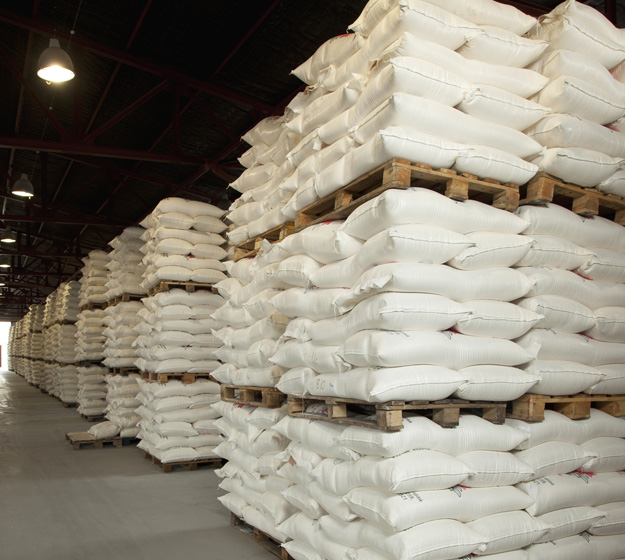
From bakery dough systems to instant beverage powders and processed meat brines, exact functional properties depend heavily on raw material grade, bulk density, and solubility. Below is an overview of core custom blending ingredient groups sourced and standardized by AIFI.
| Ingredient Category | Key Components / Raw Materials | Functional Role in Blends | Target Applications |
|---|---|---|---|
| Hydrocolloid & Texture Blends | Xanthan Gum, Guar Gum, Carrageenan, Cellulose Gum, Locust Bean Gum, Pectin | Viscosity control, water binding, syneresis suppression, freeze-thaw stability, emulsion stabilization | Sauces, dressings, dairy beverages, bakery fillings, frozen desserts |
| Functional Bakery Systems | Vital Wheat Gluten, Enzymes (Amylase, Xylanase), SSL, DATEM, Monoglycerides, Starches | Dough extension, volume enhancement, crumb structure refinement, shelf-life extension | Commercial bread, pan bread, tortillas, laminated doughs, gluten-free baking |
| Sweetener & Polyol Premixes | Erythritol, Stevia (Reb A/M), Monk Fruit, Maltodextrin, Allulose, Sucralose | Brix modification, sweetness profile matching, bulk density equalization, calorie reduction | Beverage concentrates, nutraceutical powders, confectioneries, table-top sachets |
| Acidulant & Flavor Enhancers | Citric Acid, Malic Acid, Sodium Citrate, Yeast Extracts, Monosodium Glutamate, Salt | pH control, buffering capacity, umami intensification, flavor rounding, preservation assistance | Dry seasonings, snack coatings, processed meats, soups, pickling brines |
| Proteins & Fortification Blends | WPC 80, WPI, Soy Protein Isolate, Pea Protein, Micellar Casein, Vitamin/Mineral Premixes | Protein enrichment, amino acid balancing, nutritional fortification, solubility management | Sports nutrition, meal replacement shakes, nutritional bars, infant nutrition |
| Clean-Label Leavening Premixes | Potassium Bicarbonate, Organic Starch Carriers, Monocalcium Phosphate, Tartaric Acid | Controlled $CO_2$ release, sodium reduction, chemical-additive replacement | Organic baked goods, cake mixes, clean-label biscuits, snack crackers |
A primary failure mode in custom dry blending is de-mixing (segregation), which occurs when raw materials with disparate bulk densities ($g/cm^3$) or contrasting mean particle sizes ($mesh/micron$) are blended together. During vibration, conveying, or discharge from surge bins, smaller or denser particles sink (percolation), while lighter or coarser particles rise.
To prevent segregation in custom blending ingredients, AIFI's technical team assists formulators with:
We tailor custom blending ingredient programs to match exact operational environments—accounting for shear rates, thermal processing, hydration kinetics, and packaging lines.







As global supply chains navigate geopolitical shifts, climate-induced crop fluctuations, and tightening regulatory oversight, food procurement directors are evolving their purchasing strategies. Procurement is shifting from tactical, spot-market buying to strategic, long-term partnerships built around multi-origin risk mitigation and total landed cost analysis.
Rising plant labor costs and high turnover rates on processing lines have made manual scaling and micro-ingredient additions a major operational liability. Procurement teams are increasingly specifying pre-blended, unitized batch bags (e.g., 25 lb or exact batch weight sealed foil bags). This shift eliminates scaling rooms, mitigates allergen cross-contamination, and ensures that plant operators add 100% accurate ingredient ratios with zero scaling time.
Relying on a single geographical source for key custom blend components—such as hydrocolloids from South America or specialized dairy proteins from Oceania—creates single-point supply risks. Leading procurement organizations require custom blending partners to validate secondary and tertiary supplier origins. AIFI mitigates risk by establishing pre-approved, multi-origin raw material streams for every component in a custom blend, combined with forward contract hedging to stabilize landed pricing against commodity volatility.
With the implementation of FSMA Section 204 requiring Traceability Lot Codes (TLC) and Key Data Elements (KDEs) across critical tracking events, multi-ingredient blends present a unique tracking challenge. Future-focused procurement protocols demand that every custom blend shipment includes digital lot linkage connecting the finished dry blend batch directly back to the individual Certificate of Analysis (COA) of every input raw material.
Driven by shifting consumer preferences and advanced food material science, custom blending is moving beyond basic physical mixing into high-performance functional pre-processing.
Consumer scrutiny over ultra-processed foods (UPF) and long chemical ingredient decks is compelling food brands to replace synthetic additives with clean-label custom blends. Formulators are actively swapping out mono- and diglycerides, DATEM, and sodium stearoyl lactylate (SSL) for custom enzyme-hydrocolloid premixes. Similarly, chemical anti-caking agents like silicon dioxide are being replaced with native rice starches and organic plant fibers in dry spice and beverage blends.
Modern beverage and sauce processing demands rapid, lump-free dispersibility without high-thermal cooking. Advanced agglomeration and co-processing techniques now allow hydrocolloids (such as xanthan, guar, and pectin) to be custom-blended with soluble fiber carriers. This engineered particle geometry allows instantaneous hydration in cold liquids under moderate shear, saving processing energy and shortening tank hydration cycles.
The rise of plant-based meats, dairy alternatives, and precision-fermentation proteins requires highly sophisticated texturizing dry blends. Plant proteins often exhibit off-notes, gritty mouthfeel, and low water-holding capacity. Custom blending ingredients that combine micronized pulse proteins with plant hydrocolloids, natural masking agents, and organic lipids allow manufacturers to match the gel strength, bite, and juiciness of traditional animal-derived products.
Six core operational pillars designed to eliminate supply friction, maintain strict specification compliance, and safeguard production timelines.
Consolidate dozens of dry ingredients and micro-actives into a single, standardized SKU. Our sourcing desk coordinates producer audits, specification matching, and packaging delivery so your procurement team manages fewer purchase orders.
One primary contact. Guaranteed lead times. Fully transparent landed pricing.
Contact UsProtect your production plan against crop failures and supply bottlenecks. We maintain strategic forward inventory reserves across 48 states to ensure uninterrupted deliveries of your custom blending raw materials.
Flexible logistics options: full truckloads (FTL), less-than-truckload (LTL), and JIT release schedules.
Contact UsQuality assurance and regulatory teams never wait on documentation. Every custom blend order is delivered with lot-specific Certificates of Analysis (COAs), technical data sheets, allergen matrices, nutritional breakdowns, and country-of-origin details.
Complete traceability documentation to pass SQF, BRC, and FDA audits seamlessly.
Contact UsAccess our Weekly Market Reports analyzing global commodity dynamics across dairy powders, wheat flours, starches, egg products, and hydrocolloids. Make data-backed purchasing decisions based on real supply trends.
Updated every Friday by our senior ingredient sourcing specialists.
Contact UsOur food science specialists continuously test and qualify emerging ingredients—from plant proteins to novel functional fibers and non-GMO starches. We supply bench samples quickly so your innovation pipeline stays active.
Leverage our extensive catalog of 2,500+ items for rapid prototyping.
Contact UsReformulating for cost reduction, label clean-up, or allergen elimination? Our technical specialists evaluate functional equivalents, adjust usage rates, and run pilot trials to preserve flavor, texture, and shelf life.
Practical, application-driven advice from experienced food scientists.
Contact UsPurchasing agents, QA directors, and R&D formulators have distinct priorities. AIFI is structured to deliver value across every role.
Consolidated multi-component ordering, contract pricing stability, predictable lead times, and transparent landed cost structures that protect profit margins.
Fully vetted vendor networks, strict lot-to-lot traceability, allergen isolation protocols, and rapid delivery of comprehensive regulatory specification packages.
Fast bench-sample delivery, specialized technical assistance, micro-dosing error elimination, and custom batch packaging tailored to your mixer capacity.
Detailed answers to common questions regarding custom blending ingredients, quality assurance, and bulk distribution.
Share your target formulation, mesh requirements, packaging specs, and annual volume needs. Our technical specialists will build a tailored sourcing, documentation, and supply chain plan for your facility.