
Engineered for high-shear, cold-temperature, and clean-label processing across Nordic food and industrial manufacturing plants.
An in-depth analysis of processing chemistry, rheological superiority, and supply security for Nordic procurement directors.
Potato starch extracted from Northern China (particularly Inner Mongolia, Gansu, and Ningxia regions) benefits from extreme diurnal temperature variations, sandy loam soil, and high solar radiation. These microclimates yield potato tubers with exceptionally large granule sizes (ranging from 10 to 100 microns) and high phosphorus content bound to the amylopectin matrix.
This natural phosphorylation imparts high ionic charge, resulting in an exceptionally low gelatinization temperature (60°C to 65°C), high peak viscosity (exceeding 1,400 Brabender Units at 5% dry basis), and superior paste clarity compared to corn or tapioca starches. For Swedish food processors operating high-speed automated lines, these parameters translate to lower thermal energy requirements during cooking and unmatched water-binding capacity.
The European potato starch market has faced severe volatility due to shifting climatic conditions in Western Europe, strict environmental water-usage quotas, and localized crop blights across Germany, Denmark, and Southern Sweden. Consequently, pricing for European native potato starch has fluctuated unpredictably.
Leading Chinese exporters have established massive closed-loop, automated refining facilities featuring GEA and Flottweg hydrocyclone separation systems. By sourcing high-grade potato starch from China, Swedish importers secure reliable, large-volume supply contracts with consistent lot-to-lot specifications, effectively hedging against European supply chain shocks while lowering total landed raw material costs by 12% to 22%.
Tailored starch functionality for Sweden's iconic culinary formulations, dairy alternatives, and heavy industrial paper operations.
In traditional Swedish meatball formulations, native and modified potato starches serve as the primary moisture-retention agent. Due to its large granule size and high swelling power, potato starch swells rapidly during par-frying and final heat treating, binding both free water and rendered fat.
This prevents thermal purge, ensures a juicy textural mouthfeel, and maintains dimensional stability during blast-freezing and reheating. Our starches leave no cereal off-flavor, preserving the authentic spice profile of classic Nordic meat products.
Sweden is a pioneer in green plant-based foods, home to world-renowned oat-dairy and pea-protein meat substitutes. Premium Chinese potato starch acts as a clean-label binder and texturizer in pea and fava bean meat matrices, providing a firm, springy bite mimicking animal muscle tissue.
In oat-based non-dairy cheese and yogurt formulations, hydroxypropylated or cross-linked potato starches deliver exceptional sheen, smooth spoonability, and freeze-thaw syneresis control without masking subtle oat flavor notes.
Industrial production of Swedish crispbread (Knäckebröd) and rye crackers requires precise dough rheology. Adding pre-gelatinized (alpha) potato starch increases dough water absorption, improves extensibility, and prevents cracking during sheet cutting.
During high-temperature baking, starch retrogradation properties yield a fragile, crisp cellular structure with long-lasting shelf crispness, reducing breakage during automated packaging and export transit across Scandinavia.
Swedish convenience meals rely heavily on velvety brown sauces (Brunsås) and cream-based gravies that must endure frozen storage without phase separation. Acetylated distarch adipate (E1422) derived from high-purity potato starch provides supreme resistance to thermal shear, acidic pH levels, and repeated freeze-thaw cycles.
The resulting sauce exhibits high clarity, zero starch weeping (syneresis), and a clean, glossy appearance upon microwave heating.
Sweden’s forestry and paper industry demands high-grade industrial starches for surface sizing, wet-end addition, and corrugated board bonding. Cationic potato starches bond effectively with negatively charged cellulose fibers, increasing internal bond strength (bursting strength and Mullen test performance).
This allows Swedish mills to reduce grammage while retaining package stiffness for eco-friendly shipping containers destined for global logistics networks.
Comprehensive comparative analysis of Chinese export-grade starches engineered for food and industrial processing lines.
| Starch Grade | INS / E-Number | Gelatinization Temp | Peak Viscosity (BU) | Freeze-Thaw Stability | Primary Swedish Application |
|---|---|---|---|---|---|
| Native Potato Starch | Clean Label (None) | 60°C – 65°C | 1200 – 1500+ BU | Moderate (1-2 cycles) | Köttbullar, Meat products, Noodle binding, Bakery |
| Acetylated Distarch Adipate | E1422 / INS 1422 | 58°C – 62°C | 800 – 1100 BU | Excellent (15+ cycles) | Ready-meal Brunsås, Frozen sauces, Dairy desserts |
| Hydroxypropyl Distarch Phosphate | E1442 / INS 1442 | 56°C – 60°C | 900 – 1200 BU | Superior (20+ cycles) | High-shear yogurt, Fruit preparations, Acidic dressings |
| Acetylated Distarch Phosphate | E1414 / INS 1414 | 62°C – 66°C | 750 – 1000 BU | Very Good (10+ cycles) | Canned soups, Retort pouches, Processed cheese |
| Pre-Gelatinized Potato Starch | Clean Label / Modified | Cold Water Soluble | Instant Viscosity | Good | Instant Knäckebröd doughs, Cold-mix bakery fillings |
| Cationic Industrial Starch | Industrial Grade | 68°C – 72°C | 400 – 700 BU | N/A | Paper mill wet-end, Corrugated board adhesives |
How Chinese starch manufacturing meets the rigorous environmental and safety demands of Swedish retail and industrial standards.
Swedish consumers demand ingredient decks that are transparent, recognizable, and free of unnecessary additive codes (E-numbers). Native potato starch fits this demand perfectly, serving as a clean-label texturizer that can be declared simply as "Potato Starch" or "Potatisstärkelse".
Chinese manufacturers offer ultra-refined native starches with non-detectable residual proteins (< 0.15%), ensuring zero allergen cross-contamination and clean flavor release in delicate Nordic recipes.
Sweden enforces strict Corporate Sustainability Due Diligence rules aligned with the EU Green Deal. Major Swedish food manufacturers require fully traceable raw material supply chains from farm to factory.
Top Chinese exporters utilize precision agriculture, drip-irrigation water management in potato cultivation hubs, and ISO 14001 environmental management certifications, offering complete carbon footprint documentation and EcoVadis sustainability ratings.
Genetically modified crops are strictly regulated and widely rejected by retail chains across Sweden and the wider Nordic region. Chinese potato starch is derived exclusively from 100% Non-GMO potato varieties (such as Shepody, Favorita, and Atlantic).
Suppliers provide independent PCR test certificates from Eurofins or SGS for every container shipment, alongside EU Organic and Kosher/Halal accreditations for specialty markets.
Why top Swedish buyers trust our audited manufacturing partners for high-volume, spec-critical starch procurement.
We do not issue standard quotes until our technical team matches the exact physical and rheological parameters required by your production line. Moisture content (typically ≤ 20% for native, ≤ 18% for modified), mesh fineness (99.5% passing 100 mesh), pH level, SO2 residue (< 10ppm), and Brabender viscosity curves are verified per batch.
Every shipment is backed by batch-specific Certificates of Analysis (COA), heavy metal screening (Pb, As, Cd, Hg within EU Limits), pesticide residue screens, and complete microbiological assays (Salmonella, E. coli, Listeria free).
Reformulating for cost reduction or clean-label targets? Our centralized food science laboratories offer functional substitution testing, pilot-scale texture evaluation, and custom hydrocolloid blending.
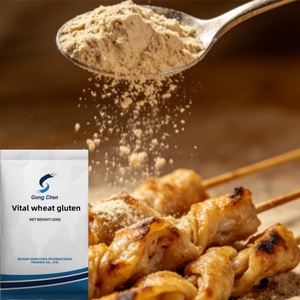
We blend potato starch with vital wheat gluten, xanthan gum, guar gum, or vegetable powders in customized batch-size bags (e.g., 25kg paper sacks with PE liners, or 850kg/1000kg Big Sacks), eliminating manual batching steps on your manufacturing floor.
We manage door-to-door ocean freight and multi-modal transit to primary Swedish commercial ports including Gothenburg (Göteborgs hamn), Helsingborg, and Stockholm. With flexible Incoterms (FOB, CIF, DDP), we ensure just-in-time replenishment schedules.
Instant access to regulatory dossiers supporting Swedish Livsmedelsverket inspections, BRCGS, FSSC 22000, HACCP, Allergen Declarations, and Country of Origin certificates, streamlining vendor approval workflows.
Gain access to quarterly crop reports, global starch price indexes, freight rate analysis, and harvest yield updates, empowering Swedish procurement managers to execute forward contracts at optimal market timing.
Direct technical and commercial answers addressing customs, food safety compliance, and logistics.
Native potato starch is classified under HS Code 1108.13.00. Modified starches fall under HS Code 3505.10.50 (Dextrins and other modified starches). Imports into Sweden are subject to EU common customs duties administered by Swedish Customs (Tullverket).
Depending on annual EU tariff quotas and trade agreements, specific duty rates apply. Our logistics desk provides complete HS code classification guidance and documentation to ensure smooth customs clearance without duty overpayment.
All food-grade potato starch exported to Sweden fully complies with EU Regulation (EC) No 1333/2008 on food additives and Commission Regulation (EU) No 231/2012 laying down specifications for food additives.
Rigorous ICP-MS testing guarantees heavy metals remain well below European maximum limits: Lead (Pb) ≤ 0.1 mg/kg, Arsenic (As) ≤ 0.1 mg/kg, Cadmium (Cd) ≤ 0.1 mg/kg, and Mercury (Hg) ≤ 0.05 mg/kg. Sulfur dioxide (SO2) residue is maintained below 10 mg/kg for standard grades, or zero-added SO2 for organic and clean-label grades.
Direct ocean transit from major Northern Chinese shipping hubs (Qingdao, Tianjin, or Ningbo) to the Port of Gothenburg (Göteborg) typically takes 32 to 38 days. Standard 20-foot Full Container Loads (FCL) hold 20 to 22 metric tons (palletized) or up to 25 metric tons (floor-loaded in 25kg multi-wall paper bags).
For high-volume industrial plants, 40-foot High Cube containers filled with 850kg or 1000kg Big Bags with top-spout discharging are available, optimized for automated pneumatic conveying systems.
Yes. We provide 1kg to 5kg sample packs of native potato starch, pre-gelatinized starch, and modified grades (E1422, E1442) shipped via express courier (DHL/FedEx) directly to your R&D or quality control laboratory within 5 to 7 business days.
Each sample includes a lot-specific Certificate of Analysis and technical data sheet outlining Brabender viscosity profiles, pH, moisture, and particle size distribution.
Native and modified potato starches have an official shelf life of 24 months from the date of manufacture when stored in unopened original packaging. Packages must be kept in a dry, cool, well-ventilated warehouse free from strong odors.
While potato starch is stable at sub-zero temperatures typical of Swedish winters, bags should be allowed to equilibrate to indoor ambient processing temperatures prior to opening to prevent atmospheric moisture condensation inside the bag.
Absolutely. 100% of our potato starch is harvested from traditional non-genetically modified potato tubers grown in China. We supply IP (Identity Preserved) non-GMO declarations alongside third-party PCR laboratory analysis verifying zero presence of GM DNA sequences (35S promoter and NOS terminator negative).
Connect directly with our technical sourcing directors. Request comprehensive technical dossiers, batch sample kits, or volume price quotations tailored for Swedish ports and processing schedules.