
Engineered for high-speed continuous ovens, frozen dough stability, and traditional Japanese confectionery applications. Compliant with MHLW Japan Food Sanitation Act standards.
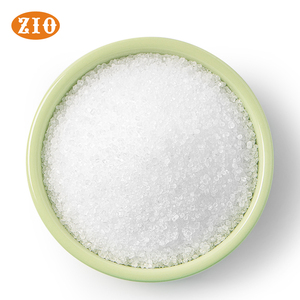
High-purity acidulant used to control $CO_2$ liberation rates in fast-acting chemical leavening systems and preserve crumb moisture in soft bakery products.
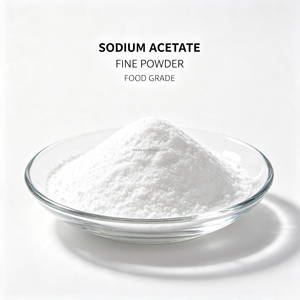
Essential slow and medium-rate leavening acid designed for automated bakery lines, ensuring uniform gas cell structure in Nagoya cake mixes and refrigerated batters.
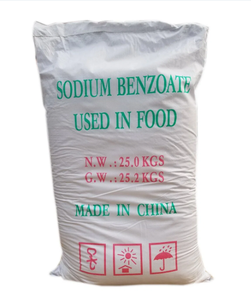
Premium aluminum-free formulation specifically tuned for Japanese soft loaf bread (Shokupan) and high-ratio cakes requiring clean taste and neutral post-bake pH.
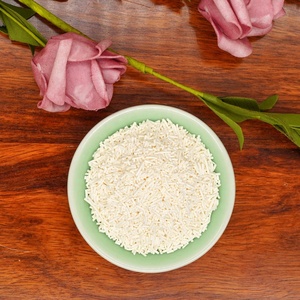
Direct functional substitute for sodium bicarbonate in low-sodium bakery products, providing equivalent $CO_2$ generation without altering crumb elasticity.
Controlled hydrolysis acidulant for steam-baked Wagashi, steamed buns, and delicate sponge cakes where instant chemical reaction must be avoided during batter resting.
Ultra-pure carbon dioxide carrier refined for consistent solubility and uniform gas release in large-scale industrial mixing lines across Aichi food hubs.
High-temperature activation leavening acid designed to provide late oven-spring in long-bake industrial loaf bread, preventing central volume collapse.
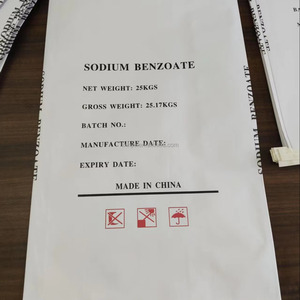
Specialty functional ingredient combining antimicrobial shelf-life extension with non-interfering pH buffers for ready-to-eat packaged Nagoya baked goods.
The industrial bakery ecosystem in Nagoya and the surrounding Aichi Prefecture represents one of Asia's most sophisticated food production networks. Characterized by high-speed production of ultra-soft toast bread (Shokupan), steamed confectioneries (Manju), soufflé pancakes, and long-shelf-life packaged baked goods for national convenience store distribution (7-Eleven, FamilyMart, Lawson), local procurement teams require chemical leavening agents with precise Rate of Reaction (ROR) profiles and flawless regulatory compliance.
Evaluating high-volume ingredient partners for Central Japan requires looking beyond raw material unit costs. Quality Assurance (QA) directors and R&D managers must assess factories based on gas release kinetics, heavy metal limits under the Ministry of Health, Labour and Welfare (MHLW) guidelines, particle size distribution, and humidity resistance during ocean transport into the Port of Nagoya.
| Manufacturer / Supplier | Core Product Specialty | Gas Release Curve (ROR) | Nagoya Logistics Lead Time | Compliance & Certifications |
|---|---|---|---|---|
| AIFI Global Sourcing Network | Custom Aluminum-Free Double-Acting Systems & Clean-Label Leaveners | Tailored ROR 15 - 45 (Controlled Multi-Stage) | Just-in-Time (2-5 Days Local Buffer Stock) | MHLW Japan, ISO22000, HACCP, Kosher, Halal, Organic |
| Chubu Chemical Ingredients Co. | Single-Acting Fast Release Sodium Bicarbonate Blends | Fast ROR 40 - 50 (Instant Hydration) | 1-2 Days (Aichi Warehouse) | JAS Organic Compatible, MHLW Standard |
| Nippon Leavening Industries Ltd. | Phosphate-Based SAPP & Monocalcium Phosphate Formulation | Medium ROR 28 - 35 | 3-5 Days | FSSC22000, Japanese Food Sanitation Act |
| Nagoya Fine Food Additives Corp. | Steamed Bun & Wagashi Slow-Release GDL Systems | Thermally Triggered (Slow Hydrolysis) | 1-2 Days (Local Plant Direct) | MHLW Approved, Halal Certified |
| Asia-Pacific Bio-Ingredients Co. | Low-Sodium Potassium Bicarbonate Industrial Powders | Medium-Fast ROR 30 - 40 | 7-10 Days (Sea Freight via Nagoya Port) | US-FDA, ISO9001, MHLW Inspection Pass |
| Kansai Starch & Chemical Works | Starch-Coated Encapsulated Baking Powders | Controlled Moisture-Barrier Activation | 2-4 Days | HACCP, ISO22000 |
| Tokai Industrial Food Solutions | High-Volume Biscuit & Cracker Ammonium Bicarbonate | Ultra-Fast Thermal Evaporation | 2-3 Days | Japanese Food Additives Codex |
| Global Fine Chemicals Ltd. | Anhydrous Monocalcium Phosphate (AMCP) High-Heat Leavener | Late Bake Trigger (>75°C) | 5-8 Days | FSSC22000, Kosher |
| Aichi Bakery Tech Supplies | Premixed Cake Sponge Aeration Compounds | Balanced Double-Stage ROR 28 | 1-2 Days | MHLW Regulatory Verified |
| Pacific Clean-Label Ingredients | Organic Tartar & Sodium Acid Pyrophosphate Alternatives | Natural Acid-Base Reaction | 7-12 Days | JAS Organic Certified, Non-GMO Project |
*Data curated via supply chain audit records, regional logistics tracking to Aichi Prefecture industrial parks (Komaki, Toyota, Kariya), and technical documentation filings.
Nagoya's baking and confectionery industry occupies a distinctive position in Japan's culinary landscape. From famous regional specialities such as Ogura Toast bread and ultra-airy Japanese Soufflé Pancakes to massive industrial automated bakeries supplying regional convenience retail chains, chemical leavening must perform predictably under exact mechanical shear and thermal profiles.
Nagoya's iconic morning cafe culture relies heavily on thick-cut Shokupan. To achieve ultra-soft crumb density without structural collapse during cooling, industrial bakeries utilize low-ROR Sodium Acid Pyrophosphate (SAPP 28) combined with Anhydrous Monocalcium Phosphate (AMCP). This provides delayed gas generation during the first 5 minutes of oven-spring, ensuring fine, uniform cell walls and maximum loaf height.
Commercial dessert production lines demand extreme aeration stability. Standard fast-acting baking powders release carbon dioxide too early during mechanical whip mixing, leading to batter deflation before griddle baking. Incorporating Glucono-Delta-Lactone (GDL) with Sodium Bicarbonate ensures zero reaction during low-temperature holding, followed by a continuous, gentle expansion when heat hits $70^\circ\text{C}$.
Traditional steamed confections in Aichi require a pure white, unblemished surface and neutral flavor profile. Chemical leaveners containing high sodium or lingering acidic salts leave yellow spots and a metallic aftertaste. Aluminum-Free Monocalcium Phosphate combined with High-Purity Ammonium Bicarbonate guarantees complete volatilization during steam baking, leaving no chemical residue or discoloration.
The food manufacturing sector across Aichi, Gifu, and Mie prefectures is undergoing a major technological transformation. Driven by shifting consumer preferences for health-conscious labels and stringent retail buyer audits, three primary ingredient trends are dominating R&D priorities:
While Japan's MHLW historically permitted trace aluminum potassium sulfate in certain bakery additives, commercial food processors in Nagoya have aggressively phased out aluminum-containing salts due to exporter requirements and consumer wellness advocacy. Factories now strictly mandate certified Aluminum-Free Double-Acting Leavening Systems with heavy metal testing thresholds below 2 ppm.
Central Japan serves as the logistics hub connecting Tokyo and Osaka. Packaged baked goods originating from Nagoya plants often face 5 to 7 days of retail supply chain transit. Chemical leaveners integrated with micro-encapsulated organic acids and hydrocolloids prevent moisture migration during ambient storage, keeping soft breads tender and retarding staling caused by starch retrogradation.
With national health campaigns advocating reduced dietary sodium intake, Nagoya bakery engineers are replacing up to 40% of standard baking soda ($NaHCO_3$) with Potassium Bicarbonate ($KHCO_3$). When paired with specialized organic acid carriers, this achieves identical volumetric expansion while eliminating the bitter potassium metallic note and significantly dropping final sodium values on retail nutrition panels.
Our formulation specialists evaluate Rate of Reaction (ROR), dough rheology, and thermal activation curves specific to your production equipment in Aichi Prefecture.
Addressing technical, regulatory, and logistics concerns raised during vendor qualification by Japanese food manufacturers:
Navigating raw material price volatility, ocean freight disruptions, and tight technical specifications requires an accountable, specification-first ingredient distributor. American International Foods, Inc. (AIFI) combines an extensive portfolio of over 2,500 industrial food ingredients with rigorous supply chain management.
We do not issue quotes based on generic chemical names. Our technical desk matches functionality, moisture levels, particle size distribution, mesh size, and origin directly to your product formulation before contract execution.
To safeguard your factory against regional crop failures, trade tariffs, or port congestion, AIFI maintains pre-audited producer relationships across North America, Europe, and Asia, guaranteeing uninterrupted supply pipelines.
Our food scientists assist technical teams with cost-reduction reformulations, clean-label ingredient conversions, low-sodium adjustments, and functional bench sampling, accelerating product development cycles.
Request our full 2,500+ food ingredient catalog, lot documentation packs, or request a custom quote and bench sample kit for your R&D facility today.