
Direct factory supply of certified organic, non-GMO, and zero-calorie sweetening agents and shelf-life extenders optimized for Parisian food production standards.
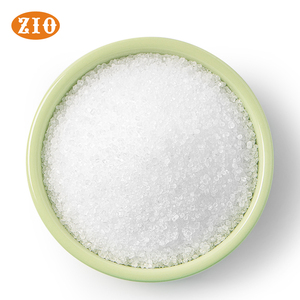
High-purity organic acidulant for pH regulation, flavor enhancement, and anti-crystallization in beverages and confectionery.
Inquire Now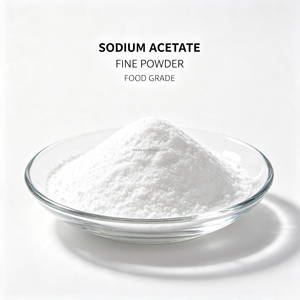
Buffered acidity control agent preventing microbial spoilage in ready-to-eat meals, sauces, and Parisian deli products.
Inquire Now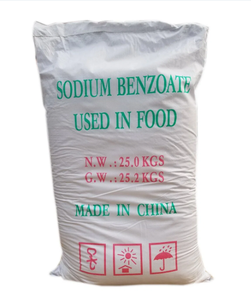
Industrial grade E211 antimicrobial preservative engineered for acidic beverages, syrups, and sweet preserve formulations.
Inquire Now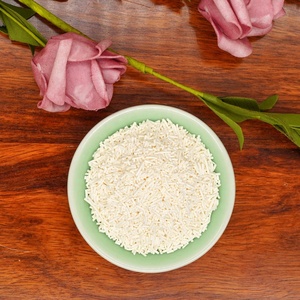
Low-dust E202 yeast and mold inhibitor specifically processed for high-speed industrial bakery and dairy lines.
Inquire Now
Clean-label fruit concentrate acting as a natural sweetening base, pectin source, and natural antioxidant matrix.
Inquire Now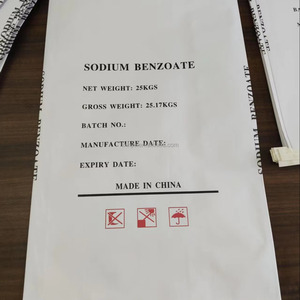
Dust-free white granules offering rapid dissolution for carbonated soft drinks, fruit juices, and flavored waters.
Inquire Now
Aromatic natural preservative and antioxidant imparting subtle warm notes while enhancing shelf-life stability.
Inquire Now
Bio-fermented clean-label antimicrobial polypeptide providing broad-spectrum protection in low-sugar food matrices.
Inquire NowThe food and beverage manufacturing ecosystem in Paris and the broader Île-de-France region is currently experiencing a historic paradigm shift. Driven by stringent European Union public health mandates, updated EFSA safety re-evaluations, and the aggressive expansion of the French Nutri-Score labeling system, commercial food processors face unprecedented pressure to eliminate added sucrose and synthetic high-intensity sweeteners. Procurement teams across Parisian artisanal central kitchens, beverage bottling plants, and industrial bakeries are actively searching for reliable, direct-from-factory partners capable of supplying high-purity natural sweeteners and bio-preservative systems that safeguard sensory integrity while achieving clean-label classification.
As a premier natural sweeteners factory and global exporter serving Paris, our enterprise bridges the gap between raw ingredient synthesis and European regulatory reality. Sweetness is not merely a single sensory attribute; it is an intricate physical matrix involving bulk density, freezing point depression, Maillard browning kinetics, moisture retention, and mouthfeel viscosity. When sugar is removed from a formulation, food scientists cannot simply substitute it with a high-intensity sweetener without triggering severe structural and preservation deficits. Our technical portfolio combines high-performance natural polyols (such as Erythritol and Maltitol), plant-derived glycosides (Stevia Reb M/Reb A, Monk Fruit), and natural acidulants and bio-preservatives (Citric Acid E330, Epsilon-Polylysine, Potassium Sorbate E202) to construct complete, turnkey reformulation systems.
Strategic Advantage for Paris Manufacturers: Formulating with our zero-calorie natural sweeteners and synergistic preservation matrices enables food brands to shift their Nutri-Score rating from C/D to A/B, completely avoiding the French national tax on sugar-sweetened beverages (Taxe sur les boissons sucrées) while preserving a clean, un compromised taste profile.
Achieving superior taste profiles in reduced-sugar food systems requires a detailed understanding of ingredient synergy. Single-source natural sweeteners often exhibit temporal lag, bitter off-notes, or metallic lingering effects. By engineering multi-component sweetener matrices engineered at our manufacturing facility, we replicate the exact sucrose sweetness curve (sugarcane profile) with zero glycemic index impact.
Erythritol (E968) serves as the primary bulking agent in low-calorie Parisian pâtisserie and beverage lines. Produced via natural fungal fermentation of glucose, our ultra-pure crystalline Erythritol possesses a high cooling effect (-43 cal/g) and 70% of the relative sweetness of sucrose. When combined with soluble fibers or hydrocolloids, it delivers the exact texture, mass, and mouthfeel required in fine bakery applications without elevating blood glucose levels. For applications requiring high thermal stability without crystallization, such as chocolate manufacturing and glaze coatings, our food-grade Maltitol provides 90% sucrose sweetness with identical melting behavior.
Extracted from Stevia rebaudiana leaves and refined through advanced chromatographic isolation, our steviol glycosides represent the pinnacle of clean-label sweetening technology. While traditional Rebaudioside A (Reb A 99%) can exhibit slight liquorice-like lingering, our advanced Rebaudioside M (Reb M) directly targets the human hTAS2R38 bitter taste receptors, providing a clean, immediate sweetness profile indistinguishable from refined sugar even at high concentration thresholds in neutral pH beverages.
Sugar is a natural preservative; removing it drastically elevates water activity ($a_w$) and creates micro-environments favorable to fungal and bacterial proliferation. To counteract this, our export catalog incorporates factory-direct Citric Acid Anhydrous E330 and bio-fermented Epsilon-PolyLysine (EPL) Hydrochloride. Citric Acid acts as a master pH regulator, sequestrant, and flavor sharpener, lowering the system pH to suppress microbial growth while sharpening fruit flavor notes. Simultaneously, Epsilon-Polylysine—a naturally occurring cationic peptide derived from Streptomyces albulus fermentation—disrupts bacterial cell membranes without altering the flavor of delicate Parisian sweet goods.
Paris is the culinary capital of Europe, where traditional craftsmanship intersects with high-volume industrial processing. Our natural sweetener systems are engineered to meet the stringent functional specifications of distinct local food industries:

Replicating the Maillard reaction, moisture retention, and structural crumb density in keto Croissants, sugar-free Brioche, and lower-calorie Macarons using custom Erythritol-Inulin blends.

Zero-sugar botanical infusions, sparkling juices, and kombuchas formatted with Stevia Reb M and Citric Acid Anhydrous to bypass the French sugar tax while retaining crisp taste.

High-end dark chocolate, pralines, and fruit jellies utilizing Maltitol and Hawthorn Puree bases to deliver smooth snap, gloss, and natural antioxidant density.

Low-GI French yogurts, mousse au chocolat, and protein-enriched desserts stabilized with Potassium Sorbate E202 and natural fruit purees for extended ambient shelf life.

Balanced sweet-and-savory condiments, salad dressings, and fruit spreads using Sodium Acetate and Benzoate for total microbiological control without artificial flavor lingering.

Alcoholic beverage sweetening systems providing specific gravity management, clarity stabilization, and post-fermentation preservation across French cider and spirit producers.
Navigating global supply chains requires an export partner with verifiable operational transparency, absolute quality assurance, and robust regulatory compliance. As a leading B2B ingredient manufacturer and global exporter, our supply program eliminates procurement vulnerabilities for European buyers.
We maintain dual-sourcing manufacturing capabilities and secondary reserve warehouses across Europe and Asia, guaranteeing uninterrupted ingredient supply even during global freight or agricultural disruptions.
Every shipment bound for Paris is dispatched with comprehensive documentation packages: Certificates of Analysis (COA) per batch, Heavy Metal Analysis, Pesticide Residue Screens, Allergen Disclosures, Kosher, Halal, Non-GMO Project Verification, and EU Organic Certificates.
We supply natural sweeteners in tailored particle sizes—from extra-fine 100-mesh powders for instant beverage dissolution to granular specifications optimized for automated bakery hoppers and dry blending facilities.
Our food technologists collaborate directly with your bench scientists in Paris, offering precise dosage calculations, synergy matrices, and lab-scale sampling to accelerate your product development cycle.
The business case for integrating natural sweeteners into Parisian food manufacturing is reinforced by three powerful market drivers:
Santé Publique France and European steering committees have tightened the Nutri-Score algorithm. Added sugars are now penalized more heavily, while fiber and protein content receive stricter evaluation. Products that previously enjoyed a "B" rating under high sugar loads now risk falling to "D" unless reformulated with zero-calorie bulking agents like Erythritol and high-potency sweeteners like Stevia.
Parisian consumers possess high food literacy. Scannable consumer apps like Yuka immediately flag synthetic additives like Aspartame, Sucralose, or Acesulfame-K with low safety scores. Transitioning to 100% plant-derived natural sweeteners and bio-fermented preservatives ensures green ratings on consumer channels, defending brand equity.
France levies a progressive tax on beverages containing added sugars or artificial sweeteners. By utilizing certified natural zero-calorie sweetener matrices, beverage producers drastically lower tax liabilities per hectolitre, boosting gross margins while presenting a healthier choice to end consumers.
Below are technical and commercial responses to common inquiries from ingredient buyers across France:
In accordance with EFSA regulations and European Parliament Regulation (EC) No 1333/2008, approved natural sweetener options include Erythritol (E968), Sorbitol (E420), Maltitol (E965), Xylitol (E967), and Steviol Glycosides (E960a/E960c including Reb A and Reb M). All our sweetener shipments to Paris comply fully with maximum residue levels, purity standards, and specified food category usage limits.
Our manufacturing sites operate under FSSC 22000 and ISO 22000 food safety management systems. Every production lot undergoes rigorous HPLC testing, microbiological assays, and heavy metal screening. Full batch traceability allows us to track raw materials back to their farm or synthesis origin. Certified COAs are transmitted digitally prior to vessel arrival at Port du Havre or CDG Logistics Hub.
Erythritol provides 70% of sugar's sweetness and shares a similar crystalline structure, but it does not undergo Caramelization or Maillard browning at standard baking temperatures. To achieve identical browning, crust formation, and moisture retention in fine pastries, our R&D team recommends blending Erythritol with small quantities of natural fructooligosaccharides (FOS) or rare sugars like Allulose where permitted, paired with precise moisture adjustment.
We offer versatile commercial terms including CIF Le Havre, FOB main ports, or DDP (Delivered Duty Paid) directly to your warehouse address in Greater Paris. Standard sea freight transit time from our primary factory terminal to Le Havre is typically 22–26 days, supported by buffer stock stored at our European warehouse network for urgent 48-hour JIT replenishment.
No. Epsilon-PolyLysine (EPL) Hydrochloride is effective at extremely low inclusion rates (typically 10 to 50 ppm). At these functional concentrations, it is completely odorless and tasteless, providing powerful broad-spectrum antimicrobial action against Gram-positive/Gram-negative bacteria and yeasts without interfering with delicate vanilla, butter, or botanical flavor notes.
Absolutely. We provide complimentary 500g–2kg sample kits for verified commercial manufacturers in France. Our technical application team is available to sign non-disclosure agreements (NDAs) and co-develop custom sweetener-preservative premixes targeted to your exact target specifications, cost goals, and Nutri-Score targets.