Leading the Food Ingredient Supply Chain  |  2,500+ Ingredients · 48 States

Cocoa Butter Factories & Supplier Serving Nigeria

Industrial Sourcing Whitepaper: Pure Prime Pressed & Deodorized Cocoa Butter Solutions, Physical-Chemical Standardization, Tropical Shelf-Life Preserving Systems, and NAFDAC-Compliant West African Logistics

100%
Pure Cocoa Fats
33–35°C
Controlled Melt Point
NAFDAC
Audit & Clearance Ready
2,500+
Global Ingredients Stocked

Essential Ingredients & Preservative Systems for Nigerian Processors

High-purity functional ingredients engineered to stabilize cocoa butter, lipid matrices, baked goods, and confectioneries under West African tropical climatic conditions.
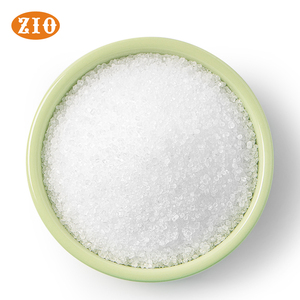
Citric Acid Anhydrous E330
Natural Preservative Citric Acid Anhydrous E330 for Food Beverage
Pharmaceutical and food-grade acidulant. Acts as a chelating agent and pH regulator in cocoa butter emulsification and beverage stabilizing systems.
Send an Inquiry
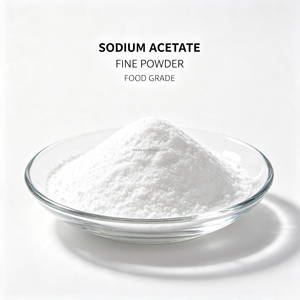
Anhydrous Sodium Acetate
High Purity 99% Anhydrous Sodium Acetate Food Grade Powder CAS 127-09-3
Buffering salt and mold-inhibiting preservative designed for extended shelf-life in humid processing environments across West Africa.
Send an Inquiry
Sodium Benzoate Preservatives
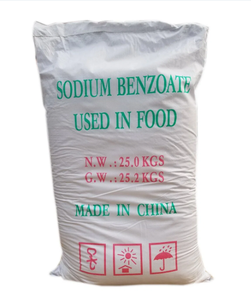
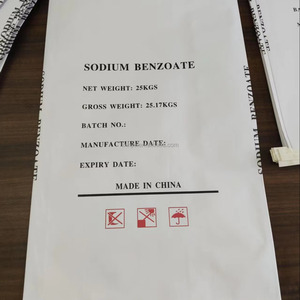
Sodium Benzoate Preservatives & Sweeteners Powder Food Grade 25kg Drum CAS 532-32-1
High-potency antimicrobial preservative preventing yeast and fungal spoilage in water-in-oil emulsions, shortenings, and flavorings.
Send an Inquiry
Potassium Sorbate 99% Granules
Food Grade Potassium Sorbate 99% Granules Preservative For Bakery Cheese 25kg
Widely utilized preservative for controlling mold and fungal activity in chocolate fillings, confectionery compounds, and baked lipids.
Send an Inquiry
Natural Pure Hawthorn Fruit Puree
100% Natural Pure Hawthorn Fruit Puree Preservatives HACCP & ISO Certified
Natural botanical antioxidant extract rich in bioflavonoids, ideal for clean-label confectionery and fruit-filled chocolate products.
Send an Inquiry
Food Grade Sodium Benzoate Preservative E211
Food Grade Sodium Benzoate Preservative E211 High Purity White Granule Kosher Halal
Dust-free white granular sodium benzoate for rapid dissolution in liquid phases, certified Halal and Kosher for international distribution.
Send an Inquiry
Cinnamic Acid Powder CAS 140-10-3
Preservative & Antioxidants Food Grade Low Prices Cinnamic Acid Powder CAS 140-10-3
Aromatic organic compound providing potent lipid oxidation resistance and thermal stability in specialty cocoa butter fats.
Send an Inquiry
Natural Food Preservative 95% Epsilon-PolyLysine
Novenzyme Supply Natural Food Preservative 95% Epsilon-PolyLysine (EPL) Hydrochloride
Biodegradable biopreservative with broad-spectrum activity against Gram-positive/negative bacteria in ultra-sensitive food applications.
Send an Inquiry

Technical Excellence in Bulk Cocoa Butter Supply

Understanding the physics of cocoa butter polymorphism, crystallization control, and supply chain integrity for the West African industrial corridor.

Polymorphic Form V Optimization

Cocoa butter exists in six distinct polymorphic crystal structures ($\text{I}$ to $\text{VI}$). Our factories precise-temper batches to maximize Stable Beta Form $\text{V}$ ($\beta_{\text{V}}$), ensuring clean snap, high gloss, and optimal bloom resistance in Nigerian ambient heat.

Deodorized vs. Natural PPP

We supply both Natural Pure Prime Pressed (PPP) cocoa butter retaining characteristic chocolate aroma, and Fully Deodorized Cocoa Butter (PPP-D) engineered for neutral cosmetic bases and non-flavored pharmaceutical ointments.

NAFDAC & Quality Audit Ready

Every metric ton shipped to Lagos or Port Harcourt includes a complete Certificate of Analysis (COA), heavy metals screening, Free Fatty Acid (FFA $< 1.75\%$) verification, Peroxide Value ($PV < 1.0\text{ meq/kg}$), and Halal/Kosher documentation.

Industrial Technical Guide & Sourcing Analysis

1. The Chemical Structure and Crystallization Kinematics of Cocoa Butter

Cocoa butter (CAS No. 8002-31-1) is a complex, naturally occurring vegetable fat extracted from the beans of Theobroma cacao. Unlike standard vegetable oils or animal fats that display broad melting trajectories, pure cocoa butter exhibits a uniquely sharp melting profile around human body temperature ($34\text{–}35^\circ\text{C}$). This physical phenomenon is dictated by its dominant triacylglycerol (TAG) structure, composed predominantly of three symmetrical monounsaturated triglycerides:

  • POP (1-palmitoyl-2-oleoyl-3-palmitin): Comprising approximately 15–20% of total fat content.
  • POS (1-palmitoyl-2-oleoyl-3-stearin): Comprising approximately 35–40% of total fat content.
  • SOS (1-stearoyl-2-oleoyl-3-stearin): Comprising approximately 25–30% of total fat content.

Because these three glycerides account for over 80% of the entire lipid matrix, cocoa butter solidifies into highly predictable crystalline structures. For industrial chocolate manufacturers and cosmetic formulators in Nigeria, controlling polymorphic behavior during processing is critical to prevent thermal softening, structural collapses, or fat bloom (the migration of un-crystallized liquid lipids to the surface forming white streaks).

Polymorphic Crystal Form Melting Temperature Range (°C) Crystallization Kinetics & Properties Industrial Application Impact
Form I ($\gamma$) 16.0 – 18.0 °C Unstable rapidly formed solid via flash cooling. Undesirable; causes soft, sticky texture.
Form II ($\alpha$) 21.0 – 22.0 °C Loose packing; converts rapidly to Form III. Unstable intermediate phase.
Form III ($\beta'$) 25.5 – 27.0 °C Fine crystalline packing; moderate stability. Used in fast-setting coatings; low heat resistance.
Form IV ($\beta'$) 27.5 – 29.0 °C Denser packing; transforms slowly into Form V. Pre-cursor stage during classical chocolate tempering.
Form V ($\beta_1$) 32.0 – 34.5 °C Optimal stable packing; deep gloss, high snap, bloom resistance. Industry Gold Standard for Chocolates & Suppositories.
Form VI ($\beta_2$) 36.0 – 36.5 °C Most thermodynamically stable; dull finish, crumbly. Occurs naturally after prolonged storage/fat bloom.

2. Localized Application Scenarios Across Nigerian Manufacturing Hubs

As the largest economy in West Africa, Nigeria exhibits strong demand for bulk industrial cocoa butter across multiple manufacturing corridors, notably the Ikeja Industrial Zone, Agbara Estates in Ogun State, and Port Harcourt. Our tailored cocoa butter supplies cater to four primary industrial sectors:

A. Confectionery and Industrial Chocolate Manufacturing

In high-speed molding and enrobing plants producing chocolate bars, biscuits, and compound coatings, cocoa butter provides the essential continuous fat phase. In Nigeria’s climate, where ambient factory temperatures frequently exceed $32^\circ\text{C}$, maintaining thermal tolerance is paramount. Formulators utilize our high-SFI (Solid Fat Index) cocoa butter combined with precise percentages of organic acidifiers such as Citric Acid Anhydrous E330 to sequester metal ions, preventing premature oxidative rancidity in warm storage warehouses.

B. Cosmetics and Personal Care Formulations

Nigeria's personal care sector consumes vast quantities of Refined Deodorized Cocoa Butter for skin creams, lotions, and traditional body balms. Cocoa butter's high concentration of natural fatty acids (stearic, palmitic, and oleic acids) offers superior occlusive skin hydration, forming a protective lipid barrier against environmental moisture loss. Deodorized cocoa butter is heavily preferred here because it allows perfumers to add complex fragrances without interference from natural cocoa odors.

C. Pharmaceutical Suppositories and Topicals

Pharmaceutical compounding plants in West Africa rely on Pure Prime Pressed Cocoa Butter as a natural base for rectal and vaginal suppositories. Due to its precise melt profile ($33.5^\circ\text{C}\text{–}35.5^\circ\text{C}$), the cocoa butter base remains completely solid at ambient tropical temperatures ($25\text{–}30^\circ\text{C}$) yet melts smoothly inside the human body at $37^\circ\text{C}$, releasing active pharmaceutical ingredients (APIs) with high bioavailability.

D. Commercial Bakery & Specialty Fat Blends

Industrial bakeries incorporate deodorized cocoa butter fractions into premium laminated pastries, cookies, and shortbreads. The sharp melting point produces clean flavor release without leaving a greasy mouthfeel (palate cling), while adding natural crispness to high-temperature baked goods.

3. Localized Development & Market Trends in Nigeria

The Nigerian industrial market is undergoing rapid evolution driven by economic reforms, foreign exchange shifts, and regulatory tightening. Key macroeconomic and technical trends shaping cocoa butter procurement include:

  • Import Substitution & Backward Integration: The Nigerian Federal Government’s push for domestic value addition has incentivized food and beverage conglomerates to source cocoa butter from certified processing factories that can guarantee consistent specifications year-round.
  • Rigorous NAFDAC Compliance Requirements: The National Agency for Food and Drug Administration and Control (NAFDAC) has heightened scrutiny on imported and locally processed vegetable fats. Parameters such as Heavy Metal limits (Lead $< 0.1\text{ mg/kg}$, Arsenic $< 0.1\text{ mg/kg}$), Mycotoxins (Aflatoxin $B_1 < 2\text{ }\mu\text{g/kg}$), and Microbiological counts (Salmonella absent in $25\text{g}$) are rigorously enforced at Apapa and Tin Can Island ports.
  • Clean-Label Preservative Integration: Due to elevated heat and relative humidity ($RH > 85\%$) in Southern Nigeria, free water condensation inside packaging can trigger hydrolysis, spiking Free Fatty Acid (FFA) levels. Processors are increasingly adopting multi-functional preservative blends—combining Potassium Sorbate granules with bio-based preservatives like Epsilon-PolyLysine (EPL)—to maintain microbiologically stable water-in-oil fillings.
  • Cold-Chain & Reefer Logistics Optimization: Transitioning from standard dry container freight to temperature-controlled flexi-tanks and reefer containers ($18\text{–}22^\circ\text{C}$) during maritime transit from global plants to Lagos, preventing fat melt-and-refreeze cycles during port clearance delays.

4. Enterprise Supply Chain Architecture & Quality Assurance

Operating as a primary wholesale supplier serving West Africa, our supply framework is designed around operational continuity, risk mitigation, and strict specification adherence. Manufacturers partnering with us gain direct access to an integrated global sourcing infrastructure:

  • Multi-Origin Factory Sourcing: Sourcing from audited cocoa processing facilities across West Africa, Southeast Asia, and South America to ensure constant inventory availability regardless of regional cocoa bean crop yields.
  • 100% Documented Batch Assurance: Every delivery container is tied to its originating lot with full traceability data, including Certificate of Analysis (COA), ISO 22000 / FSSC 22000 verification, Kosher, and Halal certifications.
  • Technical R&D Formulation Support: Our benchtop formulation specialists assist Nigerian R&D teams in calculating solid fat content (SFC) curves, optimizing tempering parameters, and solving bloom issues in cocoa butter substitute (CBS) or butter oil blends.

Frequently Asked Questions (FAQ) for Procurement in Nigeria

Practical answers addressing technical specifications, logistics, NAFDAC clearance, and payment terms for Nigerian commercial buyers.

What are the standard physical-chemical specifications of your cocoa butter?
Our pure cocoa butter meets stringent international FCC and CODEX standards: Free Fatty Acid (FFA as Oleic Acid) $\le 1.75\%$, Peroxide Value $\le 1.0\text{ meq O}_2/\text{kg}$, Iodine Value (Wijs) $33\text{--}42\text{ g I}_2/100\text{g}$, Saponification Value $188\text{--}198\text{ mg KOH/g}$, Melting Point $33.0\text{--}35.0^\circ\text{C}$, and Moisture & Volatile Matter $\le 0.10\%$. Detailed specification sheets are provided prior to contract signing.
How do you prevent cocoa butter melt and degradation during shipping to Lagos ports?
For ocean freight to Apapa or Tin Can ports, we utilize refrigerated reefer containers set at a constant $18\text{--}20^\circ\text{C}$ with controlled relative humidity. Solid block cocoa butter is packaged in 25kg corrugated cartons lined with heavy-duty polyethylene food-grade liners, protecting the fat block from moisture ingress, oxidation, and elevated ambient sea vessel temperatures.
What documentation is supplied for NAFDAC registration and customs clearance in Nigeria?
Each shipment is supported by a comprehensive documentation package tailored for Nigerian customs and NAFDAC CRIA (Clean Report of Inspection and Analysis) compliance: Batch Certificate of Analysis (COA), Certificate of Free Sale (CFS), Health/Sanitary Certificate, Phytosanitary Certificate, ISO/HACCP Quality Certifications, Heavy Metals & Mycotoxin Test Reports, and Packing Lists with country-of-origin identification.
What are the recommended payment terms and Form M commercial protocols?
We work closely with Nigerian industrial buyers to support standard trade finance procedures, including Confirmed Irrevocable Letters of Credit (L/C at sight) or Telegraphic Transfer (T/T) terms tied to Form M opening via accredited Commercial Banks and the Central Bank of Nigeria (CBN) portal. Proforma Invoices include exact HS Codes (e.g., HS 1804.00.00 for Cocoa Butter) for smooth e-Form M approval.
Can your preservatives be blended directly into cocoa butter and fat fillings?
Yes. While pure cocoa butter has extremely low water activity ($a_w < 0.3$), confectionery fillings, pralines, and cosmetic emulsions containing cocoa butter require preservation. Our food-grade Potassium Sorbate 99% Granules and Sodium Benzoate E211 can be dissolved into the aqueous phase during emulsification to effectively halt mold, yeast, and bacterial growth under West Africa's high humidity.
What is the shelf life and optimal storage condition for bulk cocoa butter in West Africa?
When stored in original unopened packaging away from direct sunlight at temperatures between $15^\circ\text{C}$ and $20^\circ\text{C}$ with relative humidity below $50\%$, pure deodorized and PPP cocoa butter has a certified shelf life of 24 months from the production date. In Nigerian facilities lacking full ambient climate control, keeping cartons elevated off concrete floors on wooden/plastic pallets in well-ventilated, shaded warehouses is essential to preserve fat integrity.

Partner with a Global Ingredient Supplier Engineered for Production Reality

Submit your target specification, annual metric tonnage requirement, and desired delivery port in Nigeria. Our technical sales engineering team will prepare competitive landed pricing, documentation packs, and batch samples within 24 hours.

Send an Inquiry