
ISO & HACCP Certified Raw Materials Shipped Direct from Manufacturing Units to Panama (Balboa & Manzanillo Ports)
Optimizing Microbial Stability, Emulsion Yield, and Lipid Oxidation Control under Tropical Ambient Processing Conditions
Technical Insight for Panama Processors: Panama's ambient high relative humidity (>80%) and elevated temperatures ($30^\circ\text{C}-35^\circ\text{C}$) pose severe challenges to raw meat stability, emulsion rheology, and fat oxidation. Industrial meat processors in Panama City, Colón Free Zone, and David require targeted acidulants, bio-preservatives, and antioxidant synergistic blends that maintain water activity ($a_w \le 0.92$) without compromising sensory profile or muscle protein solubility.
The primary objective of industrial meat additives in tropical sausage (embutidos), cured meats (cecina), and canned meat formulations is the regulation of ionic strength, pH buffering, and microbial cellular inhibition. Meat proteins—specifically myosin and actin—exhibit optimal swelling and water-binding capacity at pH ranges between 5.8 and 6.2. However, spoilage bacteria such as Listeria monocytogenes, Pseudomonas spp., and Clostridium perfringens proliferate rapidly under Panama's humid climate if the osmotic pressure and organic acid concentrations are uncalibrated.
By incorporating high-purity functional salts like Anhydrous Sodium Acetate (CAS 127-09-3) and Potassium Sorbate Granules, meat formulators create a robust barrier system (Hurdle Technology). Sodium acetate dissociates into acetate ions within the intracellular matrix of pathogens, collapsing the proton motive force without causing acid-induced denaturation of ground meat proteins. Simultaneously, non-synthetic cationic antimicrobials such as Epsilon-PolyLysine (EPL) Hydrochloride electrostatic interact with bacterial cell membranes, yielding broad-spectrum protection in cooked and emulsified pork and beef products.
| Ingredient & E-Number | CAS Number | Key Functional Role in Meat Systems | Recommended Usage Level | Target Pathogens / Spoilage Agents |
|---|---|---|---|---|
| Citric Acid Anhydrous (E330) | 77-92-9 | Chelating agent, pH acidulant, antioxidant synergist | 0.05% – 0.20% | Pro-oxidative trace metals ($Fe^{2+}$, $Cu^{2+}$) |
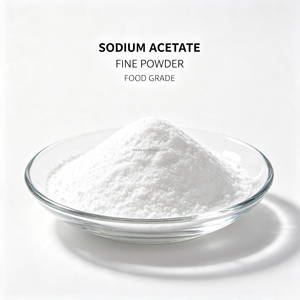
| Anhydrous Sodium Acetate | 127-09-3 | Diacetate buffer, shelf-life extension, color stabilization | 0.15% – 0.40% | Listeria monocytogenes, Psychrotrophic bacteria |
| Potassium Sorbate (E202) | 24634-61-5 | Mycostatic agent, surface spray/casing dip preservative | 0.10% – 0.25% | Molds, yeasts (Penicillium, Aspergillus in dry cured sausages) |
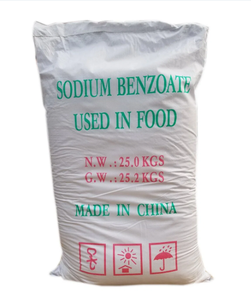
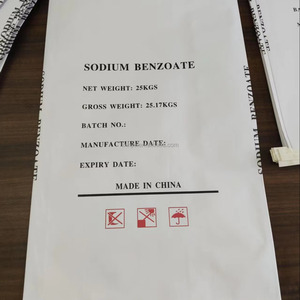
| Sodium Benzoate (E211) | 532-32-1 | Antimicrobial salt for pickled & cured meat brines | 0.05% – 0.10% | Acid-tolerant bacteria, fermentation yeast control |
| Cinnamic Acid Powder | 140-10-3 | Natural lipid antioxidant, aromatic antimicrobial agent | 0.02% – 0.08% | Lipid oxidation (TBA values control), Gram-positive microbes |
| Epsilon-PolyLysine (EPL) HCl | 28211-04-3 | Bio-preservative hydrocolloid adjunct, clean-label antimicrobial | 0.01% – 0.05% | Heat-resistant spore formers, Escherichia coli, Staphylococcus |
Formulation Engineering Tailored for Regional Panama Products, Process Lines, and Storage Requirements
Fresh ground pork sausages in Central America are subject to rapid discoloration (metmyoglobin formation) and rancidity due to high tropical temperatures during regional transport. Incorporating Cinnamic Acid and Citric Acid Anhydrous acts as a dual-action radical scavenger and metal chelator, retaining vibrant red oxymyoglobin pigments for over 21 days under refrigerated display.
High-speed vacuum cutter lines processing mortadella, frankfurters, and bologna in Panama require stable fat-water emulsions. Utilizing Sodium Acetate Powder maintains optimal ionic strength during protein extraction while mitigating purge loss during thermal processing and vacuum packing.
Panama's atmospheric moisture makes dry meat products susceptible to mold growth during air drying and aging. Application of Potassium Sorbate 99% Granules via brine injection or casing surface spray prevents fungal mycotoxin development without altering traditional smoky flavor profiles.
Supply Chain Optimization, Clean Label Shifts, and Colón Free Zone Re-Export Advantages
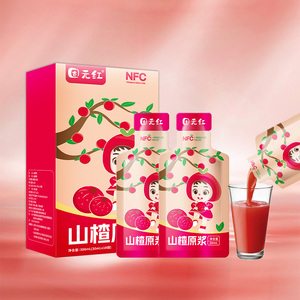
Meat processors across Latin America are substituting synthetic nitrites and parabens with natural bio-preservatives like Epsilon-PolyLysine (EPL) and botanical extract combinations (Hawthorn fruit puree blends). Buyers in Panama demand clean declaration lists ("E-Free" or natural preservative claims) to meet evolving consumer standards in major supermarket chains.
Panama serves as the primary logistics consolidation hub for Latin America. Direct China factory export containers arriving at the Port of Manzanillo or Port of Balboa are routinely stored in the Colón Free Zone for tariff-free breaking of bulk, re-labeling, and JIT re-exporting to Colombia, Costa Rica, Guatemala, and the Caribbean islands.
Inflationary pressure on raw meat cuts has forced Panama food manufacturers to seek direct manufacturing partners in China for raw additives. Sourcing ingredients directly eliminates distributor markups, reducing landed batch costs by 18% to 32% while retaining full compliance with APA (Agencia Panameña de Alimentos) standards.
A Globally Audited China Factory & Direct Exporter Dedicated to Food & Beverage Industrial Sourcing
Every single batch shipped to Panama is accompanied by complete documentation sets: Certificate of Analysis (COA), Technical Data Sheet (TDS), Allergen Declarations, Heavy Metal Analysis, GMO-Free Statements, Kosher, and Halal Certifications. Quality teams can execute sanitary import permits with MINSA and APA without delays.
Our specialized R&D application lab features dedicated meat technologists. We offer custom functional dry blending—combining preservatives, acidulants, and phosphates into single-bag micro-ingredient packs to eliminate batching errors in your meat processing plant.
Raw material markets experience price fluctuations. Our supply chain intelligence provides buyers in Panama with regular market updates on raw chemical feedstocks, ocean freight rates from Ningbo/Shanghai to Panama, and strategic buffer stock agreements to hedge against ocean freight disruptions.
Detailed Regulatory, Operational, and Logistics Guidance for Direct China Importation