
High-purity, batch-tested raw materials customized for chocolate molding, gummy matrix stabilization, acidulated candy coating, and clean-label shelf-life extension.
Luxembourg occupies a uniquely high-value position within the Western European confectionery sector. Situated strategically between Belgium, Germany, and France, the Grand Duchy hosts sophisticated chocolate artisans, industrial praline manufacturers, specialized bakery houses, and contract food re-packers. To maintain consumer trust and navigate strict European Food Safety Authority (EFSA) mandates, procurement executives in Luxembourg require complete supply integrity, immediate traceability, and strict specification conformity.
As a premier Chinese direct-factory manufacturer and global industrial ingredient distributor, our organization bridges the gap between large-scale raw material synthesis in China and precision manufacturing requirements in Europe. Sourcing wholesale confectionery ingredients—ranging from organic acidulants like Citric Acid Anhydrous E330 to bio-fermented antimicrobials such as Epsilon-PolyLysine (EPL) Hydrochloride—demands more than just low unit pricing. It necessitates guaranteed molecular purity, stable water activity ($a_w$) performance, zero heavy-metal residue, and flawless compliance with EU Regulation (EC) No 1333/2008 on food additives.
We eliminate supply chain opacity through direct manufacturing oversight, multi-origin logistics routing, and rigorous scientific laboratory validation.
Every batch of Citric Acid, Sodium Benzoate, or Sorbate is pre-tested for mesh dispersion, particle distribution, trace metals (Arsenic, Lead, Mercury < 1ppm), and moisture parameters prior to container loading.
Eliminate quality control bottlenecks. Shipments to Luxembourg arrive fully documented with Certificate of Analysis (COA), Allergen Statements, Non-GMO declarations, Kosher/Halal badges, and EFSA compliance reports.
Leveraging direct sea lines from Qingdao and Shanghai to Port of Rotterdam and Port of Antwerp, seamlessly connecting with rail express straight into Bettembourg Dry Port, Luxembourg.
Compare key functional properties, E-numbers, and recommended application ratios across our core confectionery ingredient line.
| Ingredient Name | E-Number / CAS | Primary Confectionery Function | Typical Usage Level | Key Formulation Benefit |
|---|---|---|---|---|
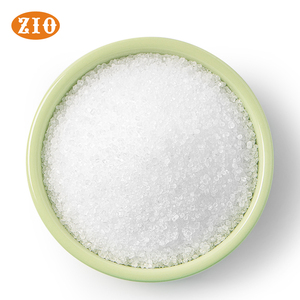
| Citric Acid Anhydrous | E330 / 77-92-9 | Acidulant, Flavor Enhancer, Inversion Agent | 0.1% - 1.2% | Prevents sugar crystallization; delivers sharp sour profile in fruit gummies. |
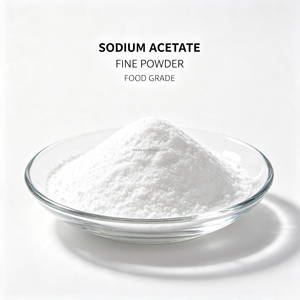
| Sodium Acetate Anhydrous | E262 / 127-09-3 | pH Buffer, Flavor Modifier, Preservative | 0.05% - 0.4% | Buffers high-acid syrup matrices; prevents premature pectin gelation. |
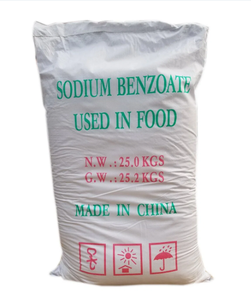
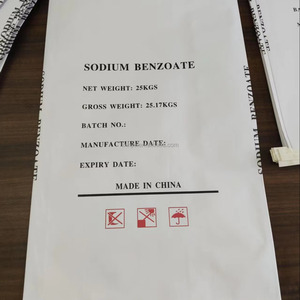
| Sodium Benzoate (Powder/Granule) | E211 / 532-32-1 | Antimicrobial, Yeast & Mold Inhibitor | 0.015% - 0.1% | Extends shelf life in high-moisture fondant fillings and fruit pastes. |
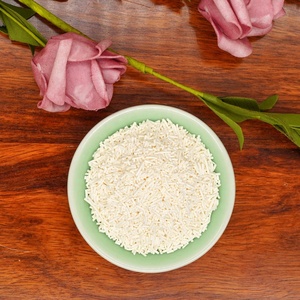
| Potassium Sorbate Granules | E202 / 24634-61-5 | Fungal Inhibitor, Water Activity Stabilizer | 0.05% - 0.2% | Highly soluble; neutral taste impact in chocolate pralines and marzipan. |
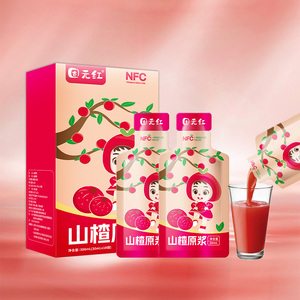
| Natural Hawthorn Puree | Natural Botanical | Clean-Label Preservative & Natural Colorant | 1.5% - 5.0% | Replaces artificial additives with rich organic polyphenols and natural pectin. |
| Cinnamic Acid Powder | CAS 140-10-3 | Flavor Precursor, Natural Antioxidant | 0.001% - 0.05% | Enhances cinnamon/spiced aromatic notes in dark chocolate and baked goods. |
| Epsilon-PolyLysine (EPL) HCl | Bio-Ferment / 28211-04-3 | Broad-Spectrum Bio-Preservative | 0.002% - 0.02% | Thermally stable, clean-label active against Gram-positive/negative bacteria. |
Precision functional ingredients engineered to resolve real-world processing challenges across Luxembourg’s regional food manufacturing nodes (Luxembourg City, Esch-sur-Alzette, Differdange, and Dudelange).
Luxembourgish pralines are famed for rich dairy cream centers. However, high water activity ($a_w > 0.75$) creates significant susceptibility to mold bloom and hydrolytic rancidity during export distribution across the Schengen zone.
Industrial gummy processing lines require sharp pH management ($pH\ 3.2 - 3.5$) to trigger gelatin/pectin set speeds while maintaining crisp flavor clarity and avoiding sugar inversion during high-temperature cooking.
Luxembourg consumers increasingly demand "Clean-Label" and "E-Number Free" confectionery labels. Traditional synthetic preservatives like E211 are undesirable in premium organic product tiers.
Automated baking lines producing stuffed waffles, soft biscuits, and pastry rolls face rapid bacterial staling and mold growth due to thermal processing limits on sensitive creams.
Confectionery consumers across the European Union, specifically within Benelux countries, are heavily scrutinizing ingredient lists. The push to reduce synthetic additives (such as artificial colors and harsh chemical preservatives) has driven food scientists to adopt naturally derived bio-antimicrobials. Epsilon-PolyLysine (EPL) Hydrochloride has emerged as a landmark ingredient. Produced via natural streptomyces fermentation, EPL is readily digested by the human body into essential lysine amino acids, fulfilling strict clean-label consumer demands while providing broad-spectrum inhibition against yeast, molds, and bacteria.
As Luxembourg manufacturers reformulate recipes to lower sugar content in response to health trends, they face a critical thermodynamic challenge: sugar acts as a primary osmotic preservative by lowering free water content ($a_w$). When sugar is reduced or replaced by polyols (maltitol, erythritol), water activity spikes, vastly increasing microbiological risk. The strategic introduction of high-efficiency preservatives like Potassium Sorbate E202 and precision acidulants like Citric Acid Anhydrous E330 restores osmotic equilibrium without adding unwanted calories or altering target sweetness profiles.
Importing raw materials into Luxembourg requires strict adherence to European Commission directives. All food additives must conform to purity criteria outlined in Regulation (EU) No 231/2012. Our China-based manufacturing hubs operate state-of-the-art HPLC, ICP-MS (Inductively Coupled Plasma Mass Spectrometry), and GC-MS testing facilities. We guarantee that heavy metals, pesticides, residual solvents, and polycyclic aromatic hydrocarbons (PAHs) strictly comply with lower European limits, ensuring seamless customs clearance at Antwerp, Rotterdam, or Luxembourg Airport Cargo Center.
Direct technical answers regarding order quantities, compliance, documentation, and European delivery logistics.
Secure stable raw material supply, lower direct purchasing costs by 15-25%, and back your manufacturing line with verified EU food grade documentation.