
Precision-engineered clouding agents, bio-preservatives, acidulants, and functional food additives manufactured for high-shear beverage processing across Southeast Asia.
In the competitive non-alcoholic liquid refreshers market across Southeast Asia, beverage emulsions serve as the vital backbone for conferring visual opacity, mouthfeel, flavor distribution, and long-term physical stability. A beverage emulsion is a thermodynamically unstable colloidal system comprising two immiscible liquids—typically a hydrophobic oil phase (containing citrus oils, flavoring aromatics, or clouding agents) dispersed thoroughly within a hydrophilic aqueous continuous phase (containing water, liquid sugar, polyols, and hydrocolloids).
For industrial beverage manufacturers operating in tropical climates such as Kuala Lumpur, Shah Alam, and the wider Klang Valley region, maintaining physical stability across extended shelf-lives of 12 to 24 months presents unique physical-chemical challenges. Ambient warehouse temperatures in Malaysia frequently hover between 28°C and 35°C with relative humidity exceeding 80%. Under these environmental stressors, sub-optimal beverage emulsions rapidly succumb to breakdown phenomena including gravitational creaming, flocculation, coalescent droplet growth, and Ostwald ripening.
Technical Insight: Ostwald ripening occurs when smaller oil droplets dissolve into the aqueous continuous phase and re-deposit onto larger droplets due to chemical potential differences. Advanced microfluidization technology from leading Chinese beverage emulsion factories reduces mean droplet diameter to under 0.8 microns, utilizing weighting agents like Sucrose Acetate Isobutyrate (SAIB) or Ester Gum to match phase densities perfectly and eliminate ringing in RTD bottles.
To prevent phase separation without compromising mouthfeel, China's premier wholesale manufacturers employ synergistic hydrocolloid networks. Modified Food Starches (such as Octenyl Succinate Anhydride / OSA Starch), Gum Arabic (Acacia), and Quillaia Saponins are precisely matched to the target beverage's specific Brix, acid profile, and pasteurization thermal load.
Cold-water soluble hydrophobic starches providing exceptional interfacial tension reduction, high oil-load capacity (up to 15%), and superior pasteurization stability in acidic carbonated soft drinks (CSDs).
High-potency clean-label surfactants derived from Quillaja saponaria bark. Effective at low dosages (0.05%), resistant to low pH (<2.5), and optimal for clear-to-cloudy functional waters.
Precisely balanced SAIB and Ester Gum formulations engineered to match the specific gravity of citrus terpene oils (0.84 g/cm³) to the final beverage sugar matrix (1.03–1.08 g/cm³).
Kuala Lumpur serves as the industrial hub for beverage manufacturing in Malaysia, housing state-of-the-art bottling plants, co-packers, and regional R&D centers in nearby logistics corridors like Port Klang, Puchong, and Rawang. Sourcing high-grade beverage emulsions and food preservatives directly from China manufacturers empowers local bottlers to tailor their product lines precisely to local consumer palates and regulatory standards.
Malaysia's heritage RTD tea market (including Chrysanthemum tea, Winter Melon, Herbal Tea, and Lemon Black Tea) demands crystal-clear stability or uniform natural cloudiness without sediment settling. Thermal processing via Ultra-High Temperature (UHT) sterilization at 135°C–140°C can destabilize standard flavor oils. Utilizing heat-stable China-manufactured beverage cloudifiers and bio-preservatives like Epsilon-PolyLysine (EPL) Hydrochloride ensures microbial safety while retaining natural volatile aromatics without chemical off-notes.
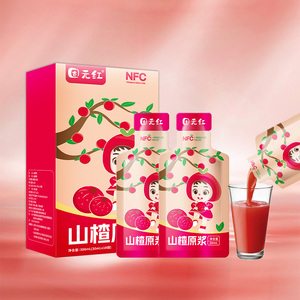
Local juice formulations incorporating Mango, Calamansi, Guava, Lychee, and Hawthorn Puree demand cloud retention agents that mimic authentic fruit pulp density. Blending natural fruit bases with emulsified neutral clouding systems creates an appealing, opaque appearance that resists acid hydrolysis. Incorporating high-purity Citric Acid Anhydrous E330 and Potassium Sorbate 99% Granules maintains microbiological stability against osmotolerant yeasts and molds in high-Brix cordials stored at room temperature.
The fast-paced urban lifestyle in Kuala Lumpur fuels massive consumption of isotonic hydration drinks and carbonated flavored sodas. In carbonated systems, beverage emulsions must resist shearing during carbonation pressure injection (3.0 to 4.2 volumes of CO2) and prevent "neck-ringing" inside PET bottles. China wholesale manufacturers supply specialized orange, lemon-lime, and sarsaparilla emulsions equipped with micro-encapsulated terpenes that unlock burst-aroma releases upon cap depressurization.
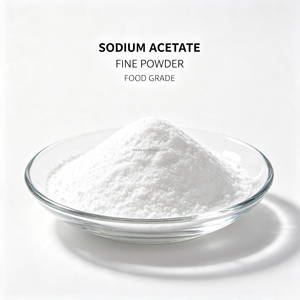
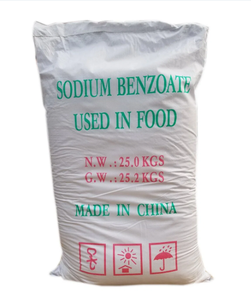
With Southeast Asia being the epicentre of coconut processing, Kuala Lumpur beverage plants frequently formulate RTD coconut water, coconut milk drinks, and soy/oat milk beverages. The high lipid content of coconut fat requires specialized emulsifier-stabilizer blends (Mono- and Diglycerides paired with Sodium Benzoate and Sodium Acetate) to inhibit lipid oxidation, prevent phase separation, and extend commercial shelf-life under warm tropical distribution channels.
Selecting the optimal combination of functional preservatives and emulsifying additives depends heavily on beverage pH, thermal processing, packaging material, and target shelf life. The following matrix illustrates recommended engineering parameters for common beverage applications in Malaysia:
| Beverage Category | Target pH Range | Primary Preservative / Additive | Emulsification Hydrocolloid | Regulatory Compliance |
|---|---|---|---|---|
| RTD Asian Herbal Teas | 4.5 – 6.2 | Epsilon-Polylysine (EPL) / Sodium Acetate | Acacia Gum / OSA Starch | JAKIM Halal |
| Tropical Fruit Juices & Nectars | 2.8 – 3.8 | Citric Acid Anhydrous / Potassium Sorbate | Natural Fruit Puree + Quillaia | JAKIM Halal |
| Isotonic & CSD Sodas | 2.5 – 3.2 | Sodium Benzoate E211 / Cinnamic Acid | OSA Starch + SAIB Weighting | High Shear Stable |
| Coconut & Plant Milk RTD | 6.0 – 6.8 | Sodium Acetate Anhydrous / EPL | Surfactant Emulsions + Distilled Monoglycerides | JAKIM Halal |
Sourcing food ingredients into Kuala Lumpur requires navigating a sophisticated regulatory ecosystem governed by the Ministry of Health Malaysia (Food Safety and Quality Division - FSQD) and the Department of Islamic Development Malaysia (JAKIM). China wholesale suppliers with established trade corridors into Port Klang provide distinct compliance advantages for local procurement directors.
Malaysia possesses one of the world's most stringent Halal certification systems. Beverage emulsions containing alcohols (used as flavor carriers) or animal-derived emulsifiers face immediate rejection. Top China export manufacturers utilize 100% synthetic or plant-derived hydrocolloids, vegetable-grade fatty acids, and grain-fermented citric acid certified by recognized international Halal bodies (such as MUI, CICOT, or cSHC) that enjoy mutual recognition with JAKIM Malaysia.
Following Malaysia's implementation of the excise duty ("Sugar Tax") on sugar-sweetened beverages (SSBs) exceeding 5g of sugar per 100ml, beverage brands in Kuala Lumpur have aggressively reformulated towards low-sugar, stevia, and erythritol-sweetened profiles. However, removing sucrose significantly reduces beverage viscosity and mouthfeel. Advanced China clouding emulsions incorporate high-molecular-weight polysaccharides that restore tactile density and natural opacity without adding caloric sugar load.
Under the Regional Comprehensive Economic Partnership (RCEP), food additives, acidulants, and beverage emulsions originating from China enter Malaysia at zero or significantly reduced customs tariffs. Direct sea-freight shipping lanes from ports such as Guangzhou, Shenzhen, or Ningbo arrive at Northport / Westport in Port Klang within 5 to 7 days, enabling just-in-time (JIT) inventory management for factories in the Selangor industrial zone.
Partnering directly with an established China beverage emulsions factory bridges the gap between raw chemical procurement and specialized application engineering. Enterprise manufacturers operate automated cleanroom processing lines adhering to international quality frameworks:
Utilizing APV and Niro Soavi homogenizers at pressures up to 1,000 bar (14,500 psi) to achieve tight, monodisperse droplet size distributions centered under 0.5 microns.
Every batch undergoes rigorous quality testing including Laser Diffraction Particle Size Analysis (Malvern Mastersizer), Turbidimetry, HPLC assay for preservatives, and heavy metal ICP-MS.
In-house flavorists and colloid chemists match benchmark product samples within 72 hours, adjusting opacity, color index, pH, and flavor delivery to exact client specifications.
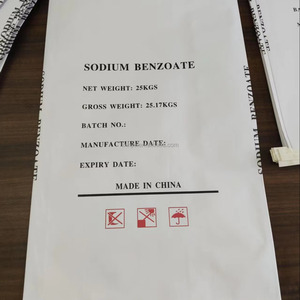
For standard wholesale preservatives (such as Sodium Benzoate, Citric Acid Anhydrous, or Potassium Sorbate), our standard MOQ is 1 Metric Ton (40 drums or 40 bags of 25kg). For specialized custom flavor emulsions or concentrated clouding agents, MOQs start as low as 500 kg, packaged in food-grade IBC totes or 25kg aseptic drums.
Our beverage emulsions are micro-homogenized to sub-micron particle sizes (<0.8 µm) and density-balanced using high-purity weighting agents. This prevents creaming and phase separation even under ambient warehousing conditions exceeding 30°C. For long-term storage, we recommend cool, dry indoor storage out of direct sunlight.
Yes. All products listed in our export catalog—including natural preservatives, acidulants, and synthetic/natural emulsions—are produced in facilities certified by internationally accredited Halal certification authorities recognized by JAKIM Malaysia. Full Halal documentation is provided with every shipment lot.
Shipments depart weekly from major Chinese ports (Guangzhou, Nansha, Shekou, Ningbo) directly to Port Klang (Northport/Westport). Ocean transit time is approximately 5 to 7 days. Customs clearance and local transport to industrial estates in Shah Alam, Klang, Rawang, or Seri Kembangan typically require an additional 2 to 3 business days.
Absolutely. Our application laboratory in China offers complimentary sample matching services. Clients in Kuala Lumpur can send a target beverage sample (200ml) or detailed physical specifications (NTU turbidity units, Brix, pH, color coordinates). Our technical team will formulate a matching emulsion prototype within 3 to 5 business days.