High-purity, spec-verified food additives direct from tier-1 Chinese manufacturing hubs to Hanoi's expanding food processing and beverage industries.
Understanding the chemical mechanics, solubility thermodynamics, and supply chain logistics connecting top Chinese production hubs to Hanoi's industrial ecosystem.
Sodium Benzoate (C7H5NaO2 | CAS 532-32-1) remains one of the most widely deployed antimicrobial food preservatives across global industrial food production. In the rapidly modernizing food manufacturing sector of Northern Vietnam—anchored by the Hanoi capital region and surrounding industrial corridors in Bac Ninh, Hung Yen, Hai Duong, and Haiphong—demand for consistent, food-grade E211 has surged. Sourcing directly from China's top tier-1 manufacturing facilities offers Vietnamese blenders, beverage plants, and sauce producers unmatched cost efficiencies and chemical stability, provided that rigorous quality control and import compliance guidelines are maintained.
The antimicrobial activity of sodium benzoate is strictly dependent on the pH of the food matrix. As a salt of benzoic acid, sodium benzoate dissolves readily in water to release sodium ions and benzoate ions. However, the active antimicrobial species is the undissociated benzoic acid molecule. Benzoic acid has a dissociation constant ($pKa$) of 4.20. At pH levels below 4.5, the equilibrium shifts dramatically toward the undissociated form, allowing the uncharged molecule to readily cross the lipophilic cellular membranes of yeasts, molds, and pathogenic bacteria.
Once inside the neutral microbial cytoplasm, the molecule dissociates, releasing protons ($H^+$) and accumulating benzoate anions. This internal acidification disrupts cellular homeostasis, inhibits essential glycolytic enzymes (specifically phosphofructokinase and alpha-ketoglutarate dehydrogenase), and exhausts microbial ATP as the cell attempts to pump out excess protons. Consequently, sodium benzoate displays optimal efficacy in acidic environments ($pH\ 2.5 - 4.5$), making it the gold-standard preservative for carbonated beverages, fruit juices, fermented sauces, pickling liquors, and acidic condiments.
| Preservative Agent | E-Number / CAS | Optimal pH Range | Target Microorganisms | Water Solubility (20°C) | Key Application Spectrum |
|---|---|---|---|---|---|
| Sodium Benzoate | E211 / 532-32-1 | 2.5 – 4.5 | Yeasts, Molds, Acid-tolerant Bacteria | ~660 g/L | Beverages, Sauces, Fish Sauce, Pickles |
| Potassium Sorbate | E202 / 24634-61-5 | 3.0 – 6.5 | Molds, Yeasts, Specific Bacteria | ~585 g/L | Bakery, Cheese, Wines, Condiments |
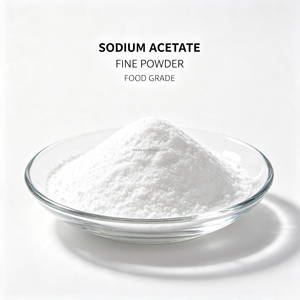
| Sodium Acetate (Anhydrous) | E262i / 127-09-3 | 4.5 – 6.5 | Spoilage Bacteria, Gram-Negative Microbial | ~465 g/L | Meat Processing, Seasoning Blends, Buffers |
| Epsilon-PolyLysine (EPL) | INS 261 / 28211-04-3 | 4.0 – 9.0 | Broad Spectrum (Gram+ / Gram- Bacteria) | Highly Soluble | Clean-Label Meats, Rice Products, Prepared Meals |
Leading Chinese chemical manufacturers produce sodium benzoate primarily through the catalytic liquid-phase oxidation of toluene with molecular oxygen. This process yields high-purity benzoic acid, which is subsequently neutralized with sodium hydroxide ($NaOH$) and crystallized into either fine powder or free-flowing dust-free granules.
For high-spec B2B buyers in the Hanoi market, verifying the manufacturing route is crucial to preventing off-odors (such as residual chlorinated impurities or trace aromatic hydrocarbon contaminants). Direct sourcing from top Chinese factories utilizing cobalt-manganese oxidation catalysts ensures an assay purity exceeding 99.5%, compliant with US Pharmacopeia (USP), European Pharmacopoeia (EP), Food Chemicals Codex (FCC), and China's National Standard GB1886.28-2016.
Precision formulation guidelines tailored to the unique climate, storage conditions, and culinary traditions of Northern Vietnamese food processors.
Hanoi and the surrounding Red River Delta host numerous industrial producers of Fish Sauce (Nước Mắm), Soy Sauce (Nước Tương), and Chili Sauce (Tương Ớt). Given Northern Vietnam's high ambient humidity, sodium benzoate (E211) is applied at 0.05% to 0.1% levels to prevent wild yeast secondary fermentation and surface mold development without altering authentic umami profiles.
The local charcuterie market in Northern Vietnam relies heavily on processed pork items such as Chả Lụa (Vietnamese pork sausage) and Nem Chua. Factory formulators combine sodium benzoate with Anhydrous Sodium Acetate or Potassium Sorbate to achieve synergistic control over Listeria monocytogenes and lactic acid spoilage strains during cold-chain transport across Hanoi's urban centers.
With Hanoi experiencing booming consumption of RTD green teas (Trà Xanh), winter melon teas, and fruit juices, sodium benzoate serves as an economical cold-fill microbial barrier. Formulators typically combine 0.025% E211 with Citric Acid E330 to drop pH below 3.8, ensuring shelf stability across non-refrigerated distribution kiosks in Vietnam.
Industrial scale pickling facilities supplying Hanoi supermarkets require consistent preservative addition to arrest excessive acidification in pickled mustard greens, bamboo shoots, and garlic cloves. Sodium benzoate stabilizes brine matrices under tropical temperatures, extending crispness and shelf life.
Beyond food manufacturing, Hanoi’s satellite industrial zones house major personal care and cosmetic manufacturing clusters. High-purity sodium benzoate is utilized as an anti-fungal preservative in shampoos, liquid soaps, and wet wipe solutions, replacing controversial parabens under strict EU and ASEAN Cosmetic Directive guidelines.
Pharmaceutical compounding plants in Hanoi utilize USP/EP grade sodium benzoate as an antimicrobial agent in oral liquid cough syrups, pediatric suspensions, and topical solutions where microbiological safety is paramount.
Navigating Circular 24/2019/TT-BYT, RCEP trade advantages, and modern industrial supply chain demands in Hanoi.
Food ingredient buyers in Hanoi operate under the regulatory oversight of the Vietnam Food Administration (VFA) under the Ministry of Health. Circular 24/2019/TT-BYT governs food additive management, aligning Vietnam closely with Codex Alimentarius standards. For sodium benzoate (E211), Maximum Permitted Levels (MPLs) vary from 250 mg/kg in specialized dairy beverages up to 1,000 mg/kg in liquid condiments and processed fish products.
Purchasing teams must ensure every incoming container from Chinese factories includes a fully verified Certificate of Analysis (COA) explicitly stating heavy metal thresholds (Lead $\le 2\text{ mg/kg}$, Arsenic $\le 3\text{ mg/kg}$) to clear customs smoothly at Haiphong Port and avoid quarantine delays at Hanoi ICD inland depots.
Modernized automated processing facilities in Hanoi's industrial parks (such as VSIP Bac Ninh or Thang Long Industrial Park II) are increasingly transitioning from traditional sodium benzoate fine powder to spherical dust-free granules. Granular E211 improves plant hygiene, eliminates airborne dust explosion risks, reduces worker inhalation hazards, and delivers superior dissolution rates in high-shear automated mixing tanks.
As consumer demand for reduced sodium and cleaner labels grows across Hanoi's urban centers, manufacturers are adopting dual-preservative systems. Blending sodium benzoate with potassium sorbate (E202) or natural biopreservatives like Epsilon-PolyLysine (EPL) allows formulators to reduce overall chemical preservative loads by up to 40% while expanding the spectrum of microbial inhibition across a broader pH band.
Under the Regional Comprehensive Economic Partnership (RCEP), Chinese sodium benzoate exports to Vietnam benefit from favorable tariff structures. Logistics corridors connecting major chemical manufacturing bases in Shandong, Jiangsu, and Sichuan directly to Haiphong Port or overland through Guangxi/Lao Cai border checkpoints offer Hanoi manufacturers transit lead-times as short as 3 to 7 days, significantly outperforming Western import timelines.
Integrated ingredient distribution structured for operational reliability, technical precision, and audit compliance.
Every lot is backed by comprehensive documentation: Certificate of Analysis (COA), Technical Data Sheets (TDS), Allergen Statements, GMO Declarations, Heavy Metal Analysis, and certified Halal & Kosher documentation required for export markets.
We maintain strategic reserve inventory in bonded warehouses in Haiphong and regional distribution hubs near Hanoi, guaranteeing uninterrupted production continuity even during global shipping disruptions or seasonal demand surges.
Our technical team assists procurement and R&D staff with dosage optimization, solubility troubleshooting, sensory impact studies, and custom blending (e.g., pre-mixed Sodium Benzoate + Potassium Sorbate formulations).
Essential insights covering customs clearance, minimum order quantities, storage protocols, and quality verification for industrial buyers in Northern Vietnam.
For standard FCL (Full Container Load) shipments dispatched from main Chinese ports (Qingdao, Shanghai, Ningbo) to Haiphong Port, maritime transit takes approximately 3 to 5 days. Customs clearance and inland trucking to Hanoi industrial parks (Bac Ninh, Hung Yen, Thang Long) usually require an additional 2 to 3 business days. For urgent requirements, local buffer stock can be dispatched directly from our regional warehouses within 24 hours.
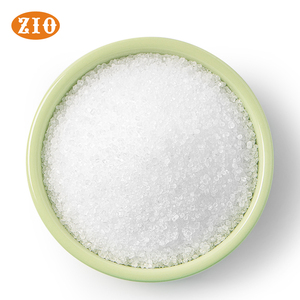
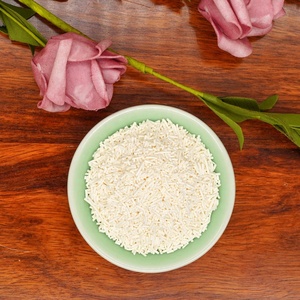
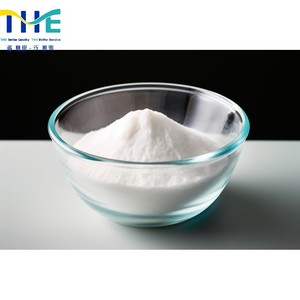
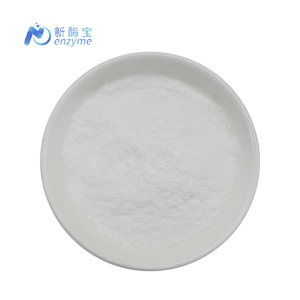
We supply sodium benzoate in three primary physical formats: (1) Free-Flowing Granules (dust-free, ideal for automated hoppers and rapid dissolution), (2) Fine Powder (80-100 mesh, suitable for dry blending and seasoning formulations), and (3) Noodles/Extruded Flakes (low-density format for specialized liquid batching). All forms maintain identical 99.5% minimum chemical purity standards.
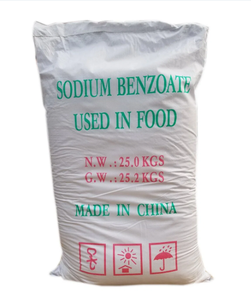
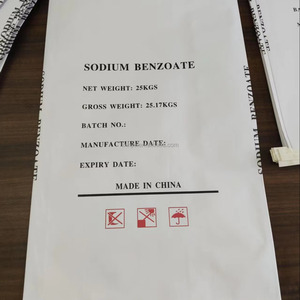
Sodium benzoate is hygroscopic and will absorb moisture if exposed to high ambient relative humidity (>75%), leading to caking. Our export packaging features multi-wall 25kg Kraft paper bags or polyethylene woven bags lined with a heavy-duty hermetically sealed PE inner liner (25kg net weight or 500kg jumbo bags). We recommend storing pallets in a cool, dry, ventilated warehouse off concrete floors, away from direct sunlight.
Every shipment is accompanied by a full audit pack: Commercial Invoice, Packing List, Bill of Lading, Certificate of Origin (Form E for RCEP tariff preferences), Batch-Specific Certificate of Analysis (COA), Product Specification Sheet (TDS), Safety Data Sheet (SDS in English/Vietnamese), and Halal/Kosher certificates where applicable. This ensures seamless registration under Circular 24/2019/TT-BYT.
Direct ocean-freight factory orders start at 1 metric ton (LTL/consolidated container shipment). For optimal landed cost efficiency in the Hanoi market, 20-foot Full Container Loads (FCL) carrying 17 to 20 metric tons (palletized or unpalletized) are recommended. Sample quantities (1kg to 5kg) are available for bench testing and initial trial batches.
Yes. Our China manufacturing partners operate cleanroom custom dry-blending lines. We can provide customized pre-compounded ratios (e.g., 50:50 Sodium Benzoate / Potassium Sorbate or custom preservative-acidulant masterbatches), reducing inventory handling steps and batching errors inside your Hanoi production facility.
All tier-1 Chinese factories we represent employ High-Performance Liquid Chromatography (HPLC) and Atomic Absorption Spectroscopy (AAS) to verify purity assay and detect heavy metal traces. Upon arrival in Vietnam, buyers can cross-validate samples with independent accredited laboratories in Hanoi such as QUATEST 1 or Eurofins Vietnam.
We support flexible trade financing structures including Telegraphic Transfer (T/T), Irrevocable Letters of Credit at sight (L/C at sight), and Usance L/C for qualified volume buyers in Northern Vietnam. Transactions can be settled in USD, EUR, or RMB depending on your corporate treasury requirements.
Request technical specifications, sample kits, landed cost quotes for Haiphong Port, or schedule a technical consultation with our chemical application team today.