
Comprehensive B2B ingredient catalog engineered for commercial bakeries, food processing facilities, fast-food pre-mixes, and personal care formulations.

In the global food ingredient supply chain, the demand for high-performance, double-acting chemical leavening agents has expanded exponentially. As food processors, industrial bakeries, and consumer packaged goods (CPG) brands navigate rising raw material costs, shifting trade tariffs, and stringent clean-label mandates, Southeast Asia has emerged as a critical manufacturing epicenter. Specifically, baking powders factories and factory networks in Vietnam have positioned themselves at the forefront of modern dry-blending technology, chemical chemical synthesis, and custom contract manufacturing (OEM/ODM).
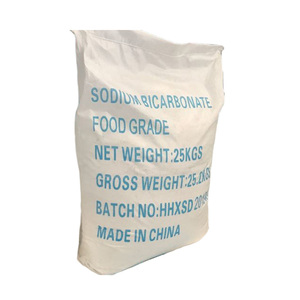
Vietnam’s chemical and food processing infrastructure has undergone a massive technological upgrade over the past decade. Industrial zones near key logistics ports such as Hai Phong in the North and Ho Chi Minh City (Cat Lai / Cai Mep) in the South host world-class manufacturing facilities equipped with automated pneumatic conveying, precise micro-dosing systems, high-shear dry-blenders, and climate-controlled cleanrooms. These facilities produce high-purity sodium bicarbonate ($\text{NaHCO}_3$), ammonium bicarbonate ($(\text{NH}_4)\text{HCO}_3$), aluminum-free acidulant systems, and customized functional bakery premixes that comply with US FDA, EU Regulation (EC) No 1333/2008, and international Halal/Kosher standards.
A major technical vulnerability in commercial baking powder is premature gas release caused by high relative humidity ($\text{RH} > 75\%$) and ambient storage temperatures exceeding $30^\circ\text{C}$. Modern Vietnamese manufacturing plants solve this by integrating micro-encapsulation technology—coating reactive sodium bicarbonate or slow-reacting acidulants (such as Sodium Acid Pyrophosphate / SAPP) with hydrogenated vegetable oils or specialized starches. This delays chemical activation until thermal thresholds are reached inside commercial deck or tunnel ovens.
To evaluate a manufacturing partner or factory in Vietnam, procurement executives and food scientists must understand the precise chemical formulations and gas-release kinetics required for various food matrix applications. Baking powder is fundamentally a dry chemical leavening mixture composed of three core components:
| Leavening Acid Component | Chemical Formula / Abbreviation | Bench Rate of Reaction (21°C) | Oven Activation Temp (°C) | Primary Application Matrix |
|---|---|---|---|---|
| Monocalcium Phosphate | MCP / $\text{Ca(H}_2\text{PO}_4)_2$ | Fast ($60\% - 70\%$) | Immediate upon hydration | Quick breads, pancakes, single-acting mixes |
| Sodium Acid Pyrophosphate 28 | SAPP-28 / $\text{Na}_2\text{H}_2\text{P}_2\text{O}_7$ | Medium-Slow ($26\% - 30\%$) | $55^\circ\text{C} - 65^\circ\text{C}$ | Standard bakery baking powder, cake batters |
| Sodium Acid Pyrophosphate 40 | SAPP-40 / $\text{Na}_2\text{H}_2\text{P}_2\text{O}_7$ | Fast Bench ($38\% - 42\%$) | $40^\circ\text{C} - 50^\circ\text{C}$ | Doughnuts, refrigerated doughs, fast-acting batters |
| Glucono-Delta-Lactone | GDL / $\text{C}_6\text{H}_{10}\text{O}_6$ | Controlled Hydrolysis | $30^\circ\text{C} - 80^\circ\text{C}$ (gradual) | Organic, clean-label, sodium-reduced baking |
| Ammonium Bicarbonate | $(\text{NH}_4)\text{HCO}_3$ | Zero (No acid needed) | $>60^\circ\text{C}$ (thermal decomp.) | Low-moisture biscuits, crackers, crispy cookies |
By adjusting the balance between fast-acting acidulants (which create initial gas bubbles during mixing) and slow-acting acidulants (which expand those bubbles during baking), Vietnamese factory chemical engineers customize the bench tolerance and volume expansion of doughs to match exact commercial production lines.
Factories in Vietnam do not merely assemble standardized raw ingredients; they specialize in customized functional blends adapted to local climate demands, raw material characteristics (such as high-protein vs. low-protein flours), and cultural consumption preferences across ASEAN, East Asia, Europe, and North America.
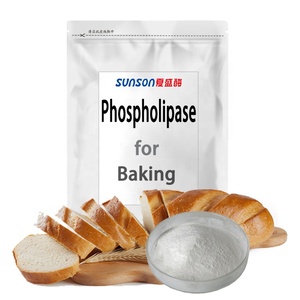
Vietnam's legendary bread culture demands a thin, crackly crust paired with an exceptionally airy, light crumb structure. Local factories manufacture specialized dough improver and chemical leavening synergies incorporating Phospholipase Enzyme Powder and fast-acting baking powders. This combination strengthens gluten networks, improves gas retention during short fermentation cycles, and delivers superior oven spring.
In large-scale biscuit factories across Vietnam (serving brands across Asia), European Food Grade Ammonium Bicarbonate is the gold standard leavening agent. Because ammonium bicarbonate leaves zero chemical salt residue when baked below $5\%$ moisture, it prevents off-flavors and yields an ultra-crispy, flaky crumb structure without toughening dough matrices.
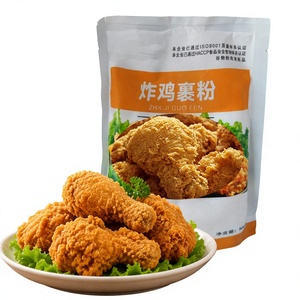
The booming QSR (Quick Service Restaurant) sector across Southeast Asia relies heavily on specialized Fried Chicken Coating Powders & Breading Mixes. Vietnamese blending plants formulate tailored leavening systems using high-temperature SAPP and modified tapioca starches to create micro-blisters in the batter. This achieves long-lasting crunch under heat lamps and minimizes oil absorption.
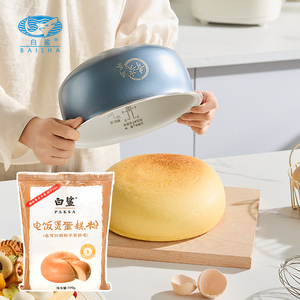
Catering to modern urban households and micro-bakery businesses across Asia, factories in Vietnam produce convenient premixes like the White Shark Rice Cooker Sponge Cake Powder. Formulated with emulsifiers and heat-stable double-acting baking powder, these mixes achieve optimal overrun and sponge expansion using standard rice cookers or domestic steamers.
Vietnamese chemical and cosmetic manufacturing plants leverage ultra-fine milling and air-classification technologies to produce high-purity mineral powders such as Custom Private Label Loose Setting Powders. Applying micro-particle engineering techniques originally refined for baking ingredient flowability, cosmetic grade loose powders deliver oil-absorption, silky texture, and matte finishing for global beauty brands.
As global supply chains diversify away from traditional single-source countries, Vietnam's chemical ingredient sector has capitalized on strategic opportunities by adopting green manufacturing, clean-label compliance, and advanced automation.
Historical reliance on Sodium Aluminum Sulfate (SAS) or Sodium Aluminum Phosphate (SALP) has declined dramatically due to international health regulations restricting dietary aluminum intake (specifically under European Food Safety Authority guidelines). Vietnamese baking powder factories have upgraded production lines to manufacture 100% Aluminum-Free Baking Powders using pure Monocalcium Phosphate, SAPP, and GDL formulations, packaged in moisture-barrier 25kg industrial multi-wall kraft bags.
Vietnam is one of the world's largest exporters of premium tapioca (cassava) starch. Local baking powder factories take advantage of immediate proximity to native and modified tapioca starch processing plants. Tapioca starch exhibits superior moisture-binding capacity, lower gelatinization temperatures, and a neutral flavor profile compared to cornstarch, making Vietnamese baking powder blends highly resilient against humidity-induced cake lump formation during storage.
Modern commercial bakeries aim to remove chemical-sounding additives from ingredient labels. In response, Vietnamese R&D laboratories lead the region in combining traditional chemical leaveners with bio-catalysts such as Phospholipase, Fungal Alpha-Amylase, and Xylanase enzymes. These bio-enzymatic baking powders allow industrial bread producers to reduce chemical sodium usage while simultaneously improving volume, dough extensibility, and shelf-life softness.
Integrating a direct manufacturer or audited supply partner from Vietnam into your enterprise supply chain offers measurable strategic benefits across quality, cost, and risk mitigation:
Every single batch produced undergoes rigorous quality control testing—including laser particle size analysis (mesh size), moisture content titrations (Karl Fischer), available $\text{CO}_2$ gas volume testing, and heavy metal screening (ICP-MS) before releasing Certificates of Analysis (COA).
Quality and compliance teams receive complete, turn-key documentation packages for every shipment: Lot Traceability Reports, Technical Data Sheets (TDS), Safety Data Sheets (SDS), Allergen Statements, GMO-Free Declarations, as well as Kosher and Halal Certifications.
Operating through major deep-water ports (Haiphong, Da Nang, Cat Lai), Vietnamese supplier networks provide flexible shipping terms (FOB, CIF, DDP, CFR) with established container shipping lines to ensure reliable just-in-time (JIT) delivery to North America, Europe, Australia, and the Middle East.
This technical FAQ addresses key operational, regulatory, and procurement questions raised by commercial buyers, purchasing agents, and food technologists evaluating baking powder factories in Vietnam.