
Vetted, audit-ready functional ingredients engineered for stability, texture retention, and shelf-life extension across food, beverage, and chemical processing.
Guar gum (E412, CAS 9000-30-0) remains one of the world's most versatile, cost-effective hydrocolloids. Derived from the endosperm of the leguminous guar plant (Cyamopsis tetragonoloba), this natural galactomannan polymer possesses exceptional water-binding, cold-water swelling, and viscosity-building properties. For commercial food manufacturers, industrial blenders, and pharmaceutical formulators, establishing direct partnerships with top trusted guar gum factories and audited suppliers is paramount to overcoming regional crop volatility, physical mesh variance, and microbiological instability.
Modern supply chains require more than transactional purchasing; they demand an end-to-end technical partnership. As a premier industrial food ingredient distributor managing nationwide logistics across 48 states with over 2,500 active portfolio ingredients, our sourcing matrix combines direct primary-origin refining oversight with rigorous domestic staging.
Guar gum functionality is dictated by its 1:2 ratio of D-galactose to D-mannose units. Understanding how mesh size and hydration speed influence viscosity yields optimized yield in automated processing lines.
| Grade Category | Mesh Size (Particle) | Viscosity (2% Sol, 25°C) | Hydration Rate | Primary Industrial Application |
|---|---|---|---|---|
| Food Grade Standard 200 Mesh | 200 Mesh (95% pass) | 3,500 – 5,000 cPs | Standard (2 hours) | Baked goods, dairy beverages, processed meats, frozen desserts. |
| High Viscosity Premium 200 | 200 Mesh (98% pass) | 5,500 – 7,500 cPs | Rapid (1 hour) | Synergistic Blends Clean-label dressings, low-fat sauces, mayo substitute. |
| Fast Hydration Industrial | 200 – 250 Mesh | 4,000 – 6,000 cPs | Ultra-Fast (<10 mins) | Oilfield fracturing fluids, high-speed automated bakery hydration systems. |
| Coarse Mesh Food Grade | 80 – 100 Mesh | 3,000 – 4,500 cPs | Controlled / Slow | Pet food gravy, instant soups, extruded feeds needing minimal dust. |
| Depolymerized / Low Viscosity | 100 – 200 Mesh | 500 – 1,500 cPs | Instant | High-fiber functional nutrition drinks, pharmaceutical binder solutions. |
Guar gum exhibits powerful non-covalent synergistic interactions when combined with other plant hydrocolloids and biopolymers. When paired with Xanthan Gum, it forms a pseudo-plastic viscous network capable of suspending heavy solids in salad dressings without imparting a gummy mouthfeel. When combined with Native & Modified Starches, guar gum protects starch granules from shear breakdown and freeze-thaw syneresis.
While guar gum is a cold-water soluble gum, its viscosity stability is directly influenced by processing thermal profiles and medium pH. It remains highly stable within pH 4.0 to 10.0. In acidic systems (pH < 3.5), acid hydrolysis cleaves the galactomannan backbone over extended ambient shelf-life. Purchasing managers must verify enzyme-inactivated (thermo-treated) grades from top factories to prevent degradation.
Procurement directors facing market volatility, geopolitical freight disruptions, and shifting clean-label demands must adapt to emerging macro-trends in guar gum sourcing.
Over 80% of global guar seed production is concentrated in the arid regions of Rajasthan, India, and adjacent belts in Pakistan. Recent erratic monsoon patterns have introduced price spikes up to 40% in single crop cycles. Forward-thinking suppliers are investing in multi-origin seed development in South America and West Texas, while deploying contracted forward positions to stabilize long-term enterprise pricing.
As consumer demand shifts away from synthetic chemically-modified starches (E1422, E1442), enzymatic modification of native guar gum is exploding. Enzymatically hydrolyzed guar gum (PHGG) delivers high dietary fiber content with low viscosity, enabling clean-label reformulations in clear functional beverages and clinical nutrition products without cloudiness or textural heaviness.
Tier-1 guar gum factories are standardizing on mechanical dehulling, optical sorting, and steam sterilization technology rather than chemical wash treatments. This transition lowers total plate counts (TPC < 5,000 cfu/g) and eliminates pathogen risks (Salmonella, E. coli) without leaving residual ethylene oxide (EtO) or chemical solvent trace contaminants.
From high-speed industrial bakeries to ultra-shear meat emulsion systems, our specialized ingredient grades deliver target rheological performance.












In high-speed commercial bakeries, guar gum acts as a powerful water management agent. By binding free moisture, it improves dough elasticity, prevents staling via starch retrogradation control, and increases loaf volume by trapping gas cells during fermentation. In gluten-free formulations, guar gum replaces the structural viscoelastic protein matrix of gluten, preventing crumbly textures in breads, tortillas, and muffins.
In ice cream and frozen desserts, thermal shock during distribution causes lactose crystallization and ice crystal growth, resulting in a coarse, grainy mouthfeel. Guar gum binds un-frozen water in the serum phase, preventing ice crystal growth during freeze-thaw cycles. Its rapid cold-water hydration allows processors to achieve target overrun and smooth melt-down without heat processing activation.
Eliminate procurement friction. We bridge global primary production with localized inventory replenishment.
Quality assurance teams face zero delays. Every shipment is delivered with lot-specific Certificate of Analysis (COA), microbiological analysis (TPC, Yeast/Mold, E. coli, Salmonella), heavy metal testing (Lead, Arsenic, Cadmium, Mercury via ICP-MS), allergen declarations, and Kosher/Halal certifications.
With strategically position warehouse nodes supplying 48 contiguous states, we support Full Truckload (FTL), Less-Than-Truckload (LTL), and Just-In-Time (JIT) release programs. Buffer stocks absorb supply chain lead-time fluctuations.
Our food scientists and ingredient specialists support benchtop reformulations, cost-reduction trials, and clean-label conversions. Request bench samples and custom viscosity screening directly from our application specialists.
Everything quality managers, R&D directors, and procurement buyers need to know when sourcing bulk hydrocolloids.
Reputable tier-1 factories implement standardized seed blending protocols, physical mechanical dehulling, and automated viscosity sorting. Seed crops vary in galactomannan density based on rainfall and soil composition. Leading suppliers test incoming raw split batches using Brookfield RVT viscometers under strict temperature-controlled environments (25°C, 2% solution, 20 RPM) to blend splits to exact target specifications (e.g., guaranteed minimum 5,000 cPs or 7,000 cPs) before milling into final mesh powders.
Mesh size defines the particle size distribution of the milled endosperm powder. 80 Mesh consists of larger particles that hydrate more slowly and resist lump formation during dry mixing, making it ideal for gravies, pet food, and industrial applications. 200 Mesh is a fine powder that passes through a 75-micron sieve, dissolving rapidly in cold water to build quick peak viscosity. It is the gold standard for automated bakery lines, ice cream mixes, and beverage formulations.
Every shipment is backed by comprehensive regulatory paperwork tailored for FSMA compliance and GFSI audit frameworks (SQF, BRCGS, FSSC 22000). Documentation includes: Lot-Specific Certificate of Analysis (COA), Product Specification Sheet, SDS (Safety Data Sheet), Allergen Statement, Nutritional Analysis, Non-GMO Statement, Country of Origin Certificate, Kosher Certification, and Halal Certification.
Guar gum is cold-water soluble, whereas Locust Bean Gum (LBG) requires thermal processing (heating to ~80°C) to fully hydrate and reach maximum viscosity. Guar gum provides roughly 8 times the thickening power of starch at a fraction of the cost. Compared to Xanthan Gum, guar gum exhibits slightly more shear-sensitivity and a shorter texture, but when combined with Xanthan, it produces a powerful synergistic viscosity boost that exceeds the additive total of either hydrocolloid alone.
When stored in original unopened multi-wall paper bags with moisture-barrier polyethylene liners in a cool, dry warehouse (< 25°C / 77°F and < 65% relative humidity), food-grade guar gum maintains full viscosity stability for 24 months from the date of manufacture. Exposure to elevated humidity can cause premature moisture absorption and localized particle lumping.
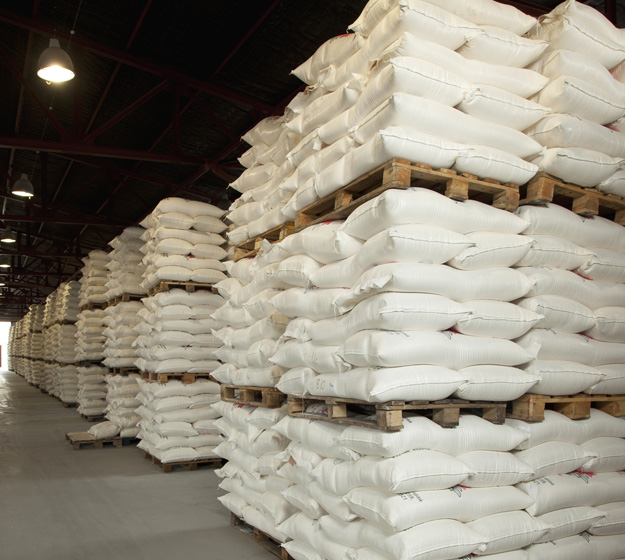
Standard enterprise packaging consists of 25 kg (55.1 lb) multi-ply paper bags with inner PE liners, stacked 40 bags per pallet (1,000 kg / 2,204 lbs net weight). Bulk FIBC tote bags (500 kg to 1,000 kg totes) are available for high-volume automated processing lines. We accommodate LTL single-pallet trial orders up to full multi-container truckload contracts.
Partner with an accountable industrial distributor. Submit your specification requirements, volume projections, and target delivery windows to receive market-competitive pricing and sample validation packs within 24 hours.