
Leading the Food Ingredient Supply Chain  |  2,500+ Ingredients · 48 States

Top China Beverage Emulsions Manufacturer & Exporters

Precision Hydrocolloid Systems, Flavor Carrier Emulsions & High-Purity Preservative Solutions for Global Beverage Formulators

2,500+
Ingredients Stocked & Exported
99.8%
Batch Purity Standard
48+
Global Markets Served
100%
Audit-Ready Documentation
Enterprise Sourcing Portfolio

High-Performance Beverage Emulsions & Preservative Agents

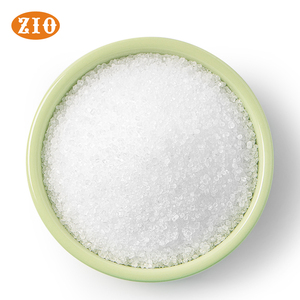
Natural Preservative Citric Acid Anhydrous E330 for Food Beverage
Contact Us
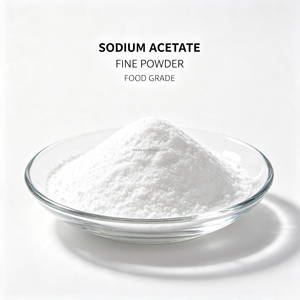
High Purity 99% Anhydrous Sodium Acetate Food Grade Powder Preservative CAS 127-09-3
High Purity 99% Anhydrous Sodium Acetate Food Grade Powder CAS 127-09-3
Contact Us
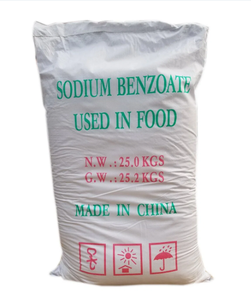
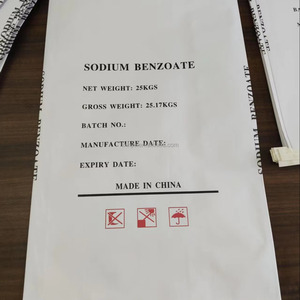
Sodium Benzoate Preservatives & Sweeteners Powder Food Grade 25kg Drum CAS 532-32-1
Sodium Benzoate Preservative Powder Food Grade 25kg Drum CAS 532-32-1
Contact Us
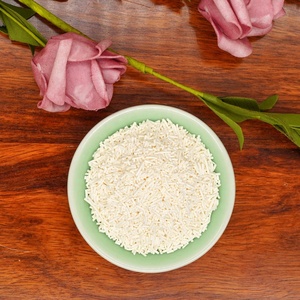
Food Grade Potassium Sorbate 99% Granules Preservative For Bakery Cheese
Food Grade Potassium Sorbate 99% Granules Preservative 25kg Carton
Contact Us
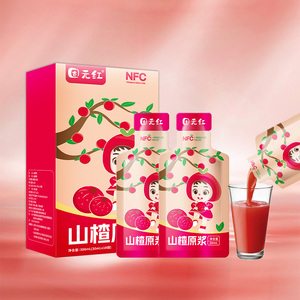
100% Natural Pure Hawthorn Fruit Puree Preservatives in Bottle HACCP & ISO Certified
100% Natural Pure Hawthorn Fruit Puree HACCP & ISO Certified 30mL*10
Contact Us
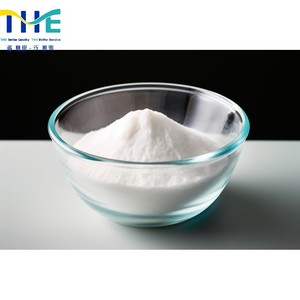
Food Grade Sodium Benzoate Preservative E211 CAS 532-32-1 High Purity White Granule
Food Grade Sodium Benzoate Preservative E211 White Granule Kosher Halal
Contact Us
Wholesale Price Preservative & Antioxidants Food Grade Hot Sales Low Prices Cinnamic Acid Powder CAS140-10-3
Food Grade Antioxidant & Preservative Cinnamic Acid Powder CAS 140-10-3
Contact Us
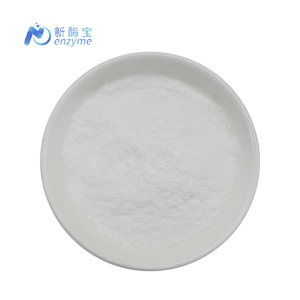
Novenzyme Supply Natural Food Preservative 95% Epsilon-PolyLysine (EPL) Hydrochloride
Natural Food Preservative 95% Epsilon-PolyLysine (EPL) Hydrochloride
Contact Us
Industry Whitepaper • Part I

The Physics and Sourcing Dynamics of Beverage Emulsions

Beverage emulsion technology serves as the cornerstone of modern non-alcoholic refreshment, RTD (Ready-To-Drink) teas, functional waters, fruit juices, and plant-based milk formulations. As a premier China Beverage Emulsions Manufacturer & Exporter, our manufacturing infrastructure bridges advanced colloidal physical chemistry with large-scale industrial distribution. Achieving colloidal stability in low-viscosity liquid matrices requires precise manipulation of droplet size dynamics, Hydrophilic-Lipophilic Balance (HLB), and interfacial rheology.

Droplet Sub-Micron Homogenization

Stable beverage emulsions require oil droplet diameters kept rigidly between 0.15 and 0.50 microns. Our dual-stage high-pressure homogenization process operates at micro-fluidic pressures up to 1,200 bar, effectively curbing gravitational separation and phase inversion over 24-month storage lifespans.

Weighting Agent Engineering

To offset the density differential between essential flavor oils (ρ ≈ 0.85 - 0.92 g/cm³) and the aqueous base (ρ ≈ 1.00 - 1.05 g/cm³), we integrate high-purity ester gums and sucrose acetate isobutyrate (SAIB). This achieves zero net buoyancy according to Stokes' Law, preventing "ringing" at the bottle neck.

Clean-Label Hydrocolloids

Replacing traditional Gum Arabic with modified food starches (OSA starch) and specialized quillaia saponins yields high thermal tolerance and acid resistance (pH 2.5–4.2), allowing UHT and HTST pasteurization without emulsion breakdown.

Sticker's Law & Flocculation Prevention Matrix

In low-viscosity beverage systems, the rate of particle creaming ($v$) is governed by Stokes' Law: $v = \frac{2g r^2 (\rho_p - \rho_f)}{9 \eta}$. By minimizing particle radius ($r$) below 200 nanometers and balancing phase densities ($\rho_p - \rho_f$), our formulation engineering lowers phase separation rates to mathematically negligible levels, ensuring absolute turbidity and uniform mouthfeel across extended supply chain storage periods.

Formulation Specifications

Comparative Technical Matrix: Beverage Preservatives & Stabilizers

Ingredient Component CAS / E-Number Optimal pH Range Primary Functional Mechanism Recommended Dosage
Citric Acid Anhydrous CAS 77-92-9 / E330 pH 2.0 – 4.5 Acidulant, Metal Chelator, Synergistic Antioxidant 0.10% – 0.50%
Potassium Sorbate Granular CAS 24634-61-5 / E202 pH < 6.5 (Optimal < 5.5) Yeast & Mold Inhibition via Dehydrogenase Blockade 0.03% – 0.12%
Sodium Benzoate Powder/Granule CAS 532-32-1 / E211 pH 2.5 – 4.0 Cell Membrane Disruption & Anaerobic Fermentation Inhibition 0.015% – 0.10%
Sodium Acetate Anhydrous CAS 127-09-3 / E262 pH 3.5 – 5.5 Buffering Agent, Flavor Masking & Microbial Inhibition 0.05% – 0.20%
Epsilon-PolyLysine HCl (EPL) CAS 28211-04-7 pH 2.0 – 9.0 Cationic Disruption of Gram-Positive & Negative Bacterial Walls 0.001% – 0.005%
Cinnamic Acid Powder CAS 140-10-3 pH 3.0 – 5.0 Natural Phenolic Antioxidant & Antimicrobial Synergy 0.005% – 0.02%
Strategic Sourcing Intelligence

Future Procurement Trends in Beverage Ingredients & Emulsions

1. Clean-Label & Natural Substitution Shifts

Global beverage procurement teams are systematically transitioning from synthetic additives to natural preservation systems. The combination of bio-fermented Epsilon-PolyLysine (EPL), standardized plant extracts like Hawthorn Fruit Puree, and natural organic acids (citric acid, cinnamic acid) allows brand owners to clear regulatory hurdles in the EU and North America while maintaining extended shelf stability.

2. Supply Chain Resilience & Multi-Origin Redundancy

Volatile shipping corridors and fluctuating raw material yields have highlighted the risk of single-source procurement. Sourcing directly from top-tier Chinese export hubs provides global beverage operations with multi-plant output allocations, guaranteed spot-market inventory, and predictable price-lock contracts spanning 6 to 18 months.

3. Zero-Sugar & High-Electrolyte Formulation Dynamics

The explosive growth of functional hydration, zero-sugar energy drinks, and RTD protein beverages introduces complex physical stabilization challenges. High mineral salts (potassium, sodium) disrupt electric double-layer stabilization in emulsions. Modern hydrocolloids and high-purity buffer salts like Anhydrous Sodium Acetate maintain osmotic equilibrium without compromising sensory clarity.

The Enterprise Advantage

Why Leading Beverage Brands Partner With Our Manufacturing Platform

Full Compliance & Traceability

Every shipment is backed by comprehensive regulatory documentation: Certificates of Analysis (COA), Technical Data Sheets (TDS), Allergen Statements, Non-GMO verification, Kosher, and Halal certifications. ISO 22000 and FSSC 22000 manufacturing audits ensure smooth customs clearance worldwide.

R&D Pilot & Application Support

Our application scientists provide full bench-top formulation assistance, particle size analysis (Laser Diffraction Malvern Mastersizer), acceleration creaming tests (LUMiSizer), and pH adjustment guidance to ensure seamless transition from laboratory scale to high-speed commercial bottling lines.

Flexible Global Logistics

From 25kg moisture-proof kraft bags and fiber drums to 1,000kg liquid IBC totes, we offer versatile packaging formats. With strategic warehouse staging at major ocean ports (Ningbo, Shanghai, Qingdao), we execute JIT (Just-In-Time) shipping schedule agreements for global clients.

Procurement Guidance

Frequently Asked Questions for Bulk Beverage Ingredient Sourcing

What is the difference between citric acid anhydrous and citric acid monohydrate in beverage manufacturing?
Citric Acid Anhydrous contains no water of crystallization (100% pure active acid), whereas Monohydrate contains approximately 8.5% bound water. Anhydrous is strictly preferred in dry powder beverage mixes, effervescent tablets, and moisture-sensitive concentrated emulsions because it prevents caking and lump formation during storage. In liquid beverage processing, Anhydrous offers higher potency per weight unit, optimizing transport efficiency.
How do beverage emulsions maintain stability in highly acidic carbonated soft drinks (CSDs)?
In low-pH regimes (pH 2.5 to 3.2) typical of CSDs and energy drinks, standard emulsifiers may undergo protonation and drop electro-steric repulsion. We utilize modified food starches (Octenyl Succinic Anhydride - OSA starch) and high-grade esters that maintain negative surface charges ($\zeta$-potential $\le -30\text{ mV}$) across low pH spectrums. Combined with micro-fluidic homogenization, this prevents droplet coalescence and sedimentation under carbonation pressures.
What quality documentation accompanies export orders of food-grade preservatives?
Every shipment exported from our production facilities includes a batch-specific Certificate of Analysis (COA) confirming chemical purity, heavy metals compliance (Pb, As, Cd, Hg), microbiological limits (TPC, Yeast & Mold, E. coli, Salmonella), particle size mesh distribution, and bulk density. Additionally, we provide TDS, SDS, Country of Origin certificates, Non-GMO statements, Halal, Kosher, and FSSC 22000 certification packages for regulatory verification.
Can natural preservatives like Epsilon-PolyLysine (EPL) fully replace traditional benzoates and sorbates?
Epsilon-PolyLysine (EPL) is a highly effective, natural antimicrobial peptide with broad-spectrum inhibition against Gram-positive/negative bacteria and selected yeasts across a wide pH range (2.0–9.0). In many clean-label tea, juice, and dairy-alternative applications, EPL can entirely replace sorbates and benzoates. For highly susceptible formulations, combining low-dose EPL with organic acids achieves synergistic preservation without altering the sensory profile.
What are the standard packaging and shelf-life conditions for bulk export shipments?
Powdered preservatives (Sodium Benzoate, Potassium Sorbate, Sodium Acetate) are packed in 25kg multi-wall paper bags or heavy-duty PE-lined fiber drums, palletized and stretch-wrapped to prevent humidity exposure. Liquid emulsions and puree concentrates are available in 20kg aseptic bag-in-box, 200kg drums, or 1,000kg IBC totes. Standard shelf life ranges from 24 to 36 months when stored in cool, dry warehouse conditions below 25°C.
How do you support custom formulation and sample testing for global customers?
We provide complimentary 100g to 1kg bench-scale sample quantities for laboratory trial evaluation, dispatched via express air freight alongside full technical specifications. Our R&D application team collaborates directly with client formulation engineers to optimize brix, acidity ratios, weighting agent ratios, and turbidity matching prior to commercial batch scale-up.
Direct Factory Engagement

Optimize Your Beverage Formulations Today

Connect directly with our senior ingredient specialists and technical sales desk to request bulk pricing, custom emulsion specifications, or sample kits tailored to your production schedule.

Contact Us