Leading the Food Ingredient Supply Chain  |  2,500+ Ingredients · 48 States
Industrial Grade Sourcing Whitepaper

Top China Amino Acids Factories & Suppliers

A Comprehensive Technical Analysis on Microbial Fermentation, Synthetic Chemistry, Specification Verification, and Global Supply Chain Optimization for Industrial Food, Beverage, and Pharma Manufacturers.

70%+
Global Fermentation Share
99.5%
Purity Assay Verification
2,500+
Audited Batch Warehouses
FSSC 22000
ISO / Kosher / Halal Certified

Featured Preservatives, Acidulants & Bio-Active Amino Derivatives

Directly factory-sourced ingredients manufactured under rigid USP/FCC/EP pharmacopeial specs and audit-ready batch traceability.
Natural Preservative Citric Acid Anhydrous E330

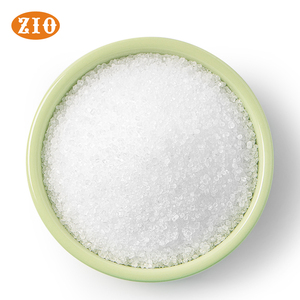
Natural Preservative Citric Acid Anhydrous E330 for Food Beverage

Grade: Food Grade / E330 / BP / USP Purity: 99.5% - 100.5% Min
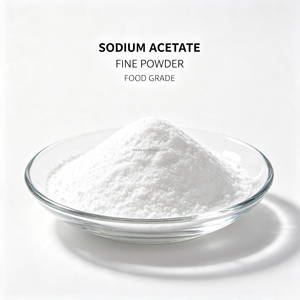
Anhydrous Sodium Acetate Food Grade Powder

High Purity 99% Anhydrous Sodium Acetate Food Grade Powder Preservative CAS 127-09-3

CAS: 127-09-3 | Mesh: 80-100 Mesh Assay: 99.0% Minimum
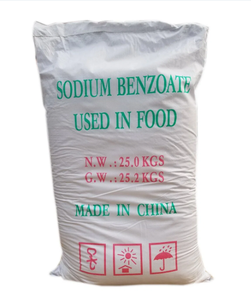
Sodium Benzoate Preservatives Powder

Sodium Benzoate Preservatives & Sweeteners Powder Food Grade 25kg Drum CAS 532-32-1

Format: Powder / Granular Shelf Life: 2 Years Strict Stability
Food Grade Potassium Sorbate 99% Granules

Food Grade Potassium Sorbate 99% Granules Preservative For Bakery Cheese-25kg Carton

Standard: FCC IV / E202 / USP Form: Spherical Granules
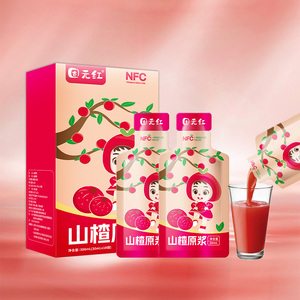
Natural Pure Hawthorn Fruit Puree Preservatives

100% Natural Pure Hawthorn Fruit Puree Preservatives HACCP & ISO Certified 30mL*10 Bags

Certificate: ISO22000, HACCP, Organic Origin: Botanical Bio-Extraction
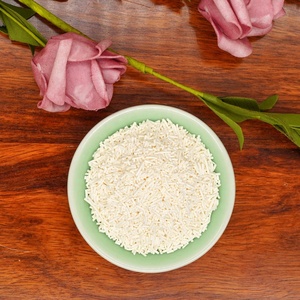
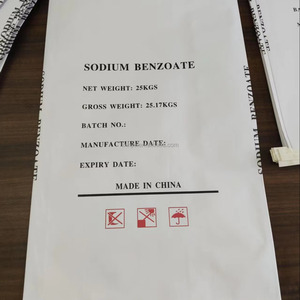
Sodium Benzoate Preservative E211 High Purity White Granule

Food Grade Sodium Benzoate Preservative E211 CAS 532-32-1 High Purity White Granule

Certifications: Kosher, Halal, FSSC Pack Size: 25kg Poly-Lined Bags
Cinnamic Acid Powder CAS 140-10-3

Wholesale Price Preservative & Antioxidants Food Grade Hot Sales Cinnamic Acid Powder CAS140-10-3

CAS: 140-10-3 | Purity: 99.5% Function: Natural Anti-Microbial
Novenzyme Epsilon-PolyLysine EPL Hydrochloride

Novenzyme Supply Natural Food Preservative 95% Epsilon-PolyLysine (EPL) Hydrochloride

CAS: 28211-04-3 | Bio-Polymer: L-Lysine Clean Label: Natural Fermentation

Supply Chain Infrastructure & Technical Capabilities

Why Tier-1 food processing brands and pharmaceutical manufacturers rely on our integrated China manufacturing matrix.

Specification-First Sourcing

We match target chemical assays, enantiomeric purity (L- vs. D- isomers), particle mesh size distributions, and heavy metal limits (As, Pb, Cd, Hg) prior to contract execution, ensuring seamless line integration.

Audit-Ready Regulatory Compliance

Every lot is backed by complete documentation including COAs, Allergen declarations, GMO Statements, Non-Irradiation certificates, Kosher, Halal, ISO22000, and full FSMA-compliant HACCP packages.

Market Intelligence & Forward Coverage

Our market desk tracks raw material feedstock indices (corn starch, glucose, ammonia, coal energy costs) to offer forward position contracts, protecting procurement teams from spot price volatility.

Just-In-Time Buffer Logistics

Strategic warehouse positioning across major port hubs (Qingdao, Shanghai, Tianjin) allows us to support mixed FCL loads, consolidated LTL orders, and emergency buffer stock releases.

Application & R&D Formulation Support

Our food scientists assist technical teams with clean-label preservation synergy, adjusting pH acidulant profiles, replacing synthetic additives, and optimizing moisture activity in baked goods and beverages.

Multi-Origin Risk Mitigation

Dual-plant approval workflows mean production shifts seamlessly across audited sister facilities in Shandong, Hebei, and Inner Mongolia if regional environmental curtailments occur.

1. The Landscape of China's Amino Acid Manufacturing Sector

Over the past two decades, China has evolved from a regional supplier into the world's dominant production hub for industrial amino acids, organic acids, and bio-fermented derivatives. Commanding over 70% of global microbial fermentation capacity for essential amino acids such as L-Lysine, L-Threonine, and L-Tryptophan, Chinese manufacturing complexes leverage unrivaled feedstock integration, advanced strain engineering, and ultra-large-scale bioprocessing facilities.

Industrial amino acid synthesis in China operates primarily across two technical pathways: Submerged Aerobic Fermentation utilizing carbon sources (corn glucose, cassava starch) and Chiral Enzymatic/Chemical Synthesis. Key industrial clusters located in Shandong, Inner Mongolia, Ningxia, and Hebei benefit from direct proximity to agricultural grain hubs and dedicated green-energy grids, significantly lowering unit production costs while maintaining rigorous carbon-footprint reduction initiatives.

Key Technical Advantages of Chinese Amino Acid Fermentation:

  • High-Density Corynebacterium glutamicum & E. coli Fermentation: Achieving industry-leading conversion ratios and broth titers exceeding 160 g/L.
  • Ultra-Pure Crystallization Systems: Multi-stage continuous evaporation and membrane filtration yielding isomeric purity levels exceeding 99.5%.
  • Integrated Carbon Capture & Waste Upcycling: Biomass byproducts are refined into high-protein agricultural feeds, establishing circular economy compliance (ISO 14040 LCA standards).

2. Technical Specifications & Industrial Application Taxonomy

Procurement teams require precise mapping of technical parameters to ensure raw materials behave predictably in commercial reactors, high-shear mixers, and automated dry-blending lines. Below is a comprehensive specification overview of primary amino acids and complementary preservation compounds sourced from top China suppliers:

Compound Category Representative Items CAS Registry Standard Grades Primary Functional Role
Essential Amino Acids L-Lysine, L-Threonine, L-Tryptophan, L-Methionine 56-87-1 / 72-19-5 USP, EP, AJI92, FCC Nutritional Enrichment, Protein Fortification, Parenteral Feeds
Branched-Chain (BCAAs) L-Leucine, L-Isoleucine, L-Valine 61-90-5 / 73-32-5 USP, EP, Instantized (Lecithinized) Sports Nutrition, Muscle Protein Synthesis, Medical Foods
Bio-Polymer Preservatives Epsilon-PolyLysine (EPL) HCl 28211-04-3 Food Grade 95% Min Broad-Spectrum Natural Antimicrobial (Gram+ & Gram-)
Organic Acidulants Citric Acid Anhydrous / Monohydrate 77-92-9 / 5949-29-1 E330, BP, USP, FCC pH Control, Flavor Enhancement, Metal Chelating Agent
Clean-Label Preservatives Sodium Acetate Anhydrous, Potassium Sorbate 127-09-3 / 24634-61-5 FCC, E202, USP Microbial Growth Inhibition, Water Activity Reduction
Specialty Organic Acids Cinnamic Acid, Sodium Benzoate 140-10-3 / 532-32-1 FCC, E211, Technical Antioxidant Synergy, Mold & Yeast Inhibition in Beverages

3. Future Sourcing & Global Procurement Trends (2025–2030)

As global supply chains navigate shifting geopolitical dynamics, carbon tariffs (CBAM), and rising consumer demand for clean-label transparencies, the procurement of China-sourced amino acids is undergoing a structural transformation. Forward-thinking procurement directors are incorporating four major strategic shifts into their vendor selection criteria:

Trend 1: Precision Fermentation & Synthetic Biology (SynBio)

Leading Chinese biorefineries are rapidly replacing traditional strain selection with CRISPR-engineered micro-organisms. This enables the high-yield production of rare amino acids (such as L-Theanine, L-Carnosine, and Trans-4-Hydroxy-L-Proline) directly from sustainable carbon substrates, significantly lowering production lead times and cost barriers.

Trend 2: Transition from Chemical Synthesis to Natural Bio-Preservation

Food and beverage formulators are actively phasing out pure synthetic chemicals in favor of naturally fermented bio-polymers and organic acid blends. The rapid scaling of Epsilon-PolyLysine Hydrochloride (EPL) combined with Citric Acid Anhydrous and Sodium Acetate offers food processors a clean-label, heat-stable alternative that satisfies strict European Union and US FDA label requirements.

Trend 3: Decarbonization and ISO 14067 Footprint Certification

Environmental compliance is no longer an afterthought. Major Chinese manufacturers have integrated solar co-generation and continuous energy recovery systems into their crystallization towers. Global buyers now routinely request product carbon footprint (PCF) reports alongside standard Certificates of Analysis (COA).

Trend 4: Dual-Sourcing & Contractual Indexing

To combat freight disruptions and sudden raw material price surges, multi-national buyers are moving away from spot purchasing toward 12-to-24-month indexed forward contracts tied to raw corn and energy benchmarks. Furthermore, buyers mandate supplier redundancy through audited multi-plant network operations.

4. Quality Assurance, Testing Protocols & Regulatory Benchmarks

Securing high-purity amino acids and preservation chemicals from Chinese factories requires rigorous multi-stage testing to guarantee compliance with pharmacopeial monographs (USP, EP, JP, AJI, FCC). Robust suppliers enforce strict batch isolation protocols prior to container loading.

Key Quality Control & Testing Protocols:

  • Chiral Purity via High-Performance Liquid Chromatography (HPLC): Verification that enantiomeric purity exceeds 99.0%, with undetectable D-amino acid impurities.
  • Heavy Metal Trace Analysis (ICP-MS): Ensuring Lead (< 1 ppm), Arsenic (< 1 ppm), Cadmium (< 0.5 ppm), and Mercury (< 0.1 ppm) conform strictly to infant formula and pharmaceutical criteria.
  • Particle Size Engineering & Custom Mesh Granulation: Micronization capability ranging from 20-mesh coarse granules down to 300-mesh ultra-fine powders for specialized wet and dry formulations.
  • Microbiological Assay Security: Total Plate Count (< 1000 cfu/g), Mold & Yeast (< 100 cfu/g), with negative screening for Salmonella, E. coli, and Staphylococcus aureus per 25g sample.

Frequently Asked Sourcing & Procurement Questions

Direct technical answers to common queries raised by procurement managers, quality assurance auditors, and R&D formulators.

Q1: What is the primary difference between Fermentation-Grade and Synthetically Derived Amino Acids?
Fermentation-grade amino acids are produced via natural microbial bioprocessing using plant-derived carbohydrates (glucose, corn starch). This process naturally produces the biologically active L-enantiomer (e.g., L-Lysine, L-Threonine) with high bio-availability. Chemical synthesis often yields a racemic mixture of D- and L-isomers, requiring complex resolution steps, and is generally reserved for specific industrial or non-nutritional applications.
Q2: Which quality documentation is provided with each commercial shipment?
Every shipment is accompanied by a full batch-specific Certificate of Analysis (COA), Technical Data Sheet (TDS), Safety Data Sheet (SDS/MSDS), Allergen Statement, Non-GMO Declaration, Country of Origin Certificate, and available Kosher, Halal, and FSSC 22000 certifications. Food-grade and pharma-grade shipments can also include residual solvent declarations and heavy metal ICP-MS reports.
Q3: How do Epsilon-PolyLysine (EPL) and Potassium Sorbate differ in food preservation applications?
Potassium Sorbate is a traditional organic acid salt highly effective against molds and yeasts in acidic environments (pH < 6.5). Epsilon-PolyLysine (EPL) is a naturally fermented bio-polymer composed of L-lysine residues. EPL exhibits exceptional heat stability and broad-spectrum antimicrobial activity against Gram-positive and Gram-negative bacteria as well as molds, functioning effectively across a wide pH range (pH 2.0 to 9.0), making it ideal for clean-label reformulations.
Q4: What are the standard Minimum Order Quantities (MOQs) and lead times for bulk purchases?
Standard factory MOQs typically start at 1 Metric Ton (1,000 kg) packed in 25kg moisture-barrier bags or drums. For custom micronized mesh sizes, private label blending, or specialized packaging (super-sacks/totes), MOQs start at 3 to 5 Metric Tons. Lead times from factory exit to sea freight dispatch generally range between 7 to 14 days.
Q5: How do China suppliers guarantee batch-to-batch consistency for large annual volume contracts?
Top tier Chinese manufacturers utilize fully automated continuous fermentation and crystallization systems monitored by SCADA software. Rigorous In-Process Quality Controls (IPQC) sample production broths at fixed intervals. Furthermore, retaining pre-shipment samples (PSS) for up to 3 years ensures physical and chemical traceability across all batch lots.
Q6: Can you provide customized particle sizes or instantized forms of amino acids?
Yes. We offer specialized physical modification services including fine micronization (100 to 300 mesh) for dry mix beverages and tablet compression, as well as instantization via sunflower or soy lecithin coating to ensure rapid cold-water dispersion for BCAA and hydrophobic amino acid drink mixes.

Streamline Your Global Ingredient Supply Chain

Connect with our technical sourcing experts to request complete specification packs, pricing contracts, and factory-direct samples for your production facility.