
Explore our high-potency bio-protective agents, functional food preservatives, and active fermentation ingredients engineered for commercial meat processing, dry curing, and shelf-life extension.

Commercial meat manufacturing relies on precise biological mechanisms to ensure pathogen safety, establish signature sensory profiles, and stabilize finished products. As global food standards transition away from synthetic chemical preservatives, **lactic acid bacteria (LAB)** and **co-culture fermentation systems** have become fundamental to modern processing operations. Our facility operates as a specialized **OEM/ODM Meat Cultures Factory**, producing targeted microbial formulations tailored to precise processing parameters (pH, water activity, salt concentration, and thermal profiles).
Meat cultures used in industrial processing fall into three main functional categories, each playing a vital role in food safety and flavor synthesis:
Selecting the optimal culture strain requires evaluating fermentation temperatures, target moisture removal rates, and recipe salt concentrations. The table below outlines our OEM/ODM strains for industrial processing lines:
| Strain Designation | Microbial Taxonomy | Optimal Temp (°C) | Primary Bio-Function | Target Application |
|---|---|---|---|---|
| MC-FastAcid 100 | Pediococcus acidilactici | 35°C - 42°C | Rapid pH drop (< 4.8), moisture loss acceleration | Fermented Snack Sticks, Summer Sausage |
| MC-FlavorMat 250 | Staphylococcus xylosus + L. sakei | 18°C - 26°C | Controlled acidification, deep aroma, color stabilization | Artisanal Salami, Dry-Cured Chorizo |
| MC-Protect LIS | Lactobacillus curvatus / sakei | 4°C - 15°C | Pediocin production, targeted Listeria control | Sliced Bacon, RTE Deli Meats, Cold Smoked Pork |
| MC-Surface Mold | Penicillium nalgiovense / chrysogenum | 20°C - 24°C | Uniform white surface cover, moisture retention, lipid protection | Traditional Italian Salami, Cured Ham Whole Muscles |
Maintaining microbial viability through storage and industrial mixing is critical. Our production line uses high-efficiency **freeze-drying (lyophilization)** paired with protective matrix cryoprotectants. This yields stable concentrated powders exceeding **$10^{11}$ CFU per gram** with a 12-to-18-month shelf life under frozen storage (–18°C).
For high-shear batch processing or direct-addition dry brines, we offer **microencapsulated cultures**. Lipid coatings protect the active bacteria during mechanical mixing, releasing them only when thermal or moisture thresholds are met during incubation. This prevents premature acidification during batter preparation.
From custom strain isolation to turnkey contract packaging, our industrial biotech facilities provide full-spectrum OEM and ODM support for global meat processors and ingredient brand owners.
We formulate tailored microbial multi-strain blends designed for your target fermentation rate, moisture loss schedule, and sensory profile requirements.
Our pilot and commercial lyophilizers deliver moisture levels below 2.5%, ensuring long-term microbial stability across global shipping routes.
Our meat scientists and microbiologists support pilot plant testing, assisting with inoculations, fermentation tracking, and pathogen challenge validation.
The global meat processing industry is undergoing significant shifts driven by regulatory tightening, consumer health demands, and supply chain volatility. Procurement managers must adapt their sourcing strategies to navigate these structural changes:
Regulatory authorities, including EFSA and the USDA, continue to review traditional chemical nitrates and nitrites. Meat processors are shifting toward bioprotective cultures paired with natural botanical extracts (such as hawthorn puree antioxidants, cinnamic acid, and bio-fermented polylysine) to maintain cured colors and prevent Clostridium botulinum without chemical additives.
Recent disruptions highlight the risk of relying on single-origin bio-ingredient suppliers. Leading global meat processors are qualifying multi-origin OEM manufacturers to secure stable access to active starter strains, ensuring uninterrupted continuous-batch fermentation lines.
Rather than relying solely on thermal lethality, food safety teams are incorporating protective bacteriocin-producing LAB (like Lactobacillus sakei) directly into fresh, marinated, and vacuum-packed meats. This provides ongoing pathogen control throughout cold-chain distribution without altering raw sensory qualities.
As blended meat products (combining animal protein with plant-based fibers) expand market share, custom starter cultures are being engineered to ferment complex hybrid substrates, masking off-notes from plant proteins while ensuring consistent acidification rates.
Our research centers invest heavily in micro-genomics, strain stabilization, and bio-preservation systems to help food manufacturers optimize yields and extend shelf life.
Utilizing high-throughput screening technologies, our R&D team isolates natural wild strains from traditional artisanal fermentations, selecting variants with superior salt tolerance, fast acidification, and enhanced lipolytic activity without genetic modification.
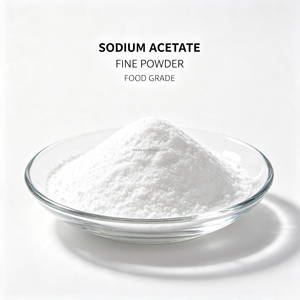
Combining biological cultures with natural microbial inhibitors—such as Epsilon-PolyLysine Hydrochloride (EPL), organic acid salts (Sodium Acetate, Citric Acid Anhydrous), and sorbates—creates multi-hurdle protection against spoilage yeasts, molds, and bacteria.
Next-generation psychrotrophic strains operate efficiently at refrigeration temperatures (2°C–8°C), suppressing spoilage microbes in fresh ground meats and vacuum-packed cuts during extended transport, without triggering premature acid fermentation.
Building on decades of supply chain expertise, robust manufacturing infrastructure, and comprehensive ingredient portfolios, we support food manufacturers through dependable, quality-verified supply programs.
From bacterial starter cultures to functional hydrocolloids, acidulants, proteins, and specialty starches, we simplify sourcing by consolidating your bill of materials into a unified supply program.
Every production lot includes full Certificates of Analysis (COA), specification sheets, allergen and nutritional declarations, alongside Kosher, Halal, ISO, and Non-GMO certifications for hassle-free QA audits.
Our cold-chain logistics and strategically located warehouses ensure rapid, temperature-monitored delivery (Full Truckload, LTL, or air-freight lyophilizates) across 48 contiguous US states and international ports.
Get answers to common technical, packaging, and logistical questions raised by food safety leads, QA directors, and industrial buyers.
Connect with our technical application specialists to discuss strain selection, request trial samples, or review batch specifications for your meat processing operations.