Direct Factory Sourcing | High-Purity Industrial Grades | Fully Certified (ISO, HACCP, Kosher, Halal)
In modern industrial food manufacturing, the precise manipulation of aqueous phase behavior, viscosity, gel strength, and moisture retention is fundamental to product quality, shelf life, and consumer acceptance. As industrial food formulations evolve toward clean-label, low-fat, and plant-based profiles, the reliance on high-performance food hydrocolloids (such as Xanthan Gum, Gellan Gum, Sodium Alginate, Carrageenan, Pectin, and Agar-Agar) and complementary preservation networks has increased exponentially.
Hydrocolloids are long-chain polymers characterized by their macromolecular structure containing multiple hydrophilic groups. When dispersed in water, they alter rheological properties by thickening (increasing continuous phase viscosity) or gelling (forming three-dimensional cross-linked networks). Strategic selection requires matching polymer chemistry to your processing parameters: pH thresholds, thermal shear, ionic concentration (Ca²⁺, K⁺), and target shelf-life stability.
Thermoreversible vs. thermo-irreversible gelling mechanisms. Precision control over brittleness, elasticity, and syneresis mitigation in dairy and confectionery matrices.
High zero-shear viscosity combined with rapid shear-thinning behavior under pumping or spraying conditions, optimizing suspendability in high-acid beverages.
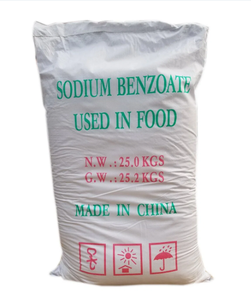
Combining functional hydrocolloids with targeted bio-preservatives (e.g., Epsilon-Polylysine, Potassium Sorbate, Sodium Benzoate) to secure moisture barrier integrity and microbial suppression.
To assist formulation scientists and industrial procurement desks, the following technical dataset synthesizes performance parameters across main hydrocolloid classes and preservation agents supplied through our Chinese manufacturing channels:
| Hydrocolloid / Preservative | Primary Functional Role | Optimal pH Range | Thermal Processing Tolerance | Synergistic Interactions |
|---|---|---|---|---|
| Xanthan Gum (80 / 200 Mesh) | Thickener / Suspension Stabilizer | 2.0 – 12.0 | High (UHT / Retort Stable) | Synergistic gelation with Locust Bean Gum & Konjac |
| Sodium Alginate (Food Grade) | Cold-Gelling Agent / Film Former | 4.5 – 10.0 | Moderate (Gel forms upon Ca²⁺ addition) | Forms insoluble gel complexes with divalent cations |
| Epsilon-Polylysine (EPL 95%) | Natural Bio-Preservative | 4.0 – 9.0 | High (Autoclave & Pasteurization stable) | Synergistic with organic acids (Citric, Lactic, Acetate) |
| Potassium Sorbate (Granular) | Fungi & Mold Inhibitor | 3.0 – 6.5 | Moderate to High | Complements Sodium Benzoate in acidic beverages |
| Citric Acid Anhydrous (E330) | Acidulant / pH Buffer / Chelator | 2.0 – 6.0 | High Thermal Stability | Enhances efficacy of thermal pasteurization & sorbates |
The global food ingredient supply chain is undergoing structural shifts driven by regulatory tightening, sustainability mandates, and consumer preferences for clean-label formulation. When sourcing food hydrocolloids and preserving systems from China, strategic buyers must navigate five critical macro trends:
While traditional plant extracts (Gum Arabic, Locust Bean Gum) remain vulnerable to climate-induced yield volatility, Chinese biotech manufacturers have scaled microbial fermentation routes. Precision fermentation yields biopolymers such as Gellan Gum, Xanthan Gum, and Welan Gum with absolute batch-to-batch structural uniformity, eliminating agricultural price shocks and supplying non-GMO, clean-label stabilization options.
Formulating alternative proteins presents severe texture challenges: moisture syneresis, lack of mouthfeel fat-mimicry, and thermal degradation during frying or extrusion. Future procurement is pivoting toward custom hydrocolloid blends—combining high-acyl and low-acyl Gellan with methylcellulose and konjac—to reconstruct real animal fat matrices and hold water binding capacity during commercial cooking cycles.
Modern consumers demand the removal of synthetic chemical preservatives without sacrificing shelf life. Sourcing strategies are actively pairing natural anti-microbial peptides such as Epsilon-Polylysine (EPL) and Nisin with functional hydrocolloid matrices (like natural puree bases or alginate edible coatings). This dual-action approach physically encapsulates food surfaces while biochemically arresting bacterial membrane replication.
Leading Chinese chemical and biopolymer producers are adopting green hydrogen, biomass energy boilers, and closed-loop water filtration systems. Procurement departments at global multi-national corporations now mandate scope-3 emissions data alongside standard Certificate of Analysis (COA) documents during supplier audits.
Navigating direct-factory sourcing from China requires a robust bridge between local manufacturing scale and Western quality assurance standards. Our operational framework addresses the three primary pain points of chemical and ingredient buyers: specification drift, regulatory compliance delays, and supply disruptions.
Every lot is backed by full analytical validation: HPLC purity assay, heavy metal spectroscopy (Pb, As, Cd, Hg), microbiological counts, pesticide residue screening, and certified Kosher, Halal, ISO22000, and HACCP documentation packs.
We mitigate ocean freight volatility by maintaining strategical regional warehouse stocks, supporting Full Container Loads (FCL), Less Than Container Loads (LTL), and forward-contracting price locks for up to 12 production calendar months.
Our food science engineers work directly with your bench team to formulate hydrocolloid replacement strategies, optimize hydration kinetics, reduce raw material costs, and match target gel textures.
Direct answers for procurement officers, quality assurance specialists, and formulation scientists.
Connect with our technical sourcing specialists today to request formal quotes, sample evaluation kits, or comprehensive regulatory documentation packs.