
Engineered for maximum bioavailability, batch stability, and seamless incorporation across dietary supplements, functional beverages, and clinical nutrition.
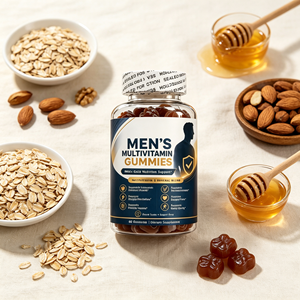
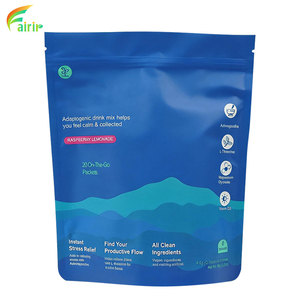
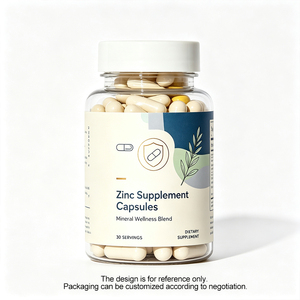
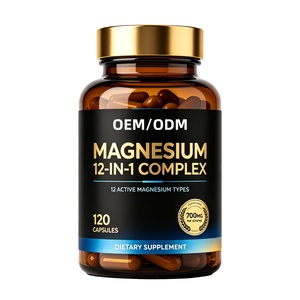
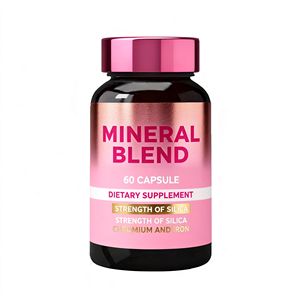
In the evolving landscape of global functional food, beverage, and nutriceutical manufacturing, selecting a top-tier partner from among China best mineral blends exporters is no longer just about procuring bulk raw materials—it is a strategic decision that directly impacts brand equity, regulatory approval timelines, and biological performance. Custom mineral blends (encompassing macro-minerals such as calcium, magnesium, sodium, and potassium alongside micro-trace elements including zinc, copper, manganese, selenium, iodine, and chromium) represent the foundational architecture of modern health supplements and fortified foods.
Formulating industrial-scale micro-nutrient premixes presents distinct biochemical and engineering hurdles. Issues such as hygroscopicity, oxidation-induced flavor degradation, metallic off-notes, density segregation during high-speed tableting, and chemical interactions between free metallic ions and sensitive vitamins demand advanced particle engineering and chelation mastery. China's leading mineral blend exporters have transitioned from commodity chemical production into world-class bio-nutritional engineering hubs, delivering custom-milled, fully chelated, and micro-encapsulated mineral matrices that satisfy strict FSMA, cGMP, HACCP, ISO22000, Kosher, and Halal international benchmarks.
Procurement teams operating in multinational consumer packaged goods (CPG) and pharmaceutical manufacturing face ongoing market volatility, tight delivery windows, and stringent quality assurance standards. China’s premier mineral blend export infrastructure is built around four core operational disciplines that eliminate manufacturing friction:
Every industrial quotation is aligned with your precise mechanical requirements. We match particle size distributions (from standard 80 mesh up to super-fine 320 mesh micro-powders), bulk density parameters (0.4 g/cc to 0.9 g/cc), flowability indices (Carr's Index and Hausner Ratio validation), and moisture thresholds prior to batch creation. This ensures smooth operations in capsule filling, sachet packing, or beverage dissolution.
Quality control teams never experience line shutdowns awaiting paperwork. Every shipment comes complete with lot-specific Certificates of Analysis (COA) backed by High-Performance Liquid Chromatography (HPLC) and Inductively Coupled Plasma Mass Spectrometry (ICP-MS) heavy metal analysis (Lead, Arsenic, Cadmium, Mercury < 0.1 ppm). Complete allergen dossiers, non-GMO declarations, radiation-free statements, and origin certificates are provided with every release.
To insulate brand owners from regional crop failures, chemical plant maintenance outages, or shipping lane congestion, our manufacturing eco-system maintains multi-site raw material approvals and strategic safety reserves. With flexible logistics configurations—including full container loads (FCL), less-than-container loads (LTL), temperature-controlled reefers, and palletized stretch-wrapped export packaging—your production schedules remain protected year-round.
Reformulating an active product to enhance clean-label consumer appeal or reduce unit production costs requires specialized technical insight. Our dedicated food technologists, bio-chemists, and pharmaceutical engineers help optimize usage rates, run sensory taste-masking trials, evaluate chelating agents (glycinate vs. malate vs. citrate), and troubleshoot stability challenges across high-heat pasteurization or long shelf-life retail formats.
Understanding the molecular properties of different mineral forms is crucial when engineering dietary supplements or fortified functional beverages. Inorganic mineral salts (such as oxides and sulfates) offer high elemental mineral percentages but frequently suffer from poor gastrointestinal absorption, harsh metallic off-tastes, and reactive degradation of lipid-soluble vitamins. Organic chelated mineral complexes offer superior bio-accessibility, reduced gastric discomfort, and high chemical stability.
| Mineral Class | Chemical Form | Elemental Content (%) | Relative Bioavailability | Organoleptic & Processing Profile | Target Formulation Applications |
|---|---|---|---|---|---|
| Magnesium Complex | Magnesium Bisglycinate Chelate | 14.1% - 18.0% | Very High (95%+) | Smooth taste profile, non-hygroscopic, ultra-gentle on stomach | Immune capsules, premium sleep aids, recovery sachets |
| Zinc Complex | Zinc Picolinate / Mono-L-Methionine | 20.0% - 22.0% | High (85%+) | Low astringency, minimal interaction with dietary phytates | Immune conditioning tablets, clinical nutrition powders |
| Copper Complex | Copper Glycinate Chelate | 10.0% - 12.0% | High (88%) | Stable in acidic liquid matrices, prevents lipid oxidation | Multi-mineral softgels, systemic antioxidant complexes |
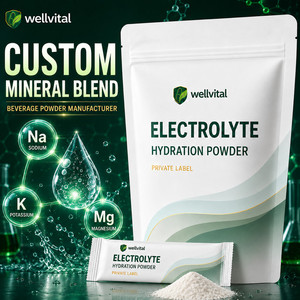
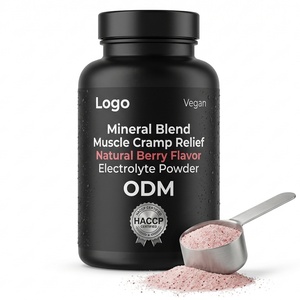
| Electrolyte Trio | Sodium / Potassium / Magnesium Citrate | Variable (12% - 38%) | Moderate-High | Rapid water solubility, refreshing acidulous flavor profile | Hydration powders, RTD sports drinks, isotonic sticks |
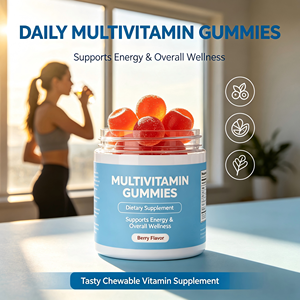
| Trace Iodine/Iron | Potassium Iodide & Ferrous Bisglycinate | 58% (I) / 20% (Fe) | Exceptional | Zero metallic aftertaste, micro-encapsulated against oxidation | Multivitamin gummies, maternal nutrition, men's wellness |
As the international dietary supplement and fortified food markets continue to mature, procurement strategies are pivoting away from transactional spot buying toward long-term strategic supplier alliances. China's leading mineral blend exporters are investing heavily in advanced manufacturing infrastructure to match four defining market shifts:
Global consumers increasingly reject artificial excipients, synthetic flow agents (such as silicon dioxide or magnesium stearate), and animal-derived gelatin carriers. Next-generation mineral premixes utilize natural organic carriers—such as acacia gum, rice-hull concentrate, and tapioca maltodextrin—alongside amino-acid chelates derived from non-GMO plant fermentation. Exporters who provide fully transparent, non-GMO, vegan, Halal, and Kosher supply chains hold a distinct market advantage.
Active mineral ions, particularly iron and copper, act as strong catalysts for lipid oxidation and vitamin degradation when exposed to humidity and ambient oxygen. Advanced spray-drying, fluid-bed granulation, and liposomal micro-encapsulation techniques create protective physical barriers around each mineral particle. This preserves organoleptic freshness in shelf-stable beverages, prevents color shifting in chewable gummies, and delivers controlled nutrient release within the human intestinal tract.
In accordance with updated global regulations (including the US FDA FSMA 204 traceability mandate and EU green supply chain directives), enterprise buyers require detailed raw material tracking back to basic elemental refining. Leading Chinese mineral export facilities incorporate digital lot-tracking, batch-wise ICP-MS mass spectrometry analysis, and automated compliance verification to ensure seamless clearance at international ports.
Industrial scale mineral processing requires considerable thermal and electrical energy for crystallization, milling, and spray-drying. The future of China's mineral export industry belongs to manufacturers integrating clean solar energy, zero-wastewater discharge systems, and closed-loop solvent recycling. Enterprise procurement directors increasingly weigh environmental, social, and governance (ESG) metrics alongside traditional pricing and delivery specs.
Direct technical and commercial insights for sourcing specialists, quality assurance teams, and product formulation managers.
Need a custom micronutrient premix, fully chelated trace mineral, or instant soluble electrolyte matrix? Our technical sales and R&D formulation team is standing by to evaluate your specs, provide test samples, and quote landed costs.
Send an Inquiry