Leading the Food Ingredient Supply Chain  |  2,500+ Ingredients · 48 States

Global Food Ingredient Sourcing & Compliance Report

CE Certified Artificial Sweeteners Factories & Exporter

CE Certified Industrial Product Portfolio

High-purity intense sweeteners, food-grade preservatives, and functional acidulants managed under strict European conformity and global quality assurance standards.
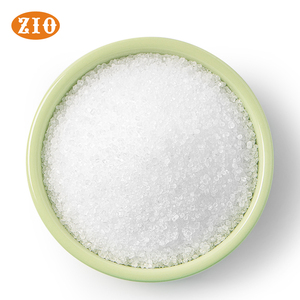
Natural Preservative Citric Acid Anhydrous E330

Natural Preservative Citric Acid Anhydrous E330 for Food Beverage

Grade: Food Grade / FCC / USP
CAS No: 77-92-9
Certification: CE, ISO, Kosher, Halal
Get Catalog
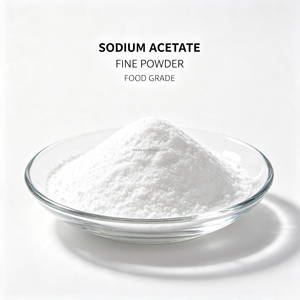
Anhydrous Sodium Acetate Food Grade Powder

High Purity 99% Anhydrous Sodium Acetate Food Grade Powder Preservative CAS 127-09-3

Purity: ≥ 99.0%
CAS No: 127-09-3
Packaging: 25kg Kraft Bag
Get Catalog
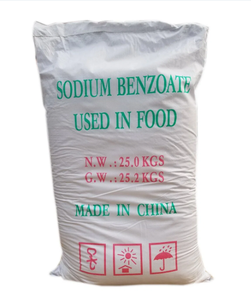
Sodium Benzoate Preservatives & Sweeteners Powder

Sodium Benzoate Preservatives & Sweeteners Powder Food Grade 25kg Drum 2 Year Shelf Life CAS 532-32-1

Format: White Powder / Granular
Shelf Life: 24 Months
Application: Beverage & Condiments
Get Catalog
Food Grade Potassium Sorbate 99% Granules

Food Grade Potassium Sorbate 99% Granules Preservative For Bakery Cheese

Assay: 99.0% - 101.0%
CAS No: 24634-61-5
Target Use: Bakery, Dairy & Cheese
Get Catalog
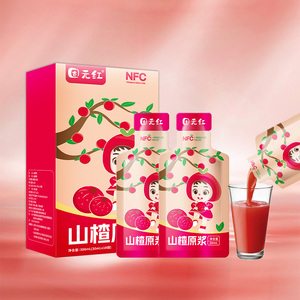
Natural Pure Hawthorn Fruit Puree Preservatives

100% Natural Pure Hawthorn Fruit Puree Preservatives HACCP & ISO Certified

Origin: Natural Botanical
Certification: HACCP, ISO, CE
Specification: 30mL * 10 Bags/Box
Get Catalog
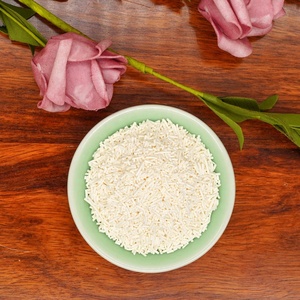
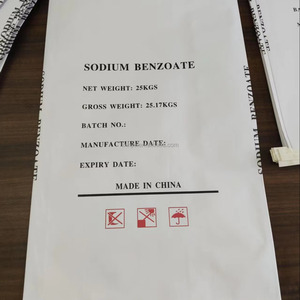
Sodium Benzoate Preservative E211 High Purity

Food Grade Sodium Benzoate Preservative E211 CAS 532-32-1 White Granule

Standard: E211 / FCC IV
Compliance: Kosher, Halal Certified
Packing: 25kg/Bag Bulk Supply
Get Catalog
Preservative & Antioxidants Cinnamic Acid Powder

Preservative & Antioxidants Food Grade Hot Sales Cinnamic Acid Powder CAS 140-10-3

Purity: ≥ 99.5%
CAS No: 140-10-3
Function: Antioxidant & Flavor Agent
Get Catalog
Natural Food Preservative Epsilon-PolyLysine Hydrochloride

Natural Food Preservative 95% Epsilon-PolyLysine (EPL) Hydrochloride Powder

Assay: 95% Active EPL
Type: Biopreservative
Thermal Stability: Up to 121°C
Get Catalog
2,500+
Ingredients Managed
100%
Lot Document Traceability
CE & ISO
Factory Standard Certifications
48+
Global Logistics Terminals

Technical White Paper: Industrial Artificial Sweetener Systems & CE Regulatory Compliance

The global food and beverage manufacturing landscape is undergoing an unprecedented structural shift driven by consumer demand for sugar reduction, caloric management, and clean-label optimization. As food formulators replace sucrose with high-intensity non-nutritive sweetener systems, securing a verified, CE-certified, and GMP-compliant ingredient supply chain becomes the defining factor in commercial product stability, regulatory clearance, and margin performance.

CE certification (Conformité Européenne) in chemical manufacturing and food additive synthesis represents a rigorous operational benchmark. It guarantees that the artificial sweetener manufacturing facility operates under strict safety protocols, environmental controls, trace contaminant thresholds, and batch-to-batch chemical uniformity. For international buyers, sourcing from a CE-certified artificial sweetener factory eliminates audit friction, protects against heavy metal contamination (such as Lead, Arsenic, and Cadmium), and guarantees full alignment with Regulation (EC) No 1333/2008 and Regulation (EC) No 1334/2008.

Sucralose (E955) Systems

600x sweeter than sucrose. Exceptional thermal stability up to 230°C makes it ideal for bakery, UHT dairy processing, and extrusion cooking without chemical degradation or off-flavour formation.

Acesulfame Potassium (Ace-K, E950)

200x sweeter than sugar with rapid onset sweetness. Features fast solubility kinetics in aqueous solutions and works synergistically when paired with Aspartame or Sucralose to round out taste profiles.

Neotame & Aspartame Blends

Ultra-high intensity solutions reaching up to 8,000x sweetness. Delivers clean, sugar-like sensory profiles while dramatically reducing raw material freight tonnage and warehousing footprints.

Strategic Sourcing & Procurement Forecast (2026–2032)

Industrial food procurement desks are transitioning from transactional spot buying to long-term risk-mitigated supply agreements. Global market fluctuations in petrochemical precursors, energy overheads, and cross-border logistics demand that high-volume buyers establish direct linkages with audited manufacturing facilities capable of forward pricing and strategic inventory buffering.

Key market drivers reshaping the high-intensity sweetener procurement sector over the next decade include:

  • Synergistic Blending Technologies: Manufacturers are moving away from single-agent sweetening towards multi-component systems (e.g., Sucralose + Ace-K + Erythritol) to mimic the temporal sweetness curve of sucrose perfectly while reducing total additive concentrations.
  • Dual-Sourcing & Regional Distribution Hubs: To counter maritime supply shocks, major industrial buyers mandate that suppliers maintain staging inventory across domestic warehouse networks, offering Just-In-Time (JIT) release schedules.
  • Automated Analytical Validation: Modern food processing facilities require High-Performance Liquid Chromatography (HPLC) verification, specific optical rotation testing, and particle size granularity analysis attached directly to every Certificate of Analysis (COA).
Additive Name E-Number Sweetness Factor (vs Sucrose) Thermal Breakdown (°C) Optimal pH Range Primary Industrial Applications
Sucralose E955 600x > 230°C 3.0 – 7.0 Bakery, Beverages, Dairy, Confectionery
Acesulfame Potassium E950 200x > 225°C 3.0 – 9.0 Carbonated Soft Drinks, Syrups, Chewing Gum
Sodium Saccharin E954 300x - 400x > 300°C 2.0 – 8.0 Tabletop Sweeteners, Oral Care, Pharmaceuticals
Neotame E961 7,000x - 8,000x > 200°C 3.0 – 7.0 Extruded Cereals, Concentrates, Dressings
Citric Acid Anhydrous E330 Acidulant (N/A) > 175°C 1.5 – 6.0 Flavor Enhancer, pH Control, Preservative Synergy

Enterprise Supply Chain & Quality Assurance Capabilities

As a global food ingredient exporter and supply chain manager, our operational model bridges verified primary chemical factories with world-class production plants. We remove multi-tiered distribution markups while enforcing uncompromised batch quality control.

Full Audit Traceability

Every shipment is backed by complete documentation: COA, Allergen Statements, Non-GMO declarations, Heavy Metal analysis, Kosher, Halal, and CE certification records.

Formulation & R&D Depth

In-house food scientists assist technical procurement teams with molecular substitution ratios, cost-reduction trials, and custom particle-size mesh customization.

JIT Logistics Architecture

Strategic warehousing infrastructure ensures truckload (TL) and less-than-truckload (LTL) deliveries are dispatched smoothly across North American and international terminals.

Procurement & Technical FAQ

Answers to critical questions asked by industrial buyers, R&D managers, and quality control directors.

What specific documentation accompanies each bulk shipment of artificial sweeteners?
Every order is supplied with batch-specific Certificates of Analysis (COA), Technical Data Sheets (TDS), Safety Data Sheets (SDS), Kosher and Halal Certificates, Allergen and Nutritional Statements, Non-GMO Status Statements, and Country-of-Origin documentation. CE and ISO audit compliance dossiers are available upon request for quality assurance validation.
How does CE certification impact the import and clearance of artificial sweeteners?
CE certification confirms that the manufacturing plant complies with European safety, environmental, and chemical synthesis regulations. This significantly simplifies customs validation, reduces physical sampling inspections at European and North American ports, and ensures total conformity with European Food Safety Authority (EFSA) and US FDA monograph standards.
What are the typical minimum order quantities (MOQ) and packaging formats for industrial orders?
Standard export packaging includes 25kg fiber drums with dual inner PE liners, 25kg multi-wall kraft paper bags, and 500kg/1000kg flexible intermediate bulk containers (super sacks). Minimum order quantities start at 1 metric ton for standard grades, with customized contract staging options for multi-container annual commitments.
Can your technical team support sugar replacement reformulation in complex beverage matrixes?
Yes. Our application specialists collaborate directly with client R&D teams to formulate high-potency sweetener blends, optimize pH stability in acidic carbonated beverages, mask lingering metallic notes with polyols or natural extracts, and achieve exact brix-matching target profiles.
How are shelf-life and chemical purity maintained during long-distance maritime transport?
All sweeteners are packed under climate-controlled conditions with moisture-proof heat-sealed barriers and desiccant pouches. Shelf-life stability spans 24 to 36 months when stored in sealed original packaging under cool, dry conditions (< 25°C and < 60% relative humidity).

Request Full Specifications & Industrial Pricing

Connect with our technical sourcing specialists to receive complete specification sheets, sample lots, factory audit packs, and competitive volume pricing.

Get Catalog