
Why Source Brining and Pickling Ingredients Globally?
Global sourcing has become essential for manufacturers seeking consistent quality, reliable supply, and distinctive regional flavors. Brining and Pickling Ingredients include salt, vinegar, sugar, spices, herbs, calcium salts, and functional preservatives. Each ingredient affects texture, acidity, shelf life, and consumer trust.
The World Health Organization reports that contaminated food causes approximately 600 million illnesses worldwide each year. This reality makes supplier verification more than a purchasing task. It becomes a core food-safety decision. The Codex Alimentarius General Principles of Food Hygiene also emphasizes hazard control, traceability, and validated processing practices. These standards matter when ingredients cross several borders.
Market intelligence from Grand View Research and Mordor Intelligence indicates continued growth in global pickles and preserved-food categories. Their estimates differ, however. That difference should encourage careful interpretation, not blind confidence. Market definitions often include sauces, fermented vegetables, and ready-to-eat products.
Fermentation educator Sandor Ellix Katz describes the process simply: “Fermentation is the transformation of food by microorganisms.” His observation highlights why ingredient selection requires technical understanding. A small change in salt purity can alter brine concentration. A different vinegar strength can shift acidity and flavor. A new spice supplier may also introduce allergen or contamination concerns.
Global sourcing can improve resilience, but it is not automatically better. Buyers must compare certificates, laboratory results, harvest conditions, transport risks, and local regulations. Sometimes, a nearby supplier offers greater reliability. Sometimes, a distant producer provides unmatched authenticity. The best decision depends on evidence, testing, and honest review.
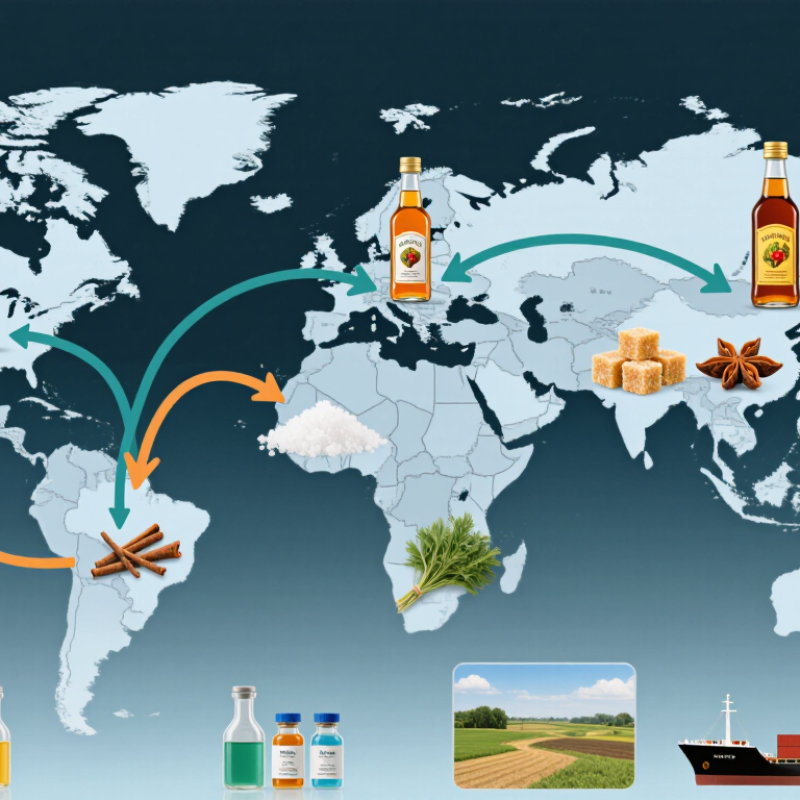
Brining and pickling ingredients are functional materials, not merely flavorings. A brine usually combines water and salt to draw moisture from vegetables, poultry, seafood, or meat. Salt also supports texture and controls unwanted microbial growth. Pickling commonly adds an edible acid, such as vinegar or lactic acid, to lower pH. Sugar, garlic, dill, mustard seed, pepper, and other spices shape aroma and taste.
The details matter. Salt purity affects clarity and fermentation performance. Vinegar strength affects acidity, shelf stability, and flavor balance. Calcium salts can help keep cucumbers firm, while herbs and spices contribute volatile oils that may vary by harvest. According to the U.S. Department of Agriculture, cucumbers contain about 95% water, which explains why brine concentration strongly changes their final texture. Small differences become obvious in a crisp slice.
Industry data also shows why ingredient sourcing deserves technical attention. Grand View Research valued the global pickles market at approximately USD 8.1 billion in 2023, with continued growth projected through 2030. The Food and Agriculture Organization emphasizes traceability, hygienic handling, and quality control across food supply chains. These reports do not make every ingredient equally reliable. A lower price may hide inconsistent salt grain size, weak spice documentation, or unclear acid specifications. That is the uncomfortable part. Global sourcing looks efficient, but supplier audits, certificates of analysis, allergen controls, and batch testing still require practical judgment.
| Ingredient | Primary Function | Common Applications | Typical Global Source Areas | Why Global Sourcing Is Useful | Key Quality Considerations |
|---|---|---|---|---|---|
| Sodium chloride (salt) | Creates the brine, draws water from food, supports preservation, and helps control texture. | Cucumbers, cabbage, olives, vegetables, fish, and meat. | Coastal evaporation regions, underground rock-salt deposits, and solar-salt production areas worldwide. | Salt is widely available, but international sourcing can improve supply continuity, crystal-size options, and cost control. | Purity, moisture level, crystal size, iodine status, and compliance with food-grade specifications. |
| Water | Dissolves salt, acids, sugars, and spices to form the brining or pickling medium. | All aqueous brines, marinades, fermented pickles, and canned pickled foods. | Usually sourced locally and treated at the processing site. | Local treatment reduces transportation costs, while alternative supply systems can support production continuity in water-stressed areas. | Potability, mineral content, hardness, microbial quality, and compatibility with the intended process. |
| Vinegar and acetic acid | Provides acidity, sour flavor, and an environment that inhibits many unwanted microorganisms. | Quick pickles, pickled onions, cucumbers, peppers, relishes, and mixed vegetables. | Regions producing grain, sugar, fruit, or wine-based fermentation substrates; food-grade acetic acid is manufactured globally. | Different origins provide options in acidity level, flavor profile, raw-material availability, and transportation efficiency. | Declared acidity, sensory profile, clarity, fermentation consistency, and regulatory compliance. |
| Sugar | Balances acidity and saltiness, adds sweetness, and contributes to flavor and browning in some products. | Sweet pickles, chutneys, relishes, fruit pickles, and flavored brines. | Sugarcane-growing regions in tropical and subtropical climates and sugar-beet-growing regions in temperate climates. | Global availability supports price management and allows selection of different sweetness, color, and dissolution characteristics. | Polarity, color, moisture, particle size, microbiological quality, and consistency of sweetness. |
| Citric acid | Adjusts acidity, provides a clean sour taste, and helps control pH in formulated pickling liquids. | Acidified vegetables, fruit pickles, sauces, dressings, and shelf-stable products. | Produced commercially by fermentation of carbohydrate substrates in many food-processing regions. | Multiple international supply sources can provide dependable acidity, particle-size choices, and formulation flexibility. | Assay, solubility, particle size, moisture, heavy-metal limits, and accurate pH performance. |
| Calcium chloride | Helps maintain firmness and crispness in some fruits and vegetables during processing and storage. | Cucumbers, canned vegetables, fruit products, and texture-sensitive pickles. | Food-grade production facilities associated with mineral-processing and chemical-manufacturing regions worldwide. | International sourcing helps processors secure consistent food-grade material and manage regional supply interruptions. | Food-grade purity, concentration, solubility, dosage control, and potential bitterness at excessive levels. |
| Mustard seed | Adds pungency, aroma, and visual character to spice blends and pickling liquids. | Pickled cucumbers, vegetables, relishes, sauces, and spice sachets. | Cool and temperate agricultural regions across South Asia, Europe, North America, and other mustard-growing areas. | Different origins offer variations in pungency, seed color, harvest timing, and seasonal availability. | Seed cleanliness, moisture, oil content, pungency, foreign-material control, and allergen management. |
| Dill | Provides a distinctive herbal aroma and flavor. | Cucumber pickles, brined vegetables, fish, sauces, and seasoning blends. | Temperate herb-growing regions in Europe, Asia, North America, and the Mediterranean area. | Global sourcing supports year-round availability of dried leaves, seeds, and different flavor strengths. | Aroma intensity, color retention, moisture, microbial safety, and stem or foreign-material content. |
| Garlic | Contributes savory flavor and characteristic aroma to brines and pickling blends. | Vegetable pickles, fermented products, sauces, relishes, and mixed spice preparations. | Major garlic-growing regions in Asia, Europe, North America, and the Southern Hemisphere. | Seasonal purchasing from different regions helps maintain supply and supports fresh, dried, granulated, or powdered formats. | Bulb condition, moisture, microbial quality, pesticide compliance, flavor strength, and storage stability. |
| Black pepper | Adds heat, aroma, and complexity to pickling spice mixtures. | Pickled vegetables, meats, fish, brines, and seasoning blends. | Tropical growing regions in South and Southeast Asia, Africa, and Latin America. | Multiple origins provide options in pungency, berry size, processing format, and harvest-season management. | Piperine-related pungency, volatile aroma, moisture, mold control, cleanliness, and pesticide residues. |
| Turmeric | Provides yellow-orange color, earthy flavor, and visual differentiation. | Vegetable pickles, relishes, curry-style pickles, and spice blends. | Warm, humid agricultural regions in South and Southeast Asia and other tropical areas. | Global procurement can balance color strength, seasonal crop variation, availability, and processed-form requirements. | Color value, curcuminoid content, moisture, adulteration screening, microbial quality, and pesticide compliance. |
| Food-grade herbs and spices | Builds flavor complexity and allows regional or application-specific recipes. | Mixed pickling spices, fermented vegetables, relishes, sauces, and specialty brines. | Mediterranean, Asian, African, Latin American, and other herb- and spice-producing regions. | A broader sourcing network supports recipe customization, harvest-risk diversification, and stable year-round supply. | Botanical identity, traceability, microbial testing, allergen controls, pesticide residues, and consistent particle size. |
Global sourcing provides access to salts, vinegars, sugars, herbs, and spices with different qualities. Regional differences can improve flavor, texture, and supply resilience.
Buyers should review moisture, grain size, acidity, microbiological results, and pesticide compliance. Samples should be tested before regular shipments begin.
Salt moisture and grain size influence dissolving speed and brine consistency. Coarse crystals should dissolve predictably without leaving unexpected sediment.
Cucumbers should arrive firm, evenly sized, and sufficiently cool. These details help protect texture during processing and storage.
Batch records, laboratory reports, lot numbers, and transport temperatures help teams locate problems quickly. Good records make investigations practical.
Long routes may expose ingredients to heat, humidity, delays, or damaged packaging. Rain can weaken outer cartons before cargo reaches the warehouse.
Yes. Weather can change pepper heat, garlic strength, vinegar supply, color, or aroma. Sometimes, the numbers look right, yet the brine tastes different.
No. Specifications may be too general, especially for herbs and spices. Sensory reviews, seasonal samples, and deviation records still matter.
Backup suppliers can protect continuity during delays or shortages. However, changing sources may also alter color, aroma, or flavor.
Not always. Buyers should compare testing, transport conditions, traceability, and delivery reliability. Cost alone can hide practical risks.
Brining and Pickling Ingredients include salts, vinegars, acids, sugars, spices, herbs, and other natural components used to preserve food, develop flavor, and maintain texture. These ingredients come from diverse agricultural and mineral sources around the world, with each region offering different qualities based on climate, soil, cultivation methods, and processing expertise. Selecting the right ingredients requires careful attention to purity, freshness, flavor strength, moisture content, and compatibility with specific preservation recipes.
Global sourcing helps producers maintain a reliable supply and achieve consistent taste, appearance, safety, and performance across different production periods. It also provides access to seasonal ingredients and specialized varieties that may not be locally available. However, international sourcing can face challenges such as weather-related shortages, transportation delays, changing costs, quality variations, and differences in storage or processing conditions. Effective supplier evaluation, testing, documentation, and quality control are essential for managing these challenges and ensuring that brining and pickling products remain dependable and consistent.