
For global buyers, Sauce and Dressing Ingredients are not simply flavor components. They influence taste, texture, shelf life, labeling, production efficiency, and consumer trust. A bright tomato base, a smooth emulsion, or a smoky chili profile can define an entire product range. Yet every ingredient must perform consistently across different climates, factories, and distribution routes.
Dr. Kantha Shelke, a food scientist and industry advisor, has said, “Ingredients are the building blocks of food innovation.” This idea matters when buyers compare vinegar, oils, starches, spices, sweeteners, stabilizers, and natural colorants. The strongest choices combine sensory appeal with reliable technical performance. They also come with clear specifications, traceability records, allergen information, and suitable regulatory documentation.
This guide examines ten important Sauce and Dressing Ingredients for international purchasing teams. Each ingredient deserves a practical review. Can it tolerate heat during processing? Will its flavor remain stable after months on a warehouse shelf? Does its supply depend on one region or one harvest? These questions are easy to overlook.
Taste comes first.
However, taste alone is not enough. A dressing may look attractive in a sample jar but separate during transport. A natural color may fade under bright retail lighting. A low-cost thickener may create an unpleasant mouthfeel. Buyers should test real formulations, not isolated samples, and should challenge supplier claims with batch records and pilot trials. No list can predict every market perfectly. That limitation deserves attention. Still, these ten ingredients provide a useful starting point for building safer, more adaptable, and commercially successful sauce and dressing portfolios worldwide.
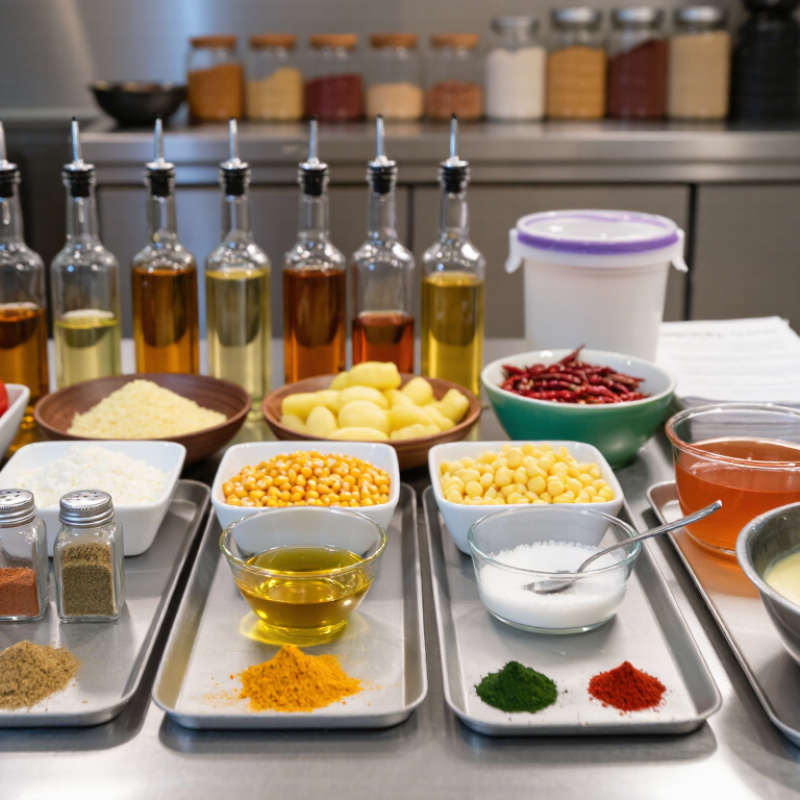
Top 10 Sauce and Dressing Ingredients for Global Buyers
Global buyers should evaluate ingredients beyond price, color, and immediate availability. The selection process starts with the finished product’s target market, recipe, and storage conditions.
Flavor consistency matters. A chili extract may taste different across harvests, so buyers should request sensory specifications and batch samples. Acidity regulators, oils, starches, sweeteners, herbs, spices, and natural colors also need documented performance. Check viscosity, pH, heat stability, solubility, and interaction with salt or preservatives. Small laboratory trials often reveal problems hidden in a supplier’s technical sheet.
Reliable documentation is essential. Buyers should review allergen statements, ingredient origins, certificates of analysis, traceability records, shelf-life data, and transport conditions. Requirements can differ between destination markets, so regulatory review should happen before purchase orders. Food safety controls and contaminant testing deserve careful attention, especially for spices, oils, and agricultural ingredients. Documents can still contain errors. Verify critical details directly.
Supplier capability also affects ingredient selection. Ask about minimum order quantities, lead times, packaging strength, storage temperatures, and backup production plans. A cheaper ingredient may increase waste if it separates during shipping or requires reformulation. Taste still decides. Conduct blind comparisons with the actual sauce or dressing base, not water alone. No checklist is perfect. Seasonal variation, delayed freight, and changing consumer preferences can challenge even experienced buyers. A cautious trial order may expose weaknesses before they become expensive.
| No. | Ingredient | Main Functional Role | Common Sauce and Dressing Applications | Key Selection Criteria for Global Buyers | Typical Technical Parameters | Supply and Regulatory Considerations |
|---|---|---|---|---|---|---|
| 1 | Vegetable Oil | Provides body, richness, lubrication, and carries fat-soluble flavors. It also forms the continuous phase in many emulsified dressings. | Mayonnaise Vinaigrette Chili Oil Sauce Creamy Dressing | Neutral flavor; suitable oxidative stability; consistent color; low off-odor; appropriate fatty-acid profile; compatibility with the target emulsion system; reliable supply in food-grade packaging. | Food-grade purity; low moisture and impurities; controlled peroxide value; suitable viscosity; cold-pressed or refined grade selected according to the product positioning. | Check allergen status, GMO declaration where required, sustainability documentation, traceability, oxidation control, and compliance with destination-country contaminant limits. |
| 2 | Vinegar | Delivers acidity, brightness, microbial control support, and balance against sweetness and fat. | Vinaigrette Hot Sauce Barbecue Sauce Pickle Sauce | Clean acidic profile; consistent acidity; low sediment; suitable aroma; compatibility with spices and preservatives; stable performance after heat treatment. | Common food vinegar strengths are approximately 4–10% acidity, depending on type and market use. pH contribution must be verified in the finished formula rather than judged from acidity alone. | Specify vinegar source, permitted processing aids, alcohol-related declarations where applicable, packaging resistance to acidity, and local limits for acetic acid and preservatives. |
| 3 | Tomato Paste or Tomato Purée | Adds color, umami, acidity, natural solids, and characteristic tomato flavor while contributing to viscosity. | Ketchup Pasta Sauce Pizza Sauce Barbecue Sauce | Bright red color; fresh tomato flavor; consistent soluble-solids level; low separation; low foreign material; suitable viscosity and heat stability. | Tomato paste is commonly standardized by soluble solids, often around 24–36 °Brix depending on the product specification. Color, pH, viscosity, and mold-count controls are important. | Consider seasonal crop variation, aseptic or frozen supply, container format, pesticide-residue compliance, mycotoxin controls, and protection from light and oxygen. |
| 4 | Sugar or Syrup | Provides sweetness, balances acidity and heat, improves mouthfeel, and contributes to browning and solids content. | Ketchup Sweet Chili Sauce Barbecue Sauce Teriyaki-Style Sauce | Consistent sweetness; clean taste; suitable solubility; stable color; compatibility with reduced-sugar or clean-label positioning; controlled crystallization risk. | Liquid syrups are typically assessed by soluble solids, while crystalline sugar is assessed by purity, particle size, moisture, and color. Finished-product sweetness should be balanced with acidity and salt. | Confirm source and labeling requirements, including cane, beet, glucose, or other syrup origins; evaluate hygroscopicity, storage conditions, and carbohydrate declaration rules. |
| 5 | Salt | Enhances flavor, moderates bitterness, contributes to preservation, and influences protein and hydrocolloid functionality. | Soy-Based Sauce Hot Sauce Dressing Seasoning Sauce | High purity; consistent granulation; clean flavor; low insoluble matter; suitability for reduced-sodium formulations; predictable dissolution. | Food-grade salt is generally specified by sodium chloride purity, moisture, insoluble matter, and particle size. Sodium content must be calculated for the finished product and serving size. | Review iodine status, anti-caking agents, heavy-metal limits, moisture protection, and nutrition-label requirements in each destination market. |
| 6 | Mustard | Provides pungency, characteristic flavor, yellow color, emulsification support, and complexity in savory formulations. | Mustard Dressing Honey Mustard Vinaigrette Mayonnaise | Controlled heat level; consistent seed quality; smooth or coarse particle profile; stable color; low bitterness; compatibility with the desired allergen statement. | Mustard products vary by seed type, grind size, acidity, and moisture. Pungency can change during storage, so sensory and microbiological stability should be evaluated over shelf life. | Mustard is a regulated allergen in many markets. Buyers should require allergen-control documentation, cross-contact controls, pesticide-residue compliance, and clear seed-origin information. |
| 7 | Soy Sauce or Fermented Soy Seasoning | Adds umami, saltiness, color, aroma, and fermentation-derived complexity. | Stir-Fry Sauce Dipping Sauce Marinade Asian-Style Dressing | Balanced umami and salt; clean fermentation profile; consistent color; low sediment; suitable viscosity; availability of reduced-sodium or wheat-free alternatives. | Important specifications include salt level, total nitrogen or amino-nitrogen indicators, pH, color, viscosity, microbiological quality, and absence of unwanted fermentation notes. | Soy and wheat may require allergen declarations. Check gluten-free requirements, alcohol or preservative declarations, GMO documentation, and compatibility with halal or kosher certification needs. |
| 8 | Garlic | Creates savory aroma, pungency, and depth; may be supplied as fresh, purée, granulated, powdered, or dehydrated garlic. | Garlic Sauce Pasta Sauce Marinade Salad Dressing | Strong but clean aroma; consistent pungency; low microbial load; controlled browning; suitable particle size; no foreign odor or excessive bitterness. | Fresh and purée forms contribute moisture and may require tighter microbiological controls. Dehydrated forms require moisture, mesh size, volatile-oil, and rehydration specifications. | Control Salmonella and other pathogens, pesticide residues, heavy metals, and storage humidity. Confirm whether the product contains preservatives, sulfites, or carrier ingredients. |
| 9 | Onion | Provides sweetness, savory depth, aroma, texture, and natural solids. | Barbecue Sauce Gravy-Style Sauce Salsa Creamy Dressing | Consistent flavor intensity; suitable dice or powder size; low moisture variation; controlled pungency; good rehydration; minimal browning or foreign material. | Fresh, purée, granulated, and powdered formats have different moisture and microbiological profiles. Particle size and water-binding behavior affect texture and processing conditions. | Evaluate crop-year variation, pesticide-residue compliance, pathogen controls, sulfite use where applicable, and protection against moisture pickup during storage. |
| 10 | Herbs and Spices | Deliver signature aroma, heat, color, and regional flavor differentiation, often at relatively low usage levels. | Chili Sauce Herb Dressing Curry Sauce Pepper Sauce | Authentic aroma; consistent heat and color; low microbial load; controlled particle size; minimal adulteration; stable volatile oils and low foreign matter. | Specifications may include moisture, mesh size, volatile-oil content, color value, capsaicin level for chili, piperine level for pepper, and microbiological limits. | Require botanical identity and authenticity testing, pesticide-residue and mycotoxin controls, irradiation or steam-treatment declarations, allergen review, and country-of-origin traceability. |
Start with the target market, recipe, and storage conditions. Price and availability are not enough. Taste still decides.
Tomato adds body and gentle acidity. Chili provides adjustable heat. Garlic and onion create savory depth. Vinegar, citrus, mustard, sesame, herbs, and spices add balance and character.
Request sensory specifications and batch samples. Compare color, aroma, heat, and aftertaste. Test several harvests when possible. Seasonal differences can surprise you.
Water tests may hide problems. Use the actual sauce or dressing base. Check viscosity, pH, solubility, heat stability, and interactions with salt or preservatives. Small trials help.
Review particle size, viscosity, color stability, and aroma strength. Observe the product after storage. A powerful ingredient may dominate the recipe.
Ask for allergen statements, ingredient origins, certificates of analysis, traceability records, shelf-life data, and transport conditions. Verify critical details directly. Documents can be wrong.
Ask about minimum order quantities, lead times, packaging strength, storage temperatures, and backup production plans. Strong packaging matters during long transport. A cheap ingredient may increase waste.
Place a cautious trial order. Conduct blind comparisons with the finished product. Use sensory panels and stability checks. No checklist is perfect. Regional tastes can change priorities quickly.
This guide introduces the top 10 Sauce and Dressing Ingredients that global buyers should evaluate when developing products for diverse markets. It explains how to select core flavor components, including herbs, spices, oils, vinegars, sweeteners, and savory ingredients, while considering consumer preferences, application requirements, and regional taste profiles. The article also highlights functional ingredients such as thickeners, emulsifiers, stabilizers, and preservatives that help improve texture, consistency, product performance, and shelf life.
In addition, the guide outlines important labeling, quality, and regulatory considerations that may vary by region, including allergen declarations, ingredient transparency, permitted additives, and documentation standards. Buyers will also learn how to assess suppliers based on pricing, minimum order quantities, quality consistency, certifications, production capacity, logistics, traceability, and supply continuity. Together, these criteria provide a practical framework for making reliable, cost-effective, and market-appropriate ingredient sourcing decisions.