
Expert analysis on ingredient trends, market movements and formulation guidance from AIFI's sourcing specialists.
Weekly Market Report ›Choosing reliable baking ingredient suppliers can shape product quality, margins, and customer trust. This guide examines China’s top 10 Baking Ingredients suppliers for global buyers. It focuses on practical sourcing needs, not impressive claims alone.
The review considers product range, manufacturing experience, quality systems, export capability, and communication. It also looks at flour improvers, cocoa products, dairy powders, yeast, emulsifiers, sweeteners, and functional blends. Buyers should examine certificates, allergen controls, batch records, and traceability before placing large orders. A clear specification sheet matters. So does a responsive technical team.
Production details can reveal more than a polished website. Ask about factory audits, sample approval, minimum order quantities, packaging options, and storage conditions. A supplier may offer competitive prices but lack stable lead times. Another may provide excellent documentation but limited customization. These differences affect bakeries, food manufacturers, distributors, and private-label brands in different ways.
No supplier fits every market. Prices change. Regulations differ. This guide is not a substitute for independent verification. Buyers should confirm current certifications, import requirements, ingredient declarations, and test results with each company. That caution is important when ingredients travel across borders and enter products consumed by families worldwide.
The selected companies are presented as practical candidates, not guaranteed partners. Their strengths may include scale, specialization, innovation, or export support. Their limitations deserve equal attention. By comparing evidence instead of relying on rankings, global buyers can reduce avoidable sourcing risks and build more dependable supply relationships. A perfect list does not exist. Careful questions still improve decisions.
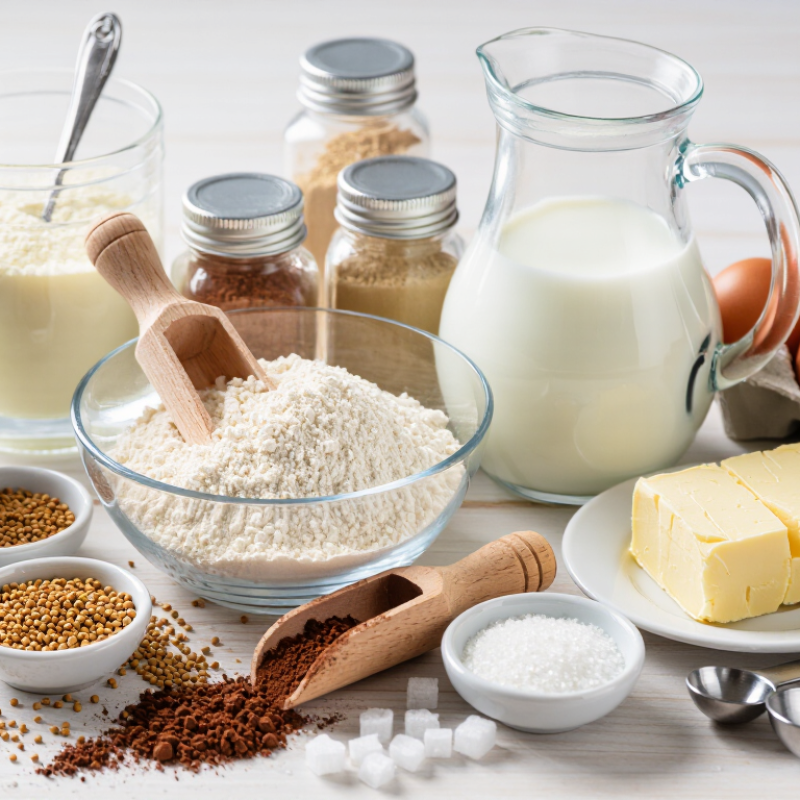
China’s baking ingredients market is expanding with urban foodservice, packaged bread, and frozen dough demand. Mordor Intelligence estimates the market reached approximately US$4.1 billion in 2024, with a projected growth rate near 6% annually through 2029. The estimate covers flour improvers, yeast, enzymes, emulsifiers, fillings, and functional blends. Definitions differ between research firms, so buyers should compare product scopes carefully.
Official trade data needs similar caution. China Customs and UN Comtrade classify many baking inputs under broader HS codes, including HS 1901 and HS 2106. Their 2024 trade records show strong cross-border activity in prepared flour products and specialty food preparations, but these categories also include non-bakery applications. This makes a single “baking ingredients trade value” difficult to verify precisely. A supplier review should therefore separate export value from domestic market value.
In practical sourcing work, growth is visible in small details. Export cartons increasingly show moisture barriers, allergen statements, and batch traceability. Enzyme blends and low-sugar filling systems also attract more technical questions. Euromonitor’s 2024 bakery analysis links premiumization and convenience with continued category growth in China, although price-sensitive consumers remain important. That tension matters. A forecast may look strong, yet demand can shift quickly when wheat prices, freight rates, or retail promotions change. Suppliers should provide recent certificates, specification sheets, shelf-life evidence, and trial quantities before large orders.
A reliable China top 10 baking ingredients supplier ranking needs more than factory size. Capacity should be checked through monthly output, production lines, storage conditions, and documented batch records. A facility producing several thousand tons annually may still struggle during peak holiday demand. Site visits, recent purchase orders, and loading records provide stronger evidence than sales claims. Capacity varies by season.
Certifications form the second filter. Buyers should verify valid HACCP, ISO 22000, BRCGS, or equivalent food safety systems through issuing bodies. Audits should cover allergen control, sanitation, traceability, and foreign-material prevention. A certificate alone proves little. Expiry dates and product scopes matter. Export performance also deserves close review. Customs records, destination markets, shipping frequency, and complete documentation can show whether a supplier regularly serves international buyers. Photos of sealed pallets and temperature-controlled containers add useful, practical detail.
MOQ data should be compared beside price, lead time, packaging options, and sample policies. A low MOQ may hide higher costs or limited customization. MOQ can mislead. Rank suppliers using verified figures, not attractive brochures. For example, one supplier may accept 500 kilograms for trials, while another requires a full pallet but offers stable quarterly production. Payment terms, inspection procedures, complaint response, and recall readiness should influence the final score. Some data will remain incomplete, especially when suppliers protect commercial information. That limitation should be stated openly, because honest uncertainty is more useful than false precision.
China’s Top 10 Baking Ingredients Suppliers for Global Buyers
China’s strongest suppliers are best assessed by product category and export performance. This list uses public customs records, shipment continuity, food-safety certifications, and buyer audits. It is not an official government ranking. The ten leading supply groups cover wheat flour, starch, sugar, cocoa powder, yeast, dairy powders, bakery fats, nuts, dried fruit, and flavor ingredients. China Customs data and UN Comtrade records show sustained international trade across these categories, especially in starch, plant-based fats, nuts, and fruit preparations.
Product specialization matters. Flour suppliers usually compete on protein control, milling consistency, and container efficiency. Starch exporters often provide tapioca, corn, or modified grades for cakes and fillings. Sugar suppliers serve industrial bakeries with stable crystal size and bulk packing. Yeast and dairy powder producers are evaluated through activity tests, moisture control, and cold-chain discipline. Nut and dried-fruit suppliers need stronger aflatoxin, pesticide, and traceability systems. Cocoa and flavor ingredient exporters must manage origin documentation and allergen controls.
Export performance should not mean volume alone. UN Comtrade data helps compare destination coverage, while the FAO Food Outlook highlights changing cereal and input costs. In practice, a smaller supplier may offer better technical support than a larger exporter. The ranking remains imperfect. Buyers should request recent certificates, batch samples, inspection records, and port-level delivery evidence before contracting. Small details matter. A delayed moisture report can disrupt an entire production schedule.
Comparing China’s top ten baking ingredient suppliers requires more than checking quoted prices. Product grade, packaging, certificates, and export experience can change the final cost. Common ingredients include cocoa powder, cake emulsifiers, fillings, dried fruits, yeast, and flour improvers. Bulk prices may appear attractive, but smaller orders often carry higher unit costs. A practical comparison should record the price per kilogram, packaging format, and delivery term. This prevents misleading comparisons between factory and delivered prices.
Lead times usually depend on production schedules, ingredient availability, and port arrangements. Stocked products may ship within 7–15 days, while customized formulas can require 25–45 days. Minimum order quantities vary widely. Some suppliers accept 100 kilograms for standard items, while customized products may require 500 kilograms or more. These figures are indicative, not guaranteed. A written production schedule is safer than a sales promise.
Tips: Request samples from three suppliers and test them in your own recipes. Check moisture, flavor, color stability, and performance after baking. Ask for current certificates, batch records, allergen statements, and shelf-life data. Confirm whether prices include inner bags, cartons, pallets, and export documentation. I would also negotiate a small trial order before annual purchasing. It costs more initially. Yet one overlooked quality difference can create waste, delays, and customer complaints. Supplier rankings should be reviewed regularly because pricing, capacity, and compliance can change.
When comparing China’s top 10 baking ingredient suppliers, global buyers should examine compliance before price. HACCP records should identify hazards at receiving, processing, storage, and dispatch stages. ISO 22000 certification can show a structured food safety management system, but the certificate must remain valid. Check the certification body, audit scope, production site, and covered product category. A certificate for one factory may not cover another facility.
Tips: Request recent audit reports, laboratory results, allergen controls, and traceability samples. Ask for lot numbers, production dates, and recall procedures. Halal and Kosher documents should match the exact ingredient, facility, and production process. Religious certification may change after a formulation or supplier change. Paperwork alone is not enough.
Customs compliance requires accurate product descriptions, HS codes, country-of-origin details, labels, invoices, and packing lists. Ingredient specifications should match customs declarations and shipment documents. Temperature-sensitive materials may need validated transport records. Border delays often begin with small inconsistencies, such as different weights on an invoice and packing list. In practice, audits are not always neat. A supplier may provide strong certificates but weak batch traceability. Buyers should test samples and verify documents through independent channels. Requirements also vary by destination, so importers should review current customs and food regulations before ordering.
The chart compares objective structural reference points used during supplier screening. Codex HACCP is built around seven principles, while ISO 22000:2018 contains seven main auditable system clauses from Clause 4 through Clause 10. Halal, Kosher, and customs compliance do not have one universally fixed global clause count; requirements depend on the certifying authority, destination market, product, and import procedure.
Compare verified capacity, food safety records, export history, pricing, lead times, and minimum order quantities. Brochures are not enough. Site visits, batch records, purchase orders, and loading records provide stronger evidence. Rankings should be reviewed regularly.
Request monthly output, production-line details, storage conditions, and recent batch records. Capacity changes seasonally. A factory producing thousands of tons annually may still face delays during holiday demand. Check recent orders and shipment records.
Review current food safety certifications and confirm them with the issuing organization. Check the facility, product scope, expiry date, and audit coverage. A certificate alone proves little. Audits should address allergens, sanitation, traceability, and foreign-material prevention.
Review destination markets, shipping frequency, customs documents, and export records. Ask for sealed pallet photos and transport details. Documentation matters. Regular international shipments usually provide better evidence than general sales claims.
Record price per kilogram, packaging format, delivery terms, and minimum order quantity together. A low minimum order may carry higher unit costs. MOQ can mislead. One supplier may accept 100 kilograms, while another requires a full pallet but offers steadier production.
Stocked ingredients may ship within 7–15 days. Customized formulas can require 25–45 days. Production schedules, ingredient availability, and port arrangements affect timing. Written schedules are safer. Sales promises may change.
Request samples from several suppliers and test them in your own recipes. Check moisture, flavor, color stability, and baking performance. Test the real recipe. Also review shelf life, allergen statements, and batch information. A small trial order may prevent expensive waste.
Verify lot numbers, production dates, specifications, labels, invoices, packing lists, origin details, and customs classifications. Product information should match every shipment document. Small errors cause delays. Temperature-sensitive materials may also require validated transport records. Some evidence will remain incomplete, so state that limitation openly.
China’s Baking Ingredients market continues to attract global buyers due to its broad manufacturing base, expanding export capacity, and competitive pricing. This summary examines the market’s 2024 trade value and growth rate while explaining how suppliers can be evaluated through production capacity, product consistency, certifications, export experience, and minimum order quantities. The review covers key product categories, including flour improvers, sweeteners, cocoa-based materials, dairy ingredients, leavening agents, flavors, and functional additives.
The comparison also considers practical purchasing factors such as indicative pricing, lead times, packaging flexibility, and MOQ requirements. A dedicated compliance review highlights the importance of HACCP, ISO 22000, Halal, Kosher, labeling, documentation, and customs standards for international shipments. By comparing suppliers according to product specialization, export performance, quality systems, and service reliability, global buyers can identify suitable partners and reduce sourcing risks when purchasing Baking Ingredients from China.