
Leading the Food Ingredient Supply Chain  |  2,500+ Ingredients · 48 States

Food Ingredient Blog & Sourcing Insights

Expert analysis on ingredient trends, market movements and formulation guidance from AIFI's sourcing specialists.

Weekly Market Report
0%

Global dairy supply chains look efficient until a shipment misses its temperature window. A delayed certificate can hold valuable ingredients at customs. A small specification change can disrupt an entire production line. These realities make Dairy Processing Ingredients sourcing a technical discipline, not a simple purchasing task.

Caroline Emond, Director General of the International Dairy Federation, has described dairy as “part of the solution to feeding a growing population sustainably.” Her statement reflects the industry’s wider responsibility. Buyers must examine nutrition, safety, environmental performance, and supplier reliability together. This guide presents seven practical tips for sourcing Dairy Processing Ingredients across international markets. It considers skim milk powder, whey protein concentrate, lactose, butter oil, and specialty milk proteins. Each ingredient demands clear specifications, including protein levels, moisture, microbiological limits, allergen controls, and packaging conditions. Supplier audits should test more than certificates. They should examine batch traceability, laboratory competence, recall procedures, and actual production capacity. Country risk also matters. Port congestion, drought, energy costs, and changing export policies can quickly alter availability. Strong contracts should define Incoterms, delivery windows, documentation, testing responsibilities, and corrective actions. Yet no sourcing plan is perfect. Forecasts can fail. Approved suppliers can still disappoint. That uncomfortable possibility deserves attention. The most reliable strategy combines verified data, direct communication, qualified alternatives, and regular review. Seven focused practices can reduce avoidable surprises while supporting safe, consistent, and commercially responsible dairy production worldwide.
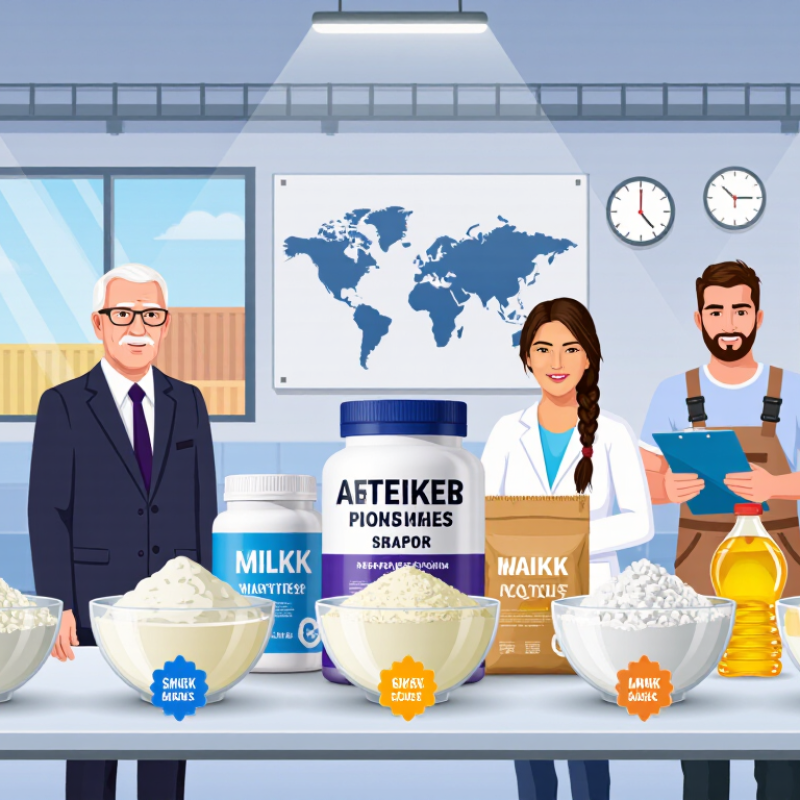
7 Tips for Sourcing Dairy Processing Ingredients Globally

Define Dairy Processing Ingredient Requirements and Quality Standards

Defining dairy processing ingredient requirements starts with the finished product, not the supplier catalogue. Specify protein, fat, lactose, moisture, ash, solubility, and particle size. Also define microbiological limits, allergen controls, contaminants, packaging, and shelf life. For infant, clinical, or sensitive products, requirements must be even tighter. FAO’s Food Outlook 2024 projects global milk production at about 965 million tonnes, showing the scale and complexity of international dairy supply. Large volume does not guarantee consistent functionality.

Tip: Write measurable acceptance criteria. “High quality” is too vague. State test methods, sampling frequency, and acceptable variation. A certificate of analysis should match the delivery lot, not merely repeat a standard template. During receiving, inspect a powder sack for damaged seams, moisture marks, unusual odor, and unreadable batch codes. These small details can reveal bigger failures. Codex guidance and ISO 22000 principles support documented controls, traceability, hazard analysis, and corrective actions. They are useful foundations, but they do not replace product-specific validation.

Tip: Connect quality standards with processing performance. A milk powder may meet protein limits yet dissolve poorly in a cold mixing tank. Test hydration time, sediment, heat stability, and sensory impact under actual plant conditions. The International Dairy Federation’s World Dairy Situation reports continue to highlight market volatility and supply-chain pressure, so dual specifications may be practical for some regions. However, flexibility can become inconsistency. Review the limits with production, quality, regulatory, and procurement teams. Then challenge them again. A perfect specification rarely exists.

Evaluate Global Suppliers, Regions, and Ingredient Capabilities

Global dairy sourcing starts with supplier evidence, not a polished brochure. Ask for three recent certificates, batch records, and a traceability map. During audits, inspect intake bays, powder rooms, allergen controls, and calibration logs. A supplier should explain how milk moves from farm collection to sealed container. Request test results for protein, moisture, solubility, microbiological limits, and contaminants. Independent verification matters when documents look unusually perfect.

Regions shape both quality and supply risk. Temperate dairy zones may offer consistent milk volumes, while seasonal regions can change protein levels and pricing. Compare ports, storage capacity, transit time, and local energy reliability. Do not judge a region by reputation alone. A strong region can still contain weak processors. I once focused too heavily on freight cost and missed a supplier’s limited peak-season capacity. That mistake changed our evaluation checklist.

Evaluate capabilities against your formulation, not a generic product list. Confirm spray-drying control, instantizing options, blending accuracy, packaging sizes, and minimum order quantities. Ask for pilot samples made under production-like conditions. Check whether the technical team can adjust particle size, dispersibility, or heat stability without weakening consistency. Review recall procedures, response times, and backup production sites. Some suppliers promise flexibility, yet cannot support a small trial. That gap deserves attention. Leave room for questions, because a rushed approval can create expensive reformulation work.

Verify Food Safety, Regulatory Compliance, and Certifications

Global dairy ingredient sourcing needs more than a competitive quotation. The OECD-FAO Agricultural Outlook 2024-2033 projects world milk production to grow about 1.6% annually. More volume can mean more suppliers, but also wider control gaps. The WHO Global Burden of Foodborne Diseases report estimates 600 million illnesses and 420,000 deaths each year from unsafe food. Safety verification is a purchasing task, not paperwork.

Tip 1: Verify the facility and ingredient. Request current HACCP plans, hazard analyses, allergen controls, microbiological specifications, and traceability records. Check testing for pathogens, antibiotics, heavy metals, and melamine where relevant. Ask for batch-level certificates of analysis. Do not accept a generic PDF.

Tip 2: Match compliance to the destination market. Compare specifications with the Codex General Principles of Food Hygiene, revised in 2022, and local import rules. Confirm labeling, permitted additives, residue limits, and shelf-life evidence. An ISO 22000 certificate helps, but its scope and expiry date matter. A checklist can miss subcontracted transport.

Tip 3: Validate certifications independently. Confirm certificate numbers with the issuing body, inspect audit scope, and request nonconformity closure evidence. Review recall history, complaint trends, and temperature logs. Use sealed retention samples and a second laboratory for higher-risk lots. Perfect assurance is unrealistic. Document the remaining uncertainty.

Before approval, score suppliers using evidence, not presentation quality. Schedule remote or onsite audits after major process changes. Keep specifications version-controlled. Require immediate notification of contamination, formulation changes, or facility relocation. These controls support due diligence for regulators, customers, and auditors.

Compare Pricing, Logistics, Shelf Life, and Supply Reliability

A practical sourcing review starts with landed cost, not the supplier’s headline price. Compare ingredient quotes by metric ton, payment terms, testing fees, insurance, and inland delivery. A low quote can become expensive after port storage and temperature-controlled transport. Request a three-month price history when possible. Markets change quickly.

Tip 1: Build one comparison sheet. Tip 2: Calculate the full delivered cost.

Logistics can decide whether a usable ingredient arrives as a costly delay. Check transit routes, customs documents, minimum order quantities, and backup ports. For milk powders, moisture barriers and pallet protection matter during humid voyages. For cultures or sensitive blends, confirm temperature limits at every handoff. Shelf life needs equal attention. Calculate remaining life on arrival, not only the production date. A long-dated product is not always better if clearance takes three weeks.

Tip 3: Ask for an arrival-life guarantee. Tip 4: Set a minimum usable shelf life. Tip 5: Confirm storage conditions in writing.

Supply reliability comes from evidence, not confident promises. Review fill rates, shipment records, batch consistency, and response times during shortages. Ask how quickly a supplier can offer an approved alternative specification. Keep safety stock for critical ingredients, but avoid excessive inventory. I once favored a cheaper route and underestimated seasonal congestion. The lesson was uncomfortable: savings mean little when production stops.

Tip 6: Test the plan with a delayed container. Tip 7: Recheck the supplier quarterly.

Establish Contracts, Quality Controls, and Contingency Plans

Global dairy ingredient sourcing needs more than a low purchase price. The OECD-FAO Agricultural Outlook 2024–2033 projects world milk production will approach 1.15 billion tonnes by 2033. This scale increases competition for reliable suppliers and transport capacity. Contracts should define ingredient specifications, approved origins, delivery temperatures, shelf life, testing methods, and remedies for delays. Include currency, freight, and force majeure clauses. Vague wording becomes expensive during shortages.

Quality controls must follow each ingredient from the collection point to the processing line. Require batch-level certificates of analysis, microbiological results, allergen declarations, and contaminant limits. Independent testing should verify critical results, especially for milk powders, cultures, and emulsifying ingredients. The FAO Food Price Index reported that dairy prices averaged about 4.7% higher in 2024 than in 2023. Price movement can pressure suppliers to change processes. Audits should examine sanitation records, calibration logs, traceability exercises, and temperature data. Paperwork alone is not enough.

Contingency plans need practical triggers. Set safety-stock levels for high-risk ingredients, pre-approve a second qualified supplier, and map alternative ports and freight routes. A supplier disruption should activate clear decisions, not a hurried meeting. Tabletop testing can reveal weak points, although many plans look better on paper than in reality. Review them after every late shipment, failed test, or rejected batch. That uncomfortable review often improves the next contract. Sources: OECD-FAO Agricultural Outlook 2024–2033; FAO Food Price Index, 2024.

7 Tips for Sourcing Dairy Processing Ingredients Globally - Establish Contracts, Quality Controls, and Contingency Plans
No. Sourcing Tip Recommended Practice Quality and Compliance Controls Suggested Contract Terms Key Records and Metrics Contingency Action
1 Define a precise ingredient specification Specify product identity, composition, moisture, protein, fat, solubility, microbiological limits, allergen status, packaging, shelf life, and storage conditions before requesting quotations. Use documented acceptance criteria based on the intended application and applicable food laws. Require certificates of analysis for each lot and retain representative samples. Include the approved specification as a controlled contract attachment. Define procedures for specification changes, deviations, rejection, and corrective action. Specification approval date; lot acceptance rate; out-of-specification incidents; complaint rate; certificate-of-analysis completeness. Hold affected material, investigate the deviation, and release only after documented review. Maintain an alternate approved specification where technically feasible.
2 Qualify suppliers using risk-based due diligence Assess manufacturing capability, food-safety systems, traceability, regulatory history, financial resilience, export experience, and dependence on a single site or region. Review an independent audit or recognized food-safety certification, the hazard analysis, environmental monitoring approach, allergen controls, sanitation program, and recall procedure. Reserve the right to conduct announced or justified-for-cause audits. Require prompt notification of regulatory actions, recalls, site changes, and major process changes. Supplier risk score; audit findings by severity; corrective-action closure time; certification validity; traceability-test completion time. Suspend new orders when critical risks are unresolved. Use a pre-qualified secondary source and document temporary approval controls.
3 Verify authenticity and food safety Create a testing plan proportionate to risk, covering identity, composition, microbiology, contaminants, residues, adulteration indicators, and packaging integrity. Use validated or officially recognized analytical methods through competent laboratories. Match test frequency to supplier history, ingredient risk, and regulatory requirements. Define who pays for non-conforming testing, how disputes are resolved, and when an independent laboratory result is final. Test pass rate; laboratory turnaround time; non-conformance trend; authenticity-screening coverage; corrective-action effectiveness. Quarantine the lot, preserve chain-of-custody evidence, perform confirmatory testing, and assess whether other lots or customers may be affected.
4 Build transparent landed-cost models Compare total landed cost rather than unit price alone, including freight, insurance, duties, customs brokerage, inspection, storage, testing, financing, waste, and currency exposure. Confirm tariff classification, labeling requirements, import permits, veterinary or sanitary documentation, and destination-country requirements before shipment. State delivery terms, pricing currency, adjustment formula, duty responsibility, demurrage responsibility, and documentation obligations. Landed cost per metric tonne; budget variance; customs clearance time; demurrage cost; exchange-rate sensitivity. Use alternative ports, routes, or shipment sizes where approved. Recalculate landed cost when tariffs, freight rates, or exchange rates change materially.
5 Control logistics, temperature, and shelf life Select packaging and transport conditions suitable for powdered or liquid ingredients. Define loading, unloading, humidity, temperature, seal, and storage requirements. Use tamper-evident seals, lot identification, shipment inspections, and temperature or humidity monitoring when the ingredient or packaging requires it. Set minimum remaining shelf life at receipt, acceptable transport excursions, notification timing, and responsibility for damage or temperature abuse. On-time-in-full delivery; remaining shelf life at receipt; seal discrepancy rate; transit damage rate; temperature-excursion rate. Place shipments on hold after a documented excursion until quality review confirms suitability. Redirect or replace material when shelf life is insufficient.
6 Establish balanced contracts and service levels Combine a framework agreement with purchase orders that state quantity, delivery window, approved specification, documentation, and release requirements. Include audit access, traceability, recall cooperation, change control, allergen communication, incident escalation, and record-retention requirements. Define forecast flexibility, minimum order quantities, lead times, service-level remedies, payment terms, force majeure, termination, and dispute-resolution procedures. Forecast accuracy; confirmed-order adherence; average lead time; fill rate; invoice discrepancy rate; corrective-action response time. Activate escalation contacts, prioritize critical production needs, and use contractually defined allocation or substitution procedures.
7 Maintain contingency plans and dual-source readiness Map risks across climate events, disease outbreaks, energy disruption, transport restrictions, regulatory changes, geopolitical events, and facility outages. Approve alternate ingredients, sites, routes, and pack formats through documented trials. Confirm that substitutes meet the same safety, legal, and performance requirements. Define emergency notification deadlines, allocation rules, substitute-approval authority, minimum safety stock, and business-continuity review frequency. Days of supply; percentage of volume with an approved second source; recovery time objective; emergency fill rate; annual continuity-test completion. Trigger the documented incident team, protect constrained inventory, communicate revised production plans, and review the event after recovery.
Implementation note: Apply controls according to the ingredient’s hazard profile, intended use, destination-country requirements, and the organization’s documented food-safety management system.

FAQS

What should a dairy ingredient specification include?

Define protein, fat, lactose, moisture, ash, solubility, and particle size. Set microbiological, allergen, contaminant, packaging, and shelf-life limits. “High quality” is too vague.

How can buyers verify each delivered batch?

Require a certificate matching the delivery lot. Inspect seams, moisture marks, odors, and batch codes on every powder sack. Small clues matter.

Why must ingredients be tested in actual processing conditions?

Laboratory compliance does not guarantee plant performance. Test hydration time, sediment, heat stability, and sensory effects in real equipment. Cold tanks can expose weaknesses.

What evidence should a global supplier provide?

Request recent certificates, batch records, and a traceability map. Review intake areas, powder rooms, allergen controls, and calibration logs. Do not trust polished brochures alone.

How should regions and suppliers be compared?

Compare milk consistency, seasonal changes, ports, storage, transit, and energy reliability. A strong region can still contain weak processors. Reputation is not proof.

Which technical capabilities deserve special attention?

Confirm spray-drying control, instantizing, blending accuracy, packaging sizes, and minimum orders. Request pilot samples made under production-like conditions. Small trials can reveal large gaps.

How should the true ingredient cost be calculated?

Compare the full delivered cost, including testing, insurance, storage, and inland transport. A low quote may become expensive after port delays. Use one comparison sheet.

How can shelf life and supply reliability be protected?

Calculate usable life when the ingredient arrives, not only its production date. Set a minimum arrival-life guarantee and written storage conditions. Test a delayed-container scenario. I once underestimated congestion.

Conclusion

Sourcing Dairy Processing Ingredients globally requires a structured approach that balances quality, safety, cost, and supply continuity. Start by defining precise ingredient specifications, including composition, functionality, purity, sensory requirements, packaging, and shelf-life expectations. Then assess suppliers across different regions according to their production capabilities, technical expertise, capacity, communication, and ability to provide consistent quality. Request documentation confirming food safety systems, regulatory compliance, traceability, and relevant certifications before moving forward.

A complete sourcing evaluation should also compare total costs, including ingredient prices, transportation, insurance, duties, storage, and possible currency fluctuations. Consider lead times, shipping conditions, minimum order quantities, and supply reliability, especially for temperature-sensitive or short-life materials. Finally, establish clear contracts covering specifications, testing methods, delivery terms, corrective actions, and dispute procedures. Regular quality checks, supplier reviews, backup sources, and contingency plans can help reduce disruptions and support stable production over the long term.

Evelyn Hart

Evelyn Hart

Evelyn Hart is a dedicated marketing professional with a strong understanding of product strategy, customer needs, and digital communication. As a valued member of our team, she combines market insight with practical industry knowledge to create clear, useful, and engaging content for our company......